
You do not need to pack hiking boots halfway around the world to go hiking in Seoul.
You may not even need to carry your suitcase around on hiking day.
Seoul has dedicated Hiking Tourism Centers where international visitors can rent hiking equipment, get trail information, use facilities such as lockers and changing areas, and check hiking programs for foreign travelers.
That makes hiking unusually easy to add to a city trip.
For the right itinerary, you can check out of your hotel, store your luggage, change clothes, rent hiking gear, spend a few hours on a mountain, return the equipment, and continue to your next destination.
The important part is knowing which center to use, what time it opens, and which mountain actually fits your day.
Table of Contents
Why Seoul Works So Well for a Hiking Day
1. You Can Reach Real Mountains Without Renting a Car
Seoul is unusual for a major city because mountains are woven directly into the urban landscape.
Bukhansan offers granite peaks and a proper mountain experience. Bugaksan and Inwangsan work well for shorter hikes combined with central Seoul sightseeing. Gwanaksan offers another substantial mountain option in southern Seoul.
Many starting areas can be reached using the subway, local bus, or a short taxi ride.
That means hiking does not necessarily require an overnight trip or a rental car.
For international visitors, it can be part of the Seoul experience rather than a separate expedition.
Seoul Hiking Tourism Centers: The Service Many Visitors Miss
2. Seoul Currently Has Three Hiking Tourism Centers
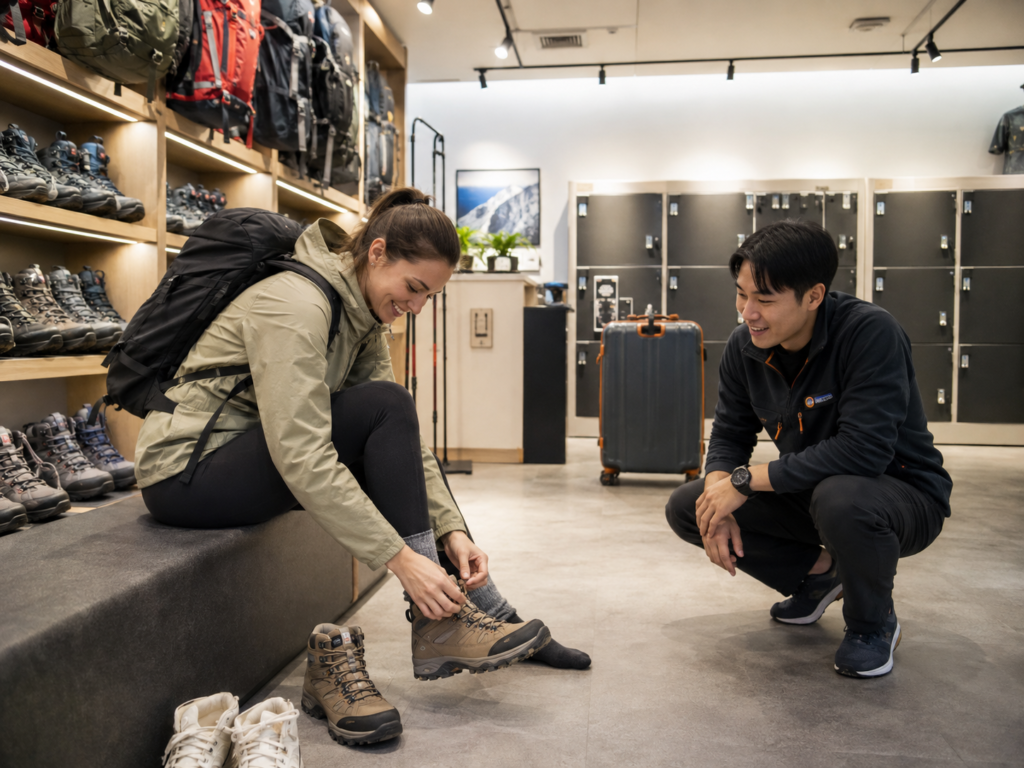
The official Seoul Hiking Tourism Center operates locations serving Bukhansan, Bugaksan, and Gwanaksan.
| Center | Location | Regular Closing Day |
|---|---|---|
| Bukhansan Center | Ui-dong, northern Seoul | Monday |
| Bugaksan Center | Samcheong-dong, central Seoul | Tuesday |
| Gwanaksan Center | Inside Gwanaksan Station | Wednesday |
All three currently operate from 09:00 to 18:00, although holiday closures and operating details can change.
Always check the official Seoul Hiking Tourism Center shortly before visiting.
The centers are more than outdoor rental shops. They provide hiking information and practical facilities designed to make Seoul’s mountains easier for visitors to experience.
3. You Can Rent Hiking Boots, Clothing and Other Gear
Depending on the center and current inventory, rental categories can include:
- Hiking boots
- Hiking jackets
- Hiking shirts and pants
- Backpacks and bags
- Trekking poles and other accessories
For travelers taking only one hiking day in Korea, this can save a surprising amount of luggage space.
KoreaHowTo tip: Reserve the items that depend on size — especially hiking boots and clothing — rather than assuming your size will be available when you walk in.
The official Seoul Hiking Tourism Center currently directs visitors to these booking pages:
Affiliate note: The three Klook booking links below are affiliate links. KoreaHowTo may earn a commission if you book through them, at no extra cost to you.
Reserve hiking gear at the Bukhansan Center
Reserve hiking gear at the Bugaksan Center
Reserve hiking gear at the Gwanaksan Center
The Seoul Hiking Tourism Center is the official tourism service. Its website currently directs gear-rental reservations to booking pages hosted on Klook. The links below use KoreaHowTo’s affiliate tracking, but the rental service itself is provided through the Seoul Hiking Tourism Center.
4. Gear Rental Changes What Time You Should Start Hiking
This is easy to overlook.
Korean hikers often recommend starting early, especially for longer mountain routes.
But if you are collecting rental equipment on the same morning, the Hiking Tourism Centers currently open at 09:00.
That means you cannot simultaneously plan a pre-dawn start and expect to pick up rental boots at the center that morning.
For example, the current Bukhansan rental page also asks renters to return equipment before 16:30.
So if you are renting gear, choose a route that comfortably fits between pickup and return rather than planning the longest possible summit route.
If you want a very early start or a long hiking day, bringing your own equipment may make more sense.
KoreaHowTo tip: First decide whether your priority is gear convenience or maximum trail time. Then choose the route.
Can You Leave Your Luggage Too?
5. Lockers and Changing Facilities Make Hiking Much Easier
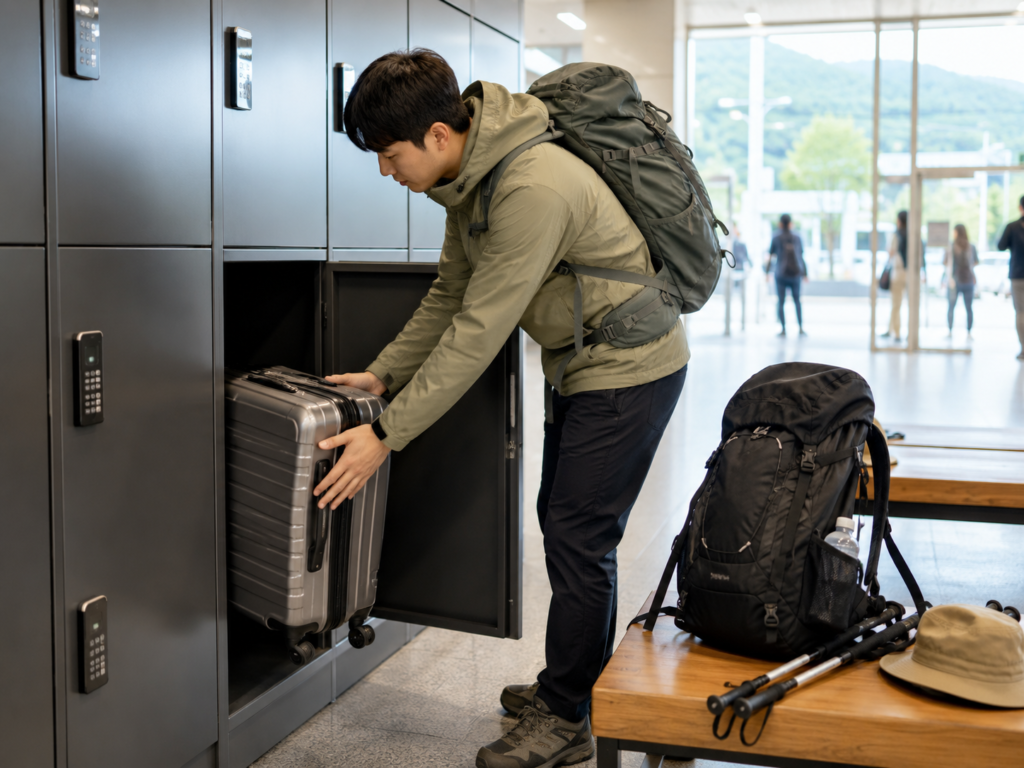
The Hiking Tourism Centers provide practical facilities that can include lockers, changing areas, and lounge space.
Seoul Metropolitan Government also describes the centers as offering luggage storage and changing facilities for hiking visitors.
This creates a useful travel-day option:
hotel checkout → hiking center → store luggage → change → rent gear → hike → return gear → collect luggage → continue your trip
That can work especially well when hotel checkout is in the morning but your next train or other transportation leaves later in the day.
There is one important limitation.
Do not assume every suitcase will fit.
Locker availability and suitable luggage size can vary, so check your specific center if you are carrying a large checked suitcase.
If a Hiking Tourism Center locker is too small, full, or inconvenient for your route, use our luggage storage in Korea guide to compare hotel storage, subway lockers, T-Luggage, airport storage, and other alternatives.
Are Guided Hikes Available for Foreign Visitors?
6. Check the Current Hiking Programs Rather Than an Old Schedule
Yes.
The Seoul Hiking Tourism Center operates hiking and experience programs for international visitors.
Routes, dates, themes, languages, and capacity can change, so a program listed in an old blog post may no longer exist when you arrive.
Use the current Seoul Hiking Tourism program page to see the latest programs and application links.
A guided program can be useful for solo travelers, first-time hikers in Korea, or visitors who would rather enjoy the trail than spend the day checking directions.
If a particular program matters to your itinerary, confirm your place before planning the rest of the day around it.
Which Seoul Mountain Should You Choose?
7. Bukhansan: For a Proper Mountain Experience
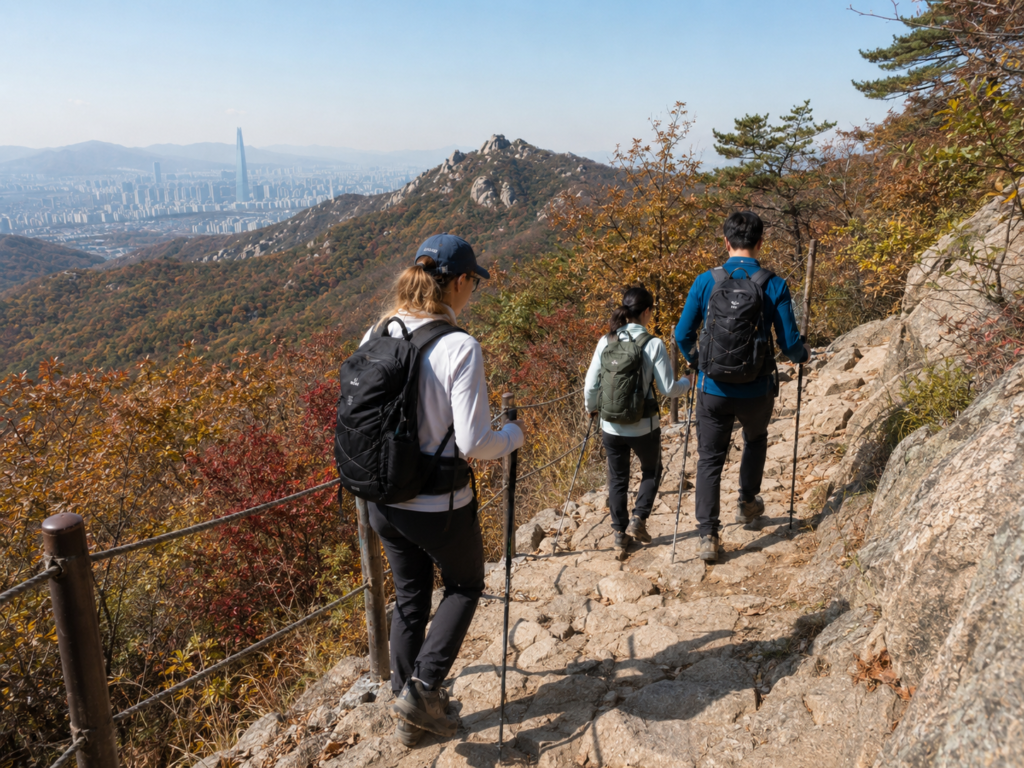
Choose Bukhansan if hiking itself is one of the main activities of your day.
Granite ridges, forests, temples, and wide views over Seoul make it feel surprisingly wild for a mountain directly beside a megacity.
But Bukhansan has many entrances and routes.
This is where first-time visitors can make an easy mistake:
Do not type only “Bukhansan” into your map app and go wherever it sends you.
Choose the route first, then save the exact trailhead.
The Bukhansan Hiking Tourism Center is around five minutes on foot from Bukhansan Ui Station Exit 2, which makes public-transport access especially convenient for gear renters.
If you are using rental equipment, however, remember the 09:00 center opening time when choosing how ambitious your hike should be.
8. Bugaksan: For Hiking Plus Central Seoul
Bugaksan is useful when you want hiking to be only part of the day.
The Bugaksan Center is in Samcheong-dong, making it easier to combine the outdoor experience with central Seoul neighborhoods and historic sightseeing.
This is a better fit than a major summit day if you want some elevation and views but still have other plans afterward.
For visitors with limited time, that flexibility can be more valuable than choosing the highest mountain.
9. Inwangsan: For a Short First Experience
Inwangsan does not have one of the three Hiking Tourism Centers attached to it, but it remains one of Seoul’s most practical introductory hikes.
It combines rocky terrain, sections near Seoul’s historic city wall, and excellent views over the city without requiring an entire mountain day.
If your reaction is:
“I want to try hiking in Korea once, but I am not really a hiker,”
Inwangsan may fit your trip better than chasing a major summit.
10. Gwanaksan: For a Stronger Hike in Southern Seoul
Gwanaksan is especially useful if you are staying in southern Seoul or want a more substantial hiking option away from the most obvious tourist areas.
The Hiking Tourism Center is inside Gwanaksan Station, making the transition from subway to hiking unusually straightforward.
Accessibility does not mean every trail is easy, however.
Choose the route based on your fitness and available time rather than assuming that a subway-accessible mountain must be beginner-level.
How to Prepare the Night Before
11. Save More Than the Mountain Name
Before your hiking day:
- Check the weather.
- Confirm the center is open.
- Confirm your gear reservation.
- Choose the actual hiking route.
- Save the exact trailhead in Naver Map or KakaoMap.
- Screenshot the Korean name.
- Check your return route.
Saving the Korean name is particularly useful when using taxis.
Showing the destination on your phone is easier than trying to pronounce a Romanized trailhead name.
Our guide to Google Maps and local map apps in Korea explains why Naver Map or KakaoMap can be especially useful for exact entrances and local transportation.
12. Do Not Make the Schedule Too Tight
A mountain does not have the predictable finish time of a museum ticket.
Crowded trails, slower descents, rain, tired legs, or simply stopping longer for the view can all change your timing.
This matters especially if you are using a hiking day between hotel checkout and an evening train or flight.
Leave a generous buffer.
If an awkward bus transfer threatens the whole schedule, a taxi can sometimes be worth the cost. Our guide to taking taxis in Korea covers taxi apps, Korean addresses, fares, and payment.
What Should You Rent and What Should You Bring?
13. Rent the Bulky Gear, Keep the Personal Essentials
Renting makes the most sense for equipment that takes up luggage space, such as hiking boots, trekking poles, outdoor clothing, or a hiking backpack.
Bring your own comfortable socks, water, snacks, sunscreen, personal medication, phone, portable battery, and anything else you normally prefer to keep personal.
Check the weather before choosing clothing.
Seoul’s granite and stone surfaces can become slippery after rain, and winter conditions may require equipment very different from what you would use in spring or autumn.
Do not assume a trail is easy simply because you saw someone hiking it in sneakers on social media.
The Most Useful Travel-Day Trick
14. Hotel Checkout Does Not Have to Waste Half a Day
Imagine your hotel checkout is in the morning but your next train leaves that evening.
Normally, this creates an awkward block of time.
If the location and storage capacity work for your luggage, a Hiking Tourism Center can turn that gap into an actual Seoul experience:
check out → store luggage → rent equipment → hike → change → return gear → collect luggage → continue your trip
Just avoid scheduling a difficult mountain followed immediately by a non-refundable flight.
The convenience of luggage storage is useful precisely because it gives you flexibility.
Do not remove that flexibility by turning the rest of the day into a race.
Do Not Skip the Part After the Hike
15. A Meal Is Part of Korean Hiking Culture
Many Korean hiking days continue after the descent.
Around popular mountain areas, groups often sit down together for a meal rather than going straight home.
Jeon and makgeolli are famously associated with Korean hiking, although alcohol is completely optional.
What matters is the pattern:
meet → hike → descend → eat together
That social rhythm is one reason hiking is such an established weekend activity in Korea.
If your schedule allows it, leave room for something warm to eat before heading back into the city.
Final Thoughts
Seoul makes it unusually easy to experiment with hiking.
You can reach mountains by public transportation, rent equipment instead of bringing it from home, store luggage, change clothes, get local trail information, and sometimes join a hiking program designed for international visitors.
The key is not to make the day more complicated than it needs to be.
Choose Bukhansan when you want a proper mountain day.
Choose Bugaksan or Inwangsan when hiking needs to fit around central Seoul sightseeing.
Consider Gwanaksan when southern Seoul works better for your location.
And if you are renting equipment, remember the detail that matters most:
your hiking schedule begins when the rental center opens, not when the sun rises.
Check current hours, reserve important sizes, save the exact trailhead in Korean, and leave enough time to return the gear without rushing down the mountain.
That is how Seoul hiking becomes convenient rather than stressful.
Frequently Asked Questions
Can tourists really rent hiking shoes in Seoul?
Yes. Hiking gear rental is available for foreign tourists through the Seoul Hiking Tourism Centers. Equipment and sizes vary, so reserving important items in advance is recommended.
Can I leave a suitcase at a Hiking Tourism Center?
The centers provide convenience facilities including lockers, and Seoul Metropolitan Government also lists luggage storage among their visitor services. Capacity and suitcase size can vary, so confirm your specific center if you have large luggage.
What time do the Seoul Hiking Tourism Centers open?
The three centers currently list opening hours of 09:00 to 18:00, with different regular closing days. Always check the official site before visiting because holiday schedules can change.
Are guided hikes available for foreign visitors?
Yes. Hiking and experience programs are offered for international visitors, but routes and schedules change. Use the current program page rather than an old schedule.
Which Seoul mountain is best for a first-time hiker?
For a shorter introduction, Inwangsan or Bugaksan may suit many travelers better than a demanding Bukhansan summit route. The best choice depends on your fitness, weather, available time, and the exact trail.
Related Guides
Google Maps in Korea 2026: Naver Map, KakaoMap & What Changed
Finding the correct mountain entrance is much easier when you know which Korean navigation apps work best.
→ Read the Korea map apps guide
Too Early to Check In? Here’s Where to Leave Your Luggage in Korea
Compare hotel storage, subway lockers, T-Luggage, airport storage, and other options if a hiking-center locker does not fit your itinerary.
→ Read the luggage storage in Korea guide
Taking a Taxi in Korea: What Surprises First-Time Travelers
A taxi can simplify an early start, an awkward bus connection, or the trip between your hotel and a trail entrance.