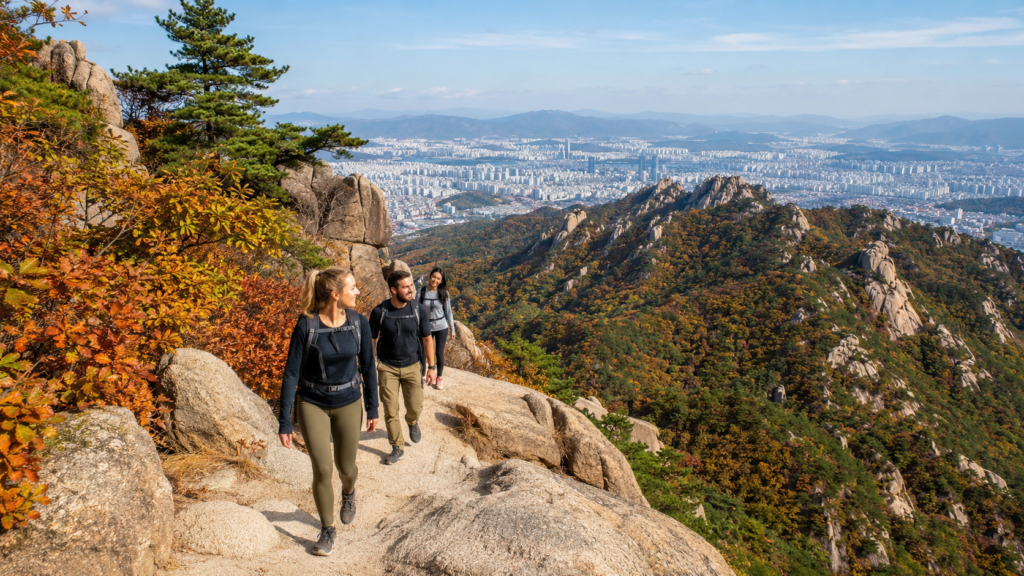
One of the most surprising things about hiking in Korea is how close the mountains are to everyday life.
In Seoul, you can take the subway toward a trailhead, climb above the city, and still return downtown for dinner. Hiking does not always require a rental car or an overnight trip.
But Korean mountains can become serious quickly. Modest elevations can still mean steep stone steps, exposed granite, long descents, or strict entry times. Hallasan has controlled summit access, parks can close trails, and rural trailheads may be difficult to reach early.
There is also a distinct hiking culture: gimbap, trekking poles, early starts, and a good meal after the descent.
This guide helps you decide what kind of hike fits a Korea trip — from short urban mountains to Hallasan, Seoraksan, and Jirisan. If you are specifically hiking in Seoul and need gear rental, lockers, or center information, use our separate Hiking in Seoul: Gear Rental, Luggage Storage and Local Tips.
Here is what first-time visitors should know before hiking in Korea.
Table of Contents
Why Hiking in Korea Feels Different
1. Mountains Are Part of Everyday City Life
Seoul is surrounded by mountains including Bukhansan, Bugaksan, Inwangsan, and Gwanaksan. Some trail areas are reachable by subway and bus, so a short hike can fit into a normal sightseeing day.
A smaller urban mountain may take only a few hours. Bukhansan can become the main activity for half a day or longer.
For visitors, hiking is an easy way to add nature to a Seoul itinerary.
For many people living in Seoul, a mountain does not automatically mean a weekend trip out of the city. It can simply be part of a normal Saturday — subway, hike, meal, home.
2. Korean Hiking Is Social — and More Serious Than It Looks
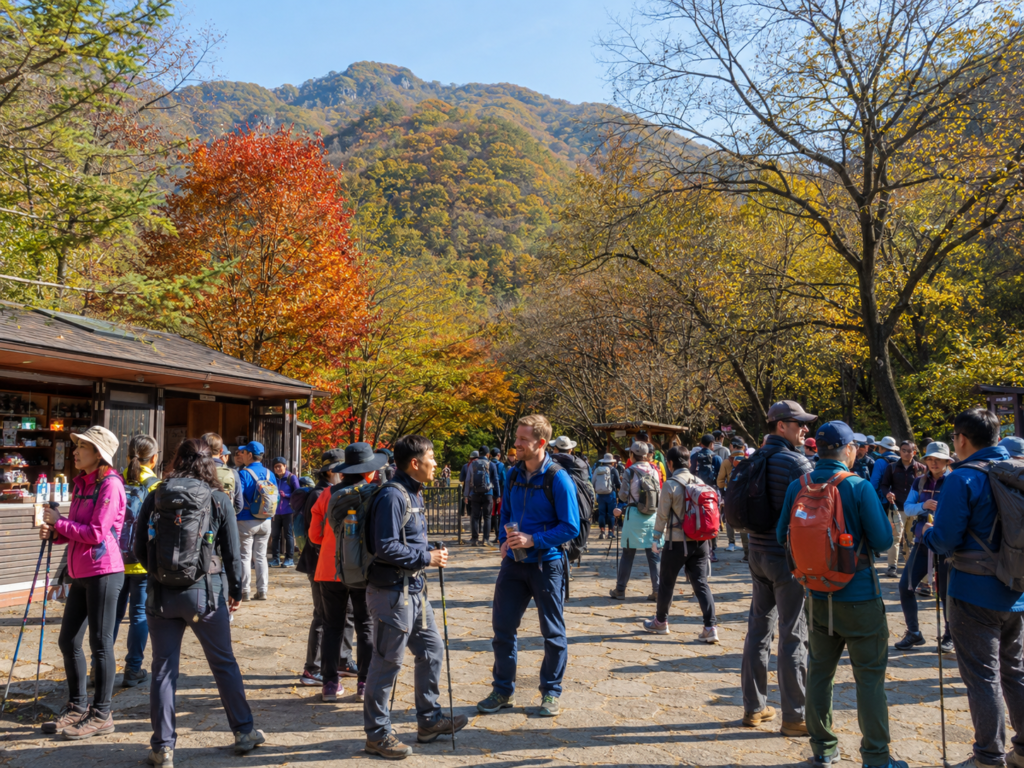
Weekend hiking often begins before the trail: groups meet near subway stations, buy gimbap, and return to nearby restaurants afterward.
Technical clothing, trekking poles, backpacks, and proper hiking shoes are common. You do not need the full outfit for every easy trail, but Korean mountains often gain elevation quickly and include stone steps, roots, uneven rocks, and slippery surfaces after rain.
Visitors sometimes notice how seriously dressed Korean hikers look, even on mountains close to the city. It can seem excessive at first, but steep stone steps, exposed rock, and fast elevation gain explain why proper shoes and poles are so common.
Do not judge a Korean hike only by elevation. An 800-meter mountain can still be a demanding day.
Which Mountain Should You Choose?
| If You Want… | Consider | Good For |
|---|---|---|
| A short Seoul hike | Inwangsan or Bugaksan | Beginners, limited time |
| A proper mountain in Seoul | Bukhansan | Active travelers |
| A major Jeju hike | Hallasan | Jeju itineraries |
| Dramatic scenery | Seoraksan | Nature and autumn trips |
| A hiking-focused journey | Jirisan | Experienced hikers |
3. Inwangsan or Bugaksan: A Lighter Introduction
These are good choices for city views, forest sections, and a taste of Korean hiking without giving up a full day.
They also let you test Korean slopes and stone steps before committing to a longer mountain.
4. Bukhansan: The Classic Seoul Mountain Experience
Bukhansan is the obvious next step if you want a real mountain without leaving Seoul. Granite ridges rise directly beside the city, creating one of the capital’s most memorable contrasts.
Baegundae is the highest summit, but different entrances offer very different routes, scenery, and difficulty.
KoreaHowTo tip: Do not save only “Bukhansan” in your map app. Choose the route first and save the exact trailhead. The wrong entrance can put you on a completely different side of the mountain.
5. Hallasan: Best When Jeju Is Already in Your Trip
Hallasan is South Korea’s highest mountain. If Baengnokdam is your goal, check the official Hallasan Visit Reservation System before building the rest of your Jeju day around the hike. The system provides current reservation and trail-access information, and availability can change.
But you do not have to reach the summit to enjoy Hallasan. Other trails offer beautiful volcanic landscapes and can fit a normal Jeju sightseeing itinerary much better than a full summit day.
6. Seoraksan: Go for the Scenery, Not Just the Summit
Seoraksan is one of Korea’s most dramatic national parks, especially in autumn. Granite formations, valleys, temples, forests, and rocky ridges create the scenery many travelers imagine when they think of Korean mountains.
Daecheongbong is the highest summit, but it is not essential. Ulsanbawi offers a strong hike and memorable views, while easier valley areas suit visitors who want nature without a major summit climb.
Some Seoraksan trails can be restricted because of weather, wildfire-prevention periods, or safety conditions, so check the Korea National Park Service for your exact route shortly before you go.
7. Jirisan: Better for a Hiking-Focused Trip
Jirisan is a vast mountain area with long routes, ridges, shelters, and the 1,915-meter Cheonwangbong summit.
Some Jirisan trails and facilities use the KNPS reservation system, while others do not. Choose the exact route first, then check whether that route, shelter, or access point requires a reservation.
That is a major attraction for experienced hikers, but it can be difficult to squeeze into a short first-time Korea itinerary. If you choose Jirisan, give it enough transportation and recovery time rather than treating it as a quick detour.
Practical Hiking Tips That Matter in Korea
8. You Can Rent Hiking Gear in Seoul — and Store Luggage
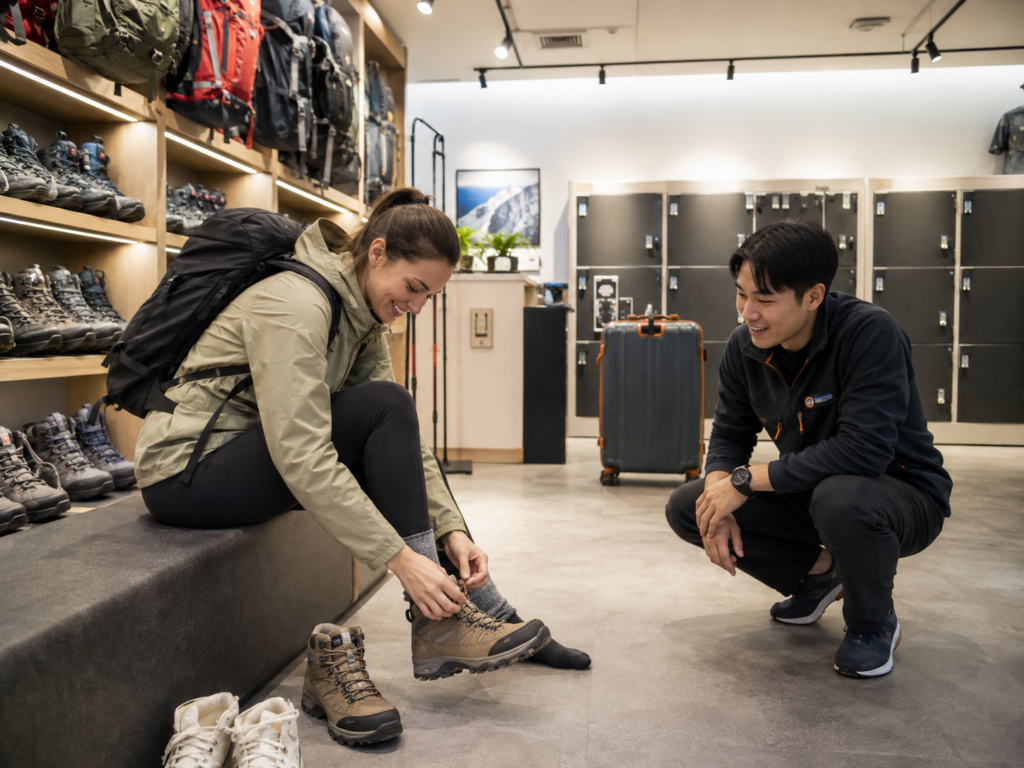
This is one of the most useful tips for visitors.
The Seoul Hiking Tourism Center operates centers serving Bukhansan, Bugaksan, and Gwanaksan. Depending on the center, international visitors can rent hiking shoes, clothing, backpacks, trekking poles, and other gear. Facilities can also include lockers, changing areas, and lounge space.
You may not need to pack bulky gear for one Seoul hiking day, and the service can be useful between hotel checkout and an evening train or flight.
Check the official Seoul Hiking Tourism Center for current equipment, facilities, and reservations.
For center locations, rental gear, lockers, changing areas, and booking details, see our full Hiking in Seoul: Gear Rental, Luggage Storage and Local Tips.
9. Save the Exact Trailhead in Korean
Before your hike:
- Choose the route.
- Find the exact entrance in Naver Map or KakaoMap.
- Save or screenshot its Korean name.
- Check the return route too.
Mountains can have several entrances on completely different sides. This is especially useful in taxis: showing the Korean trailhead name is easier than pronouncing a long Romanized place name.
Our Google Maps in Korea 2026: Naver Map, KakaoMap & What Changed guide explains why Naver Map or KakaoMap can be more useful for local navigation.
10. Start Earlier Than You Think
Depending on the park and route, you may encounter reservations, entry cutoffs, turnaround times, wildfire-prevention closures, weather closures, or temporary safety restrictions.
Early starts are common on serious Korean hikes for a practical reason. It is not only about reaching the summit early; it leaves room for entry cutoffs, slower descents, changing weather, and the trip back from the trailhead.
If access closes, your hiking speed does not create an exception.
Check Hallasan through its official system and Jirisan or Seoraksan through the Korea National Park Service shortly before your hike.
For a major mountain, give the hike the whole day rather than placing a tight flight, train, or important reservation immediately afterward.
11. Carry Food and Water — and Use Facilities When You See Them
Popular trail entrances may have shops, toilets, or visitor centers. Do not assume those facilities continue up the mountain.
Carry enough water and easy food such as gimbap, bananas, nuts, or energy bars. Use toilets around entrances, rest areas, or shelters when available, and take your rubbish back down.
12. Choose Your Hotel Based on the Morning
Outside Seoul, a hotel can look close to a mountain but still be inconvenient before dawn.
Check hotel → exact trailhead → actual departure time, including the first bus or realistic taxi trip.
For Hallasan, Jirisan, or Seoraksan, sleeping closer to the entrance can be more valuable than staying in the most famous tourist area.
If a taxi solves an awkward early transfer, our Taking a Taxi in Korea 2026: Apps, Fares & First-Time Tips guide covers apps, fares, addresses, and payment.
13. Pack for the Mountain, Not the Hotel
For a substantial day hike, bring shoes with reliable grip, enough water, food, sun protection, a light rain layer, an extra layer when temperatures may fall, a portable battery, basic first-aid items, and a headlamp if part of the route may be dark.
A Korean eSIM or SIM is useful for maps, weather, translation, buses, and taxis outside the easiest tourist areas.
Also check whether your travel insurance covers hiking, mountain injuries, rescue expenses, and your planned activity.
When Is the Best Time to Hike in Korea?
14. Spring and Autumn Are Usually the Most Comfortable
Spring usually offers comfortable temperatures and green forests.
Autumn brings Korea’s famous red, orange, and yellow foliage, but also larger crowds. Popular mountains can become extremely busy on beautiful weekends, so weekdays or early starts are preferable when possible.
Autumn can look like the obvious hiking season in Korea, but a famous mountain on a perfect foliage weekend may feel very different from the same trail on a weekday. The scenery is only one part of choosing the day.
Foliage does not peak everywhere at once. Elevation and region matter, so Seoraksan, Seoul, Jirisan, and Hallasan can look very different during the same week.
Spring and autumn can still bring trail closures, rain, and sudden heat or cold snaps, so comfortable weather does not mean every hiking day is easy.
15. Summer and Winter Need More Caution
Korean summers can be hot and humid, with monsoon rain and occasional typhoon disruption.
Winter changes the difficulty completely. Snow and ice can require traction equipment, warmer clothing, and more experience. A route that looks easy in an October photo may be a very different hike in January.
Always check actual mountain conditions rather than relying only on seasonal averages.
The Hike Is Not Always Over at the Trailhead
16. Try the Korean Post-Hike Ritual
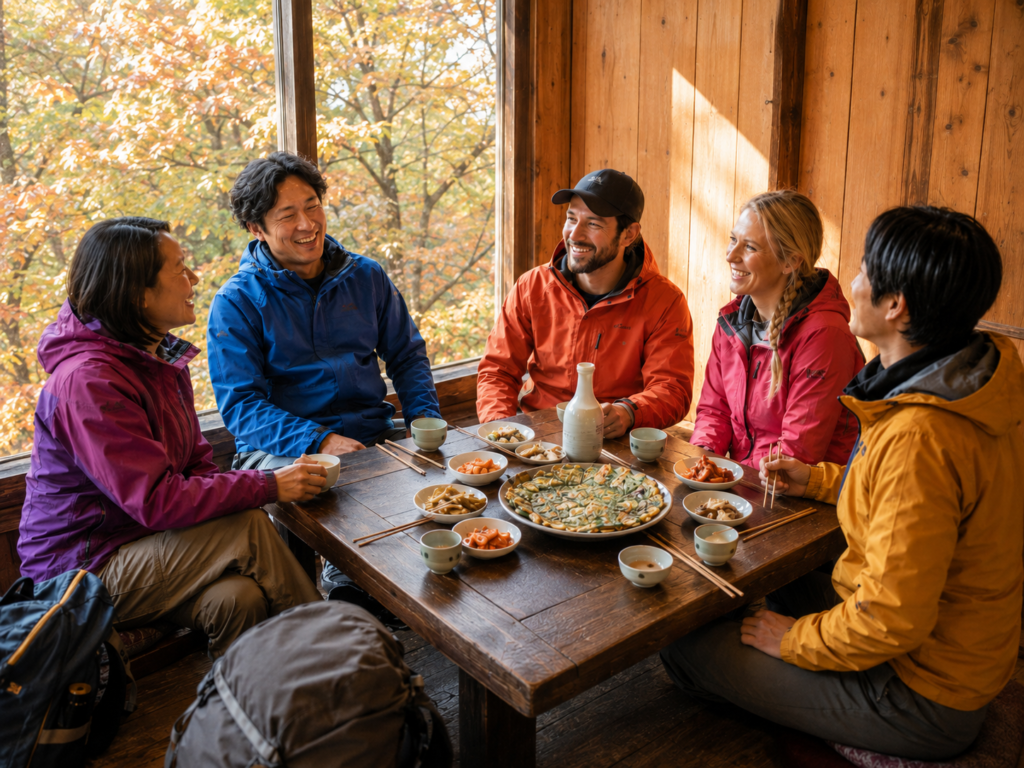
After descending, look around before rushing back to your hotel.
Popular mountain entrances often have restaurants full of hiking groups. Jeon and makgeolli are strongly associated with Korean hiking culture, although alcohol is obviously optional.
The typical rhythm is simple:
meet → climb → descend → eat together → talk about the hike
For many Koreans, hiking is a social weekend activity as much as exercise. Sometimes the meal afterward explains the culture as well as the summit does.
The Summit Is Only One Option
17. Know When a Summit Is Not the Best Plan
A summit is not automatically the best version of a Korean hike.
If weather, reservations, transport, trail closures, fitness, or daylight make the summit unrealistic, choose a shorter trail, valley route, ridge walk, or lower viewpoint instead.
Hallasan, Seoraksan, and Jirisan all offer experiences that do not depend on reaching the highest point.
For a first trip to Korea, finishing a route comfortably and still having time to get back to your accommodation can be a better travel decision than forcing a summit because it is famous.
Final Thoughts
Hiking in Korea can be as light or serious as you want.
You can spend a few hours above Seoul, rent hiking equipment instead of packing it from home, build a Jeju day around Hallasan, visit Seoraksan mainly for scenery, or plan a hiking-focused trip around Jirisan.
Do not choose the highest mountain just because it looks impressive on a list.
Choose the hike that fits your trip.
In Korea, a good hiking day is not measured only by the summit. The route, the season, how you get to the trailhead, and what happens after you come down are all part of the day.
Save the correct trailhead, check current access rules, start early, carry your own water, and leave enough time for a good meal after the descent.
Frequently Asked Questions
Can beginners go hiking in Korea?
Yes. Korea has everything from short urban walks to difficult full-day summit routes. Choose by terrain and duration, not fame.
Can I hike in Korea without a rental car?
Yes, especially in Seoul. Major mountains outside the capital require more planning, and an early taxi can sometimes be useful.
Is it safe to hike alone in Korea?
Solo hikers are common on popular routes. Still, check weather and trail status, stay on marked paths, carry enough water, and tell someone your plan on longer hikes.
Are Korean mountains crowded?
They can be, especially on pleasant weekends and during autumn foliage season. Weekdays and early starts are usually calmer.
Can I hike if I cannot read Korean?
Yes. Major hiking areas are manageable for international visitors, but saving the Korean name of your exact trailhead makes buses, taxis, and map apps much easier.
Related Guides
Hiking in Seoul: Gear Rental, Luggage Storage and Local Tips
Use the dedicated Seoul guide for tourism center locations, gear rental, lockers, changing areas, and booking details.
→ Read the Hiking in Seoul guide
Google Maps in Korea 2026: Naver Map, KakaoMap & What Changed
Learn which Korean map apps are most useful for trailheads, bus stops, and local destinations.
→ Read the Korea map apps guide
Too Early to Check In? Here’s Where to Leave Your Luggage in Korea
Hotel storage, subway lockers, T-Luggage, airport storage, and other options can make an active travel day much easier.
→ Read the luggage storage in Korea guide
Taking a Taxi in Korea 2026: Apps, Fares & First-Time Tips
Early mountain starts and rural trailheads sometimes make a taxi the practical choice.