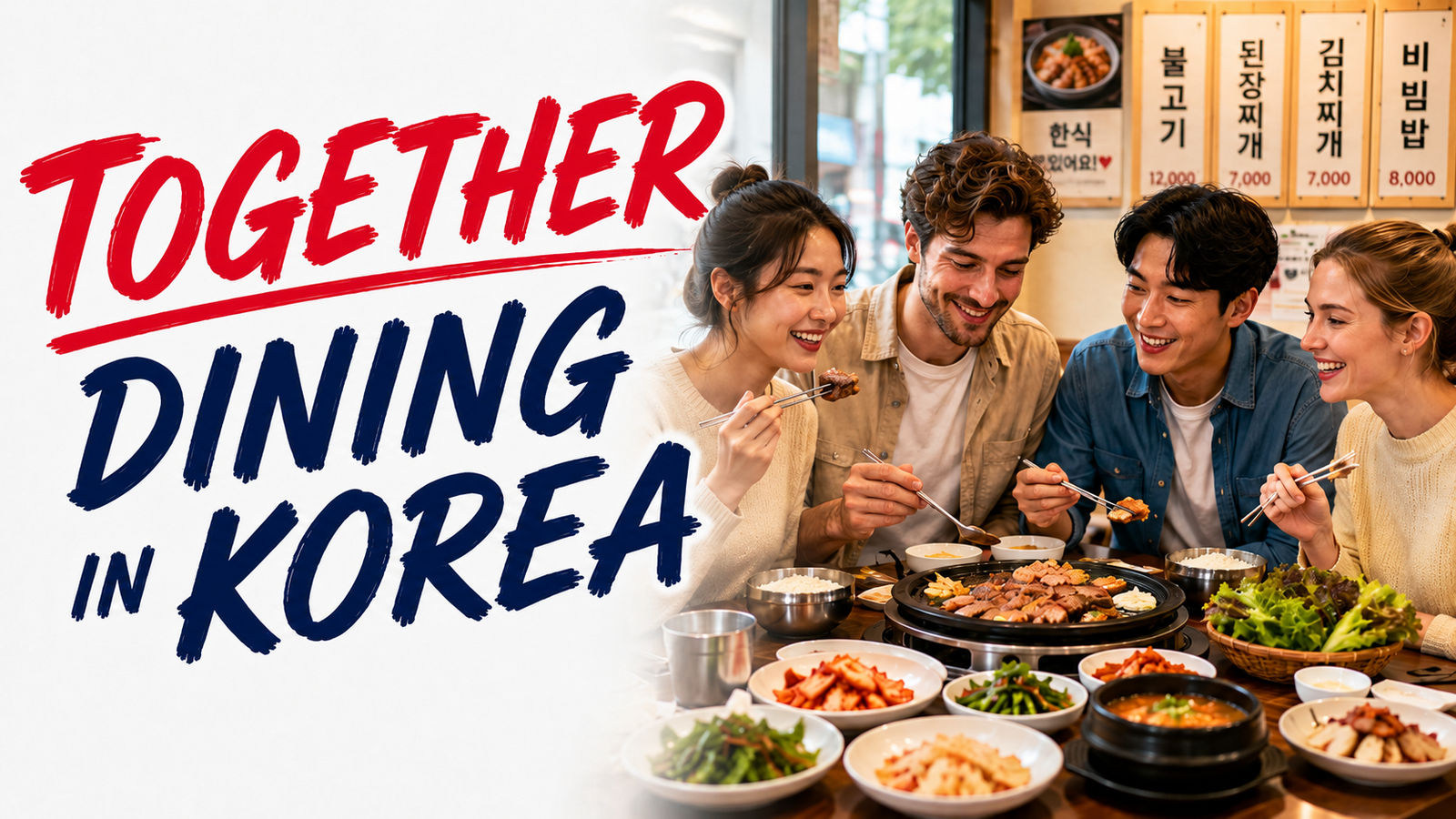
Dining together in Korea opens up far more menu choices than eating alone. Add just one more person, and shared grills, hot pots, and large dishes suddenly become much easier to order.
At restaurants built around barbecue, hot pots, braised dishes, or other shared food, the menu may be organized by serving size or table-sized dishes rather than one plated meal per person.
But dining together brings new questions. How much should you order? Does “two servings” mean two dishes? Who cooks the meat? And can you split the bill?
Here is what changes when you eat with others in Korea—and how to enjoy more food without ordering too much.
Table of Contents
Why Does Dining with Others Change What You Can Order?
1. Many Korean Meals Are Designed for Two or More People
In Korea, some restaurant dishes are not meant to be individual meals. They arrive on one grill, in one large pot, or on one plate placed in the middle of the table.
This is common with Korean barbecue, hot pots, braised dishes, and other meals that continue cooking while you eat. The restaurant may prepare one shared setup for the whole table rather than separate portions for each person.
That is why adding just one travel companion can make a big difference. A dish that feels too large, expensive, or impossible to order alone may suddenly become a practical choice for two people.
This does not mean every Korean meal must be shared. Rice, noodles, soups, and many set meals are still ordered individually. The difference is that dining with others gives you access to both individual dishes and shared dishes.
A larger menu does not always mean every item is practical for one diner. Some of those choices only become realistic when two or more people are seated together.
2. “Two Servings” Is Not the Same as Ordering Two Dishes
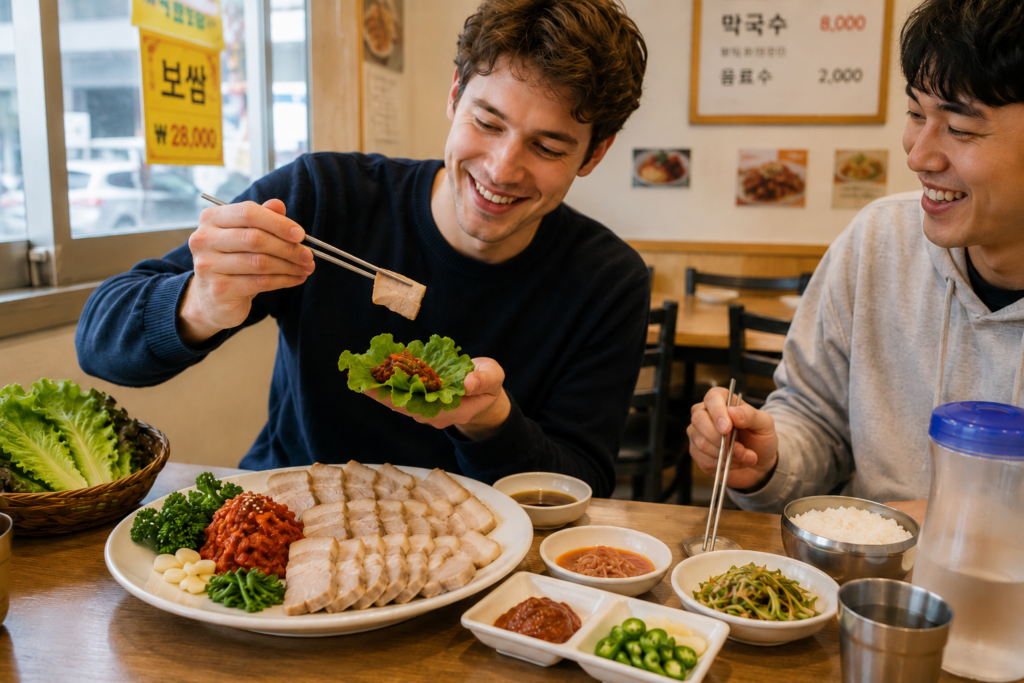
One of the most confusing parts of a Korean menu is the word inbun (인분), meaning a serving for one person.
If a restaurant requires a minimum order of two servings, you are usually ordering one type of food in a quantity meant for two people. You are not necessarily receiving two separate plates.
For example, ordering two servings of meat may mean twice the weight placed on the same grill. Two servings of dakgalbi may arrive together in one large pan. A hot pot marked for two people usually comes as one shared pot.
The exact portion size can vary by restaurant, so two servings are not always enough for two very hungry diners. Side dishes, rice, noodles, or fried rice may also be ordered separately.
Before adding several extras, it can be smarter to see the main dish first. Korean restaurant tables often fill up quickly, and the total amount of food may be larger than expected. For Koreans, reading a shared-dish menu often starts with the serving unit and the size of the pan or grill—not with choosing one separate plate for each person.
Which Korean Foods Become Easier to Order Together?
3. Table Grills, Shared Pots, and Large Main Dishes
The biggest change is access to foods cooked and served for the whole table. Korean barbecue uses one grill, while dishes such as dakgalbi or hot pot arrive in a single pan or pot that everyone shares.
A large main dish is also easier to order with company. It may not require a strict two-serving minimum, but its size and price often make more sense when divided between several people.
These meals are more than oversized portions. Cooking, watching the pot, and choosing the next bite are part of the dining experience. Everyone eats from the same main dish while using personal rice bowls and small plates.
You do not need a large group. For many restaurants, just two diners are enough to turn an impractical menu item into one of the most memorable meals of the trip.
4. Lesser-Known Shared Dishes Worth Trying
Korean barbecue may be the most famous shared meal, but it is only one option. Several dishes that first-time visitors may overlook are especially enjoyable when shared.
Bossam (보쌈) is sliced pork served with cabbage, kimchi, sauces, and small side dishes for making wraps. Jjimdak (찜닭) combines chicken, vegetables, and glass noodles in a rich sweet-savory sauce. Gamjatang (감자탕) is a hearty pork-bone stew served bubbling in a large pot.
These dishes are not always sold by individual serving. Depending on the restaurant, they may be listed as small, medium, or large, or described as suitable for two to three people or three to four people. Some restaurants offer only one standard size.
These labels are useful, but they are only rough guides. Portion sizes vary by restaurant, and rice, noodles, or other additions may need to be ordered separately. A “small” dish can still be surprisingly large for two light eaters.
Because everyone can take a little at a time, these meals let a group enjoy several flavors and textures without ordering a separate main dish for each person. They can also feel closer to the relaxed, generous way many Koreans eat together.
Search the Korean name of the dish on Naver Map instead of searching only for “Korean restaurant.” At the restaurant, check the number of recommended diners before choosing small, medium, or large.
How Much Food Should Your Group Order?
5. Does Everyone Need to Order One Serving?
Usually, it depends on whether the restaurant serves individual meals or shared dishes.
At restaurants specializing in individual rice bowls, noodles, soups, or set meals, each adult is generally expected to order one main dish. Two adults sharing a single bowl may be accepted in some casual restaurants, but it can be uncomfortable during busy meal times.
At restaurants built around shared food, the group does not necessarily need one dish per person. Instead, the table must follow the restaurant’s minimum order or choose a size suitable for the group.
Children, light eaters, and people who are only joining briefly may be treated differently, but policies vary. The safest approach is to ask before ordering rather than assuming that one shared dish is enough for the entire table.
If the menu or minimum order is unclear, ask “Inwon-su-daero jumunhaeya haeyo?” (인원수대로 주문해야 해요?)—“Do we need to order for the number of people?”
6. Why Is It Easy to Order Too Much?
Overordering is easy when several people share the table. Each dish may look manageable on the menu, but the total can grow quickly once meat, a shared main dish, rice, noodles, and extra sides are combined.
Korean meals can also feel larger than expected because the table fills with banchan (반찬), sauces, lettuce, soup, and other items served with the main order. These are not always large portions, but together they can make the meal much more filling.
Another common mistake is ordering everything at once. A group may choose a large main dish, add individual rice or noodles, and then realize there is still fried rice or another finishing dish they want to try later.
Appetites also differ. A menu marked for three people may be enough for four light eaters, while two very hungry diners may need something extra. Recommended group sizes are helpful, but they are not exact measurements.
Start with the main dish and only the essential extras. In many restaurants, you can add rice, noodles, meat, or another dish after seeing the actual portion.
7. The Main Dish May Have a Second Ending
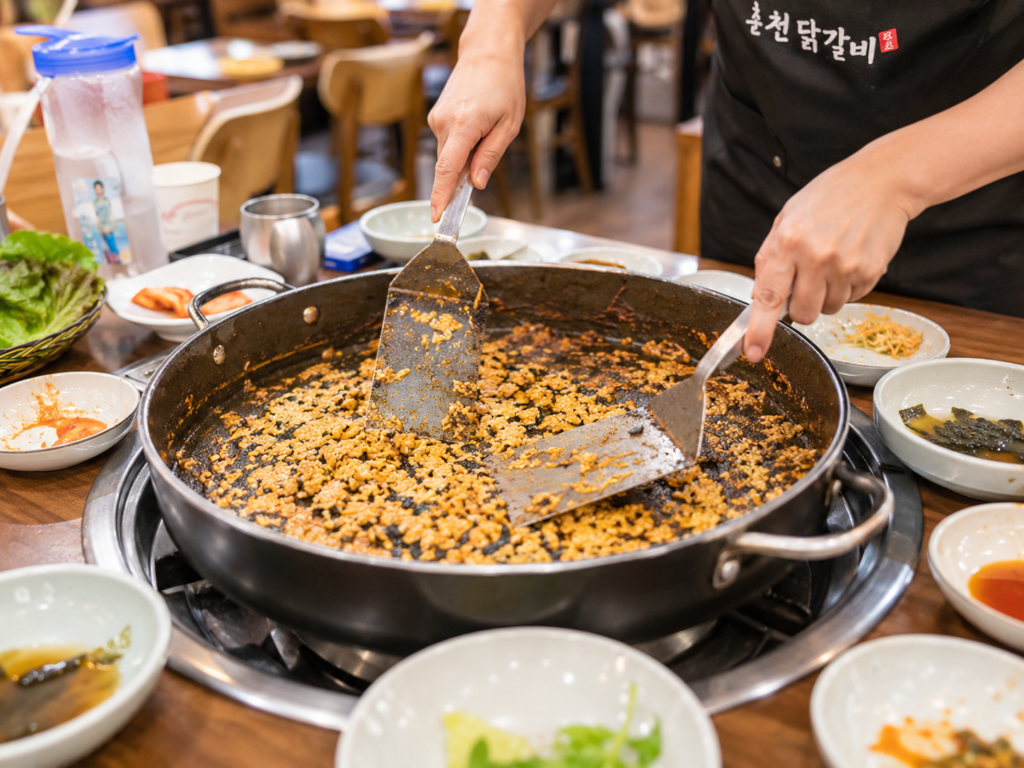
In Korea, the meal may continue even after the main dish is almost gone.
Many shared dishes have a final course. You may add noodles to the remaining broth, or order fried rice after most of the food has been eaten.
The timing is important. Noodles need enough broth to cook. Fried rice usually comes later. The staff may mix rice with the sauce left in the pan, along with seaweed, vegetables, and sesame oil.
With dishes that offer noodles or fried rice at the end, many diners treat that final course as part of the fun rather than simply a way to use leftovers. Fried rice is sometimes jokingly called the “dessert” of a Korean meal.
Plain rice is different. You can order it earlier and eat it with barbecue, stews, or braised dishes. Noodles and fried rice are usually shared, so check how full everyone is before ordering.
Not every restaurant offers the same final course. Some have noodles, some have fried rice, and some have both.
Before the pan or pot is removed, ask “Bokkeumbap doenayo?” (볶음밥 되나요?)—“Can we get fried rice?” or “Sari chuga hal su isseoyo?” (사리 추가할 수 있어요?)—“Can we add noodles or another extra?”
How Does Dining Together Work at a Korean Table?
8. Your Rice Is Yours. The Main Dish Belongs to the Table.
A Korean table can look confusing at first. Some dishes are just for you, while others are shared by everyone.
Your rice bowl and personal plate are usually yours. An individual soup or set-meal dish may also be personal, while a large stew, grill, pot, and many side dishes in the center are shared by the table.
During one meal, you may pick up meat from the grill, take vegetables from a shared plate, and ladle a little stew into your own bowl. The food stays in the center, while each person takes small portions as they eat.
Use the tongs, ladle, or serving spoon when one is provided. This is especially important for raw meat, soup, and dishes covered in sauce. However, not every plate comes with its own serving utensil, so the table may feel more casual than expected.
There is no need to fill your plate at once. Many Koreans take a little, eat it, and then reach back for more. The meal naturally moves between the shared food in the middle and each person’s own bowl.
For a broader introduction to Korean table settings, side dishes, call buttons, and silverware drawers, visit the official VISITKOREA Korean Food Guide.
Before asking the staff, check the side of the table. Many Korean restaurants keep spoons, chopsticks, napkins, and sometimes serving utensils in a built-in drawer. If you still need a serving spoon, ask “Deoreomeongneun sujeo juseyo” (덜어먹는 수저 주세요)—“Could we have a serving spoon?”
9. Who Cooks and Cuts the Food?
At some Korean restaurants, the food arrives ready to eat. At others, part of the cooking happens at the table.
At Korean barbecue restaurants, the staff may place the meat on the grill, turn it, and cut it with scissors. In other places, diners are expected to cook the meat themselves. Dakgalbi, hot pots, and other table-cooked dishes can work the same way.
Watch what the staff does first. If they start cooking, it is usually best to let them continue. If they leave the tongs and scissors on the table and walk away, your group will probably need to take over.
There is no fixed rule about who in the group should handle the cooking. Usually, one person naturally takes charge of the grill while everyone else waits, talks, and watches the food.
Once the food is ready, everyone eats for themselves. Diners take cooked meat from the grill or use a ladle or serving spoon to move shared food into their own bowl or plate.
If you are unsure, ask “Jeohui-ga guwo-ya haeyo?” (저희가 구워야 해요?)—“Do we need to cook it ourselves?”
10. How Do Groups Pay and Split the Bill?
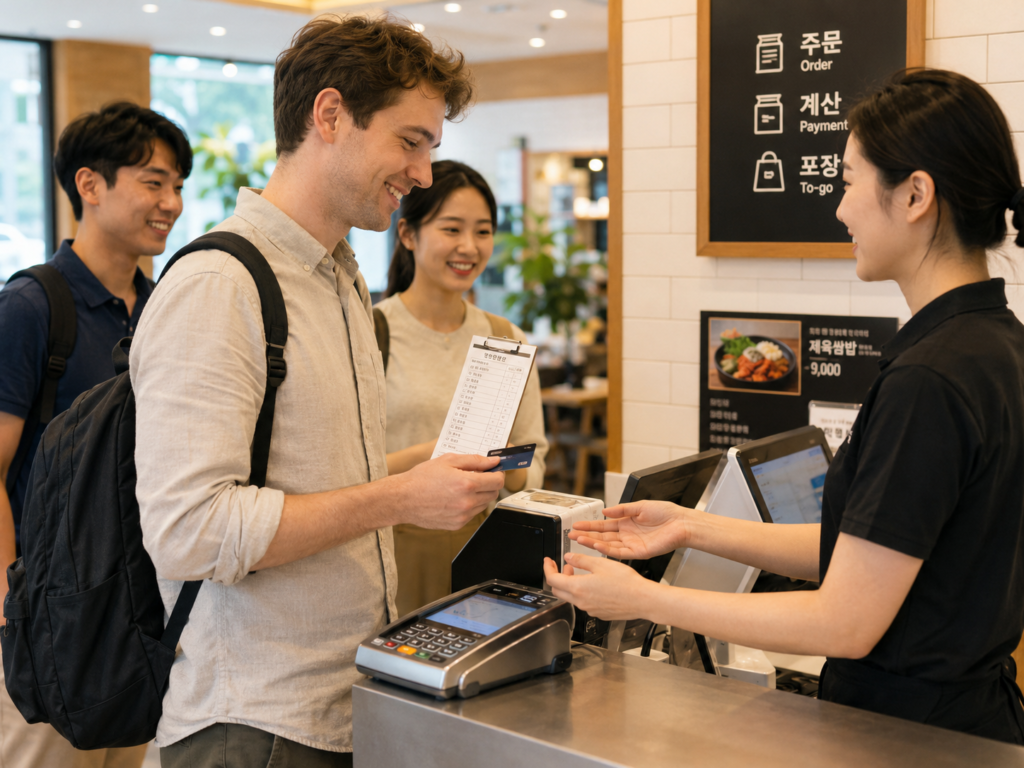
In many Korean restaurants, you pay at the counter after the meal.
After your first order, the staff may leave a paper order slip on the table. Extra dishes, drinks, or additional servings may be added to the same slip. When you are ready to leave, take it to the counter. This helps the staff find your order quickly and makes payment easier.
Some restaurants use table-order tablets instead. The tablet may only send your order, with payment made later at the counter. Other systems let you pay by card directly at the table when you order. Check whether the screen asks for payment before assuming that your order has already been paid.
Among Korean groups, one person paying first and receiving bank transfers later is common. This is usually faster than asking the restaurant to divide one bill into several payments.
Some restaurants accept separate cards if each person clearly says how much they want to pay. Others may not offer split payments, especially during busy hours.
Travelers without Korean banking or payment apps can simply use cash or another method they already share. Many groups divide the total equally unless one person ordered much more.
Check the table for a paper order slip before going to the counter, and take it with you if there is one. To ask about separate payment, say “Ttaro gyesan doenayo?” (따로 계산 되나요?)—“Can we pay separately?”
Final Thoughts: More People, More Korean Food Experiences
Dining with others in Korea is not only about ordering more food. It changes the kinds of dishes you can try, how the meal is served, and how everyone at the table takes part.
With two or more people, shared grills, large pots, and group-sized dishes become easier to order. You can also enjoy the full rhythm of a Korean meal: starting with the main dish, adding noodles or fried rice later, and sharing each part of the meal together.
The key is not to order everything at once. Check the serving size, begin with the main dish, and add more only after seeing the actual amount of food.
Once you understand which dishes are personal and which belong to the table, dining together in Korea feels much simpler—and the menu suddenly becomes far more interesting.
Frequently Asked Questions
Can We Choose Different Spice Levels for One Shared Dish?
Usually not. Shared dishes are cooked with one sauce, so the whole table normally chooses one spice level.
Can Vegetarians and Meat Eaters Share the Same Table?
Yes, but check the broth, sauces, and shared grill. A separate dish may be safer for strict vegetarians or vegans.
Can We Take Leftover Shared Food to Go?
Sometimes. Solid foods are easier to pack, while soups, raw seafood, and unlimited-refill items may not be available for takeout.
Ask “Pojang doenayo?” (포장 되나요?)—“Can this be packed to go?”
Do Children Count Toward the Minimum Order?
It depends on the restaurant and the child’s age. Buffets, unlimited-refill restaurants, and fixed-price menus may have separate children’s rules.
Related Guides
Solo Dining in Korea: 13 Tips for Honbap & Korean BBQ
Learn which Korean meals are easy to order alone and why some restaurants require two or more servings.
Korean BBQ Restaurants: What Surprises First-Time Visitors
Understand minimum orders, shared grills, side dishes, and other details that can surprise first-time visitors.
How to Pay in Korea in 2026: Cards, Cash & Transit
Find out how cards, mobile payments, cash, and restaurant bills work during a trip to Korea.