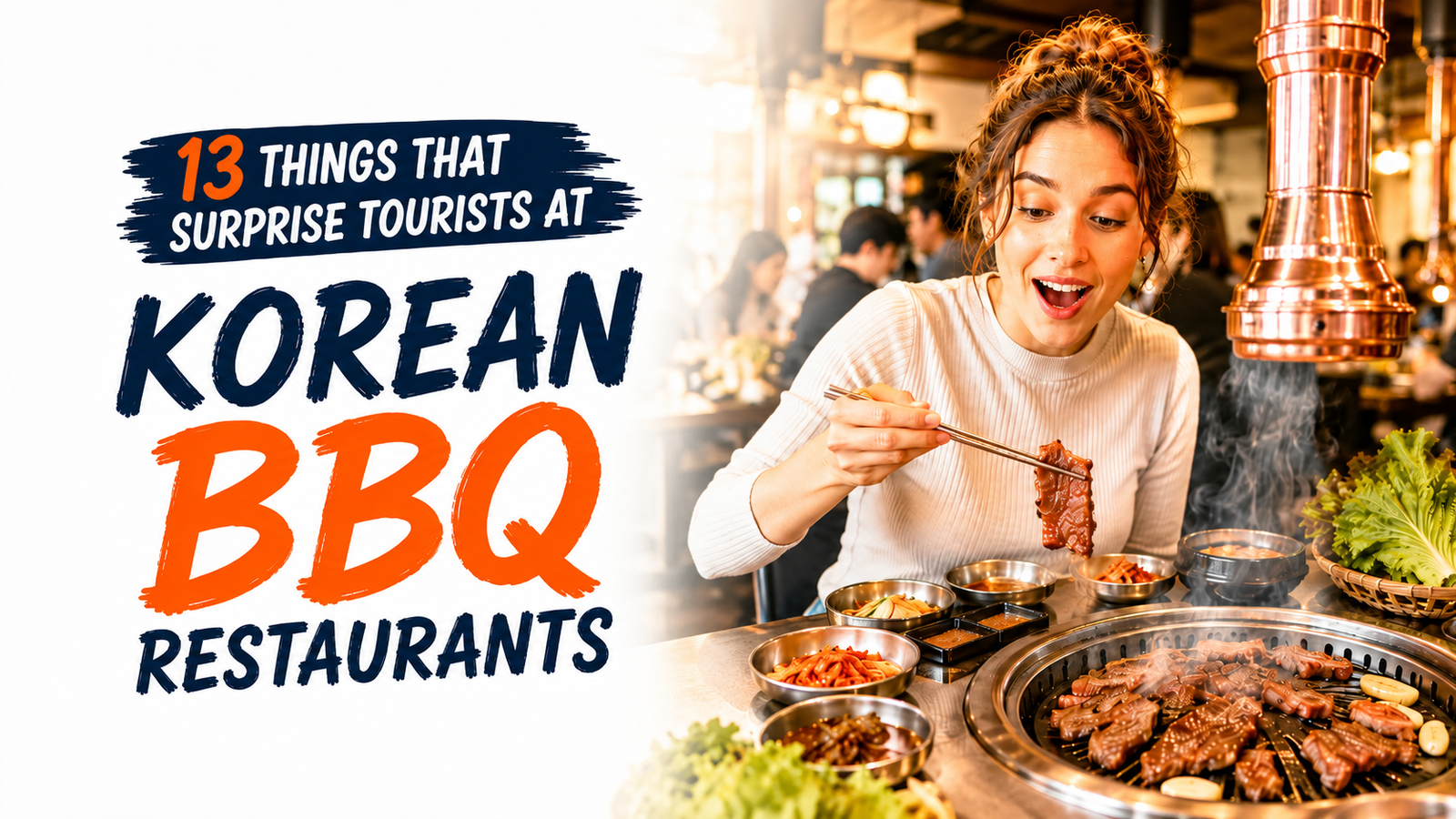
Korean BBQ restaurants are one of the most exciting food experiences for first-time visitors to Korea.
At first, Korean BBQ restaurants may look simple: meat, grill, lettuce, and sauces. But once you sit down, you quickly realize that Korean BBQ has its own rhythm. The details vary by restaurant, meat type, price level, and service style, so the table setup and the staff’s behavior are often your best guide.
Table of Contents
The First Surprise Is the Table Itself
1. Why Does Every Table Have Its Own Grill?
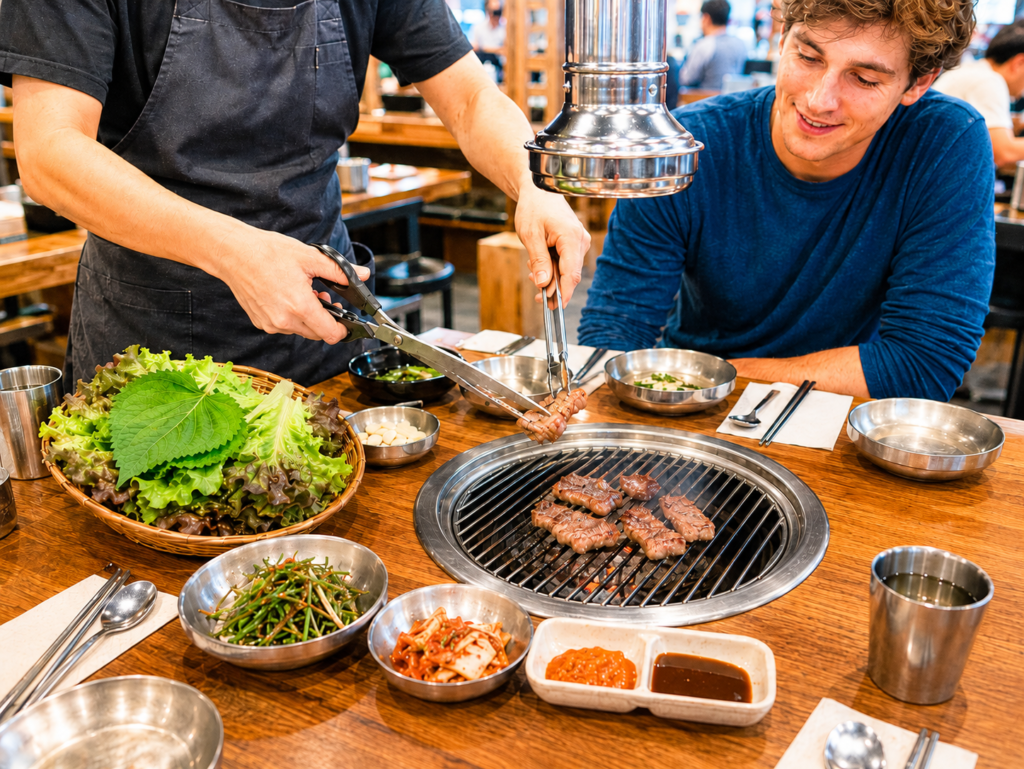
One of the first surprises at many Korean BBQ restaurants is the grill built into the table.
Instead of receiving every piece fully cooked from the kitchen, diners often grill and eat together at the table. Depending on the restaurant, the staff may cook the meat, one person in your group may handle the grill, or everyone may cook their own pieces.
Because you cook the meat at your table, every bite is served hot straight from the grill.
For Koreans, BBQ is about spending time together as much as eating good food.
If the staff or one person at the table starts grilling, watch how the table is working before reaching for the tongs. The grill setup and staff behavior usually make it clear who is expected to cook.
2. Why Are There So Many Small Side Dishes?
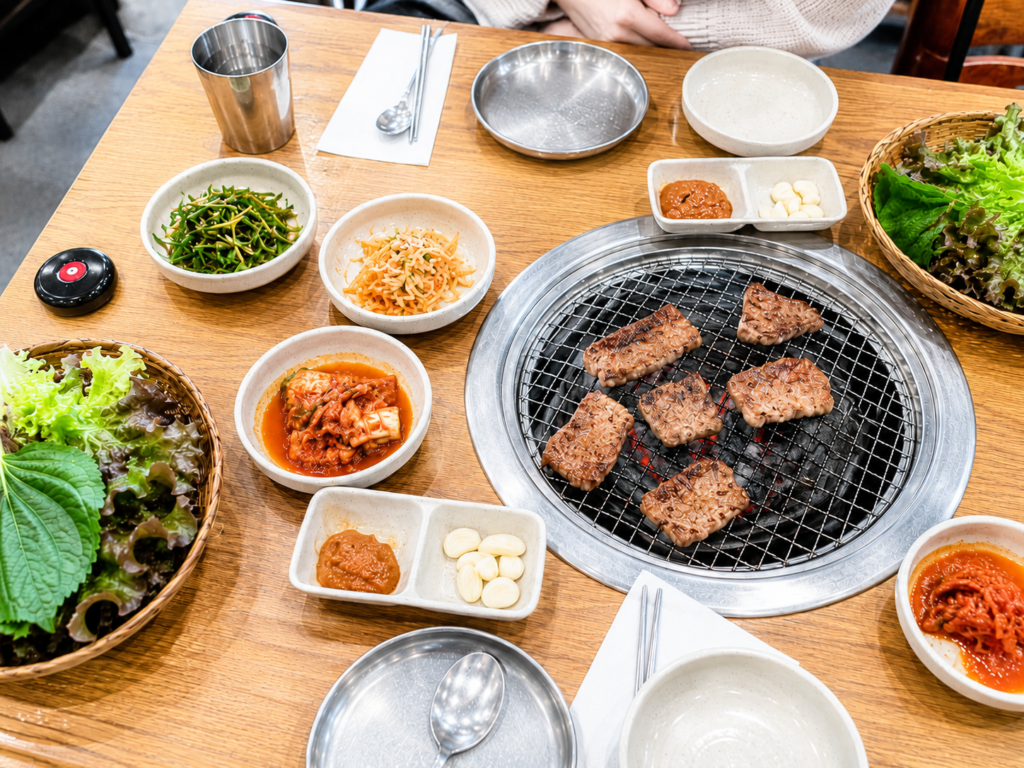
One of the first surprises is that the side dishes arrive before the meat. Before the grill even gets busy, your table is already filled with kimchi, vegetables, sauces, and other small dishes.
These side dishes, called banchan, are served to accompany the meal rather than as a separate appetizer course. What appears depends on the restaurant, but kimchi, vegetables, pickles, and sauces can add different flavors and textures to the meat.
For many diners, banchan make the table feel complete and provide fresh, sour, spicy, or crisp contrasts to rich grilled meat.
At many restaurants, basic banchan can be refilled at no extra charge, but premium or separately priced items may not be. Look for a self-service station or ask the staff before assuming every dish is unlimited.
3. Wait… Why Is the Staff Cooking My Meat?
Just as you’re about to start grilling, a staff member quietly picks up the tongs and takes over.
If it’s your first Korean BBQ, it can be a little surprising. At many restaurants, the staff cook the first batch of meat so it’s served at the right moment without being overcooked. Once it’s ready, they’ll place it on your plate or let you know it’s time to eat.
At many Korean BBQ restaurants, cooking the meat for guests is part of the dining experience. It helps ensure the meat is cooked properly, so everyone can enjoy it at its best.
Not every Korean BBQ restaurant grills the meat for you. At many casual restaurants, you’ll be expected to do the grilling yourself. If you’re not sure, simply wait a moment before picking up the tongs. The staff will either come over or let you know it’s up to you.
4. Why Is Everyone Cutting Meat with Scissors?
As the meat begins to cook, someone picks up a pair of kitchen scissors and starts cutting it right on the grill.
For many first-time visitors, it’s an unexpected sight. While kitchen scissors are common in many countries, they’re usually used in the kitchen. In Korea, they’re used right at the table to cut the meat into bite-sized pieces. Smaller pieces cook more evenly and are easier to eat as soon as they’re ready.
Koreans generally prefer BBQ cut into bite-sized pieces. Cutting the meat on the grill helps every piece cook evenly and makes it easy to enjoy each bite while it’s still hot.
The scissors aren’t just for meat. They’re often used to cut kimchi and even cold noodles, making them a normal part of the Korean BBQ experience.
5. Why Does Everyone Keep Adding More to Their BBQ?
Just when you think the meat is ready to eat, everyone starts placing grilled meat, garlic, kimchi, and a spoonful of ssamjang on top of a lettuce leaf before taking a bite.
A popular way to eat the meat is to build a ssam by combining it with lettuce, ssamjang, garlic, or banchan. The fresh leaf and sharper flavors can balance the richness of the meat, but wrapping every bite is a choice, not a rule.
The appeal of ssam is that each person can adjust the balance of meat, vegetables, sauce, and banchan to suit their own taste.
There isn’t one “correct” way to make a ssam. Use the ingredients you like, keep it small enough to eat comfortably, or skip the lettuce and enjoy the meat on its own.
6. Why Is the Kimchi on the Grill Too?
Just after the meat goes on the grill, someone places a few pieces of kimchi beside it.
For many first-time visitors, it’s another unexpected sight. Some restaurants and diners grill kimchi alongside fatty cuts such as pork belly. As it cooks, the kimchi softens and develops a richer flavor, but not every grill or restaurant is meant for cooking kimchi.
When the restaurant’s setup allows it, grilled kimchi can be an excellent partner for rich meat because its tangy flavor cuts through the fat.
Before placing kimchi on the grill, check whether the staff does it first or whether there is a designated area for it. If the setup allows it, try grilled kimchi with the meat in the same bite.
The Unwritten Rules of Korean BBQ
7. Who’s in Charge of the Grill?
As the meal begins, you may notice that one person naturally takes charge of the grill while everyone else waits.
There isn’t an official age-based rule. In practice, the person who is comfortable with the tongs often takes charge, while at staff-grilled restaurants the server may manage the timing. The goal is simply to keep the meat cooking evenly without several people moving it at once.
Letting one person manage the grill can keep the cooking consistent, but the role depends on the group and the restaurant rather than age or rank.
If someone naturally becomes the grill master, let them keep the rhythm unless they ask for help. At a Korean BBQ table, the easiest rule is often to look before acting.
8. Finished the Meat? The Meal Isn’t Over Yet.
You’ve finished the last piece of meat and think the meal is over. But someone suddenly orders a bowl of rice with doenjang-jjigae, kimchi-jjigae, fried rice, or even cold noodles.
Some groups like to add rice with jjigae, fried rice, or cold noodles after the meat, while others simply finish the meal there. The choice depends on appetite, the restaurant’s menu, and what everyone feels like eating.
A final dish can extend the meal and give the table a different flavor after rich grilled meat, but it is an optional extra rather than a required course.
These dishes are usually ordered separately, so do not expect them to arrive automatically. Check the menu and order one only if your group wants it; stopping after the meat is completely normal.
9. Meet Korea’s Unofficial “K-Dessert”
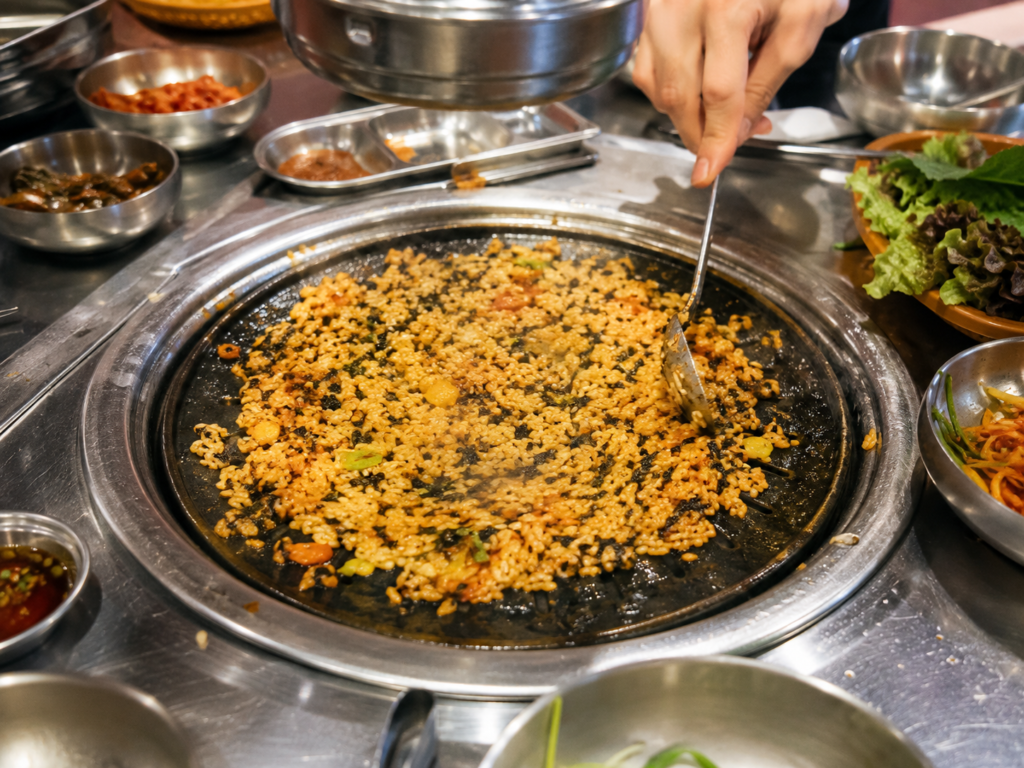
At restaurants that offer grill-top fried rice, the staff may spread rice, roasted seaweed flakes, vegetables, and sesame oil onto the cooking surface after the meat.
A few minutes later, your “dessert” is ready.
Some Koreans jokingly call this “K-Dessert.” It is not an official name or a universal ending, but a playful expression for a savory final dish. Where it is available, the rice picks up the sauce and toasted flavors from the cooking surface.
This style of fried rice is usually prepared on a flat grill or pan with the restaurant’s own seasoning. It is not suitable for every type of BBQ grill, so never add plain rice to the grill yourself.
Fried rice is not available at every Korean BBQ restaurant and is normally ordered separately. Check the menu or ask the staff; if it is not listed, choose another optional finish such as rice, jjigae, or noodles.
The Korean BBQ Details No One Tells You About
10. Where Have All the Jackets Gone?
You look around the restaurant and suddenly realize something—almost nobody has a jacket hanging on their chair.
There’s a good reason for that. Korean BBQ is delicious, but the smoky aroma can easily cling to your clothes. That’s why many Korean BBQ restaurants offer thoughtful solutions, such as storage compartments under the seats, baskets for your belongings, plastic covers for coats, or even fabric deodorizing spray near the exit.
These little details help you enjoy Korean BBQ without worrying about your clothes smelling like grilled meat for the rest of the day. It’s one of those thoughtful touches that many first-time visitors don’t expect.
Before sitting down, check under your seat or around your table. You may find a hidden storage compartment or a basket for your jacket. If not, don’t hesitate to ask the staff—many restaurants are happy to provide a coat cover or recommend the best place to keep your belongings.
11. Why Wait for the Staff’s Eye Contact? Just Ring the Bell.
You’re ready to order another plate of meat, but instead of waving or trying to catch a server’s attention, everyone simply presses a small bell on the table.
Many Korean BBQ restaurants have a table bell, tablet, or call button for service. If your table has one, use it when you need to order more or ask for help instead of trying to catch a server’s eye.
The table bell is part of what makes Korean BBQ service feel so efficient. Instead of checking every table over and over, the staff know exactly when someone needs help. It keeps the restaurant running smoothly while giving customers quick service whenever they need it.
Pressing a provided table bell is not rude. Some restaurants use a tablet instead, and others rely on staff service, so follow the system you see at your table.
12. Why Is There Raw Garlic on the Table?
At Korean BBQ, one of the first surprises is not the grill or the meat. It is the raw garlic on the table.
For many first-time visitors, this can feel unusual. In Korea, garlic is not just hidden inside sauces or marinades. At Korean BBQ, it often appears right on the table, ready to be added to a ssam with grilled meat, lettuce, ssamjang, and kimchi.
Some Koreans enjoy it raw for a stronger kick, while others place it on the grill first. Once grilled, garlic becomes softer, sweeter, and much easier to eat.
Garlic gives Korean BBQ a deeper, bolder flavor. It also helps balance the rich taste of grilled meat, especially when eaten inside a ssam.
If raw garlic feels too strong, grill it first. It becomes milder and slightly sweet, making it much easier to enjoy with Korean BBQ.
13. Why Does the Staff Suddenly Take Away Your Grill?
You’re still eating, the meat is still cooking, and then a staff member suddenly comes over and lifts the grill away.
For a first-time visitor, it can feel like the restaurant is clearing the table before you’re even finished. But don’t worry — your meal isn’t over. At many Korean BBQ restaurants, the staff keep an eye on the grill and change it when it gets too burnt, oily, or covered with charred bits from the meat. A clean grill helps the next pieces of meat cook better and taste cleaner.
Korean BBQ is all about timing and flavor. If the grill gets too burnt, the meat can start to taste bitter, and the smoke can become stronger. Changing the grill helps keep the meal comfortable and the meat tasting its best.
If the staff lifts the grill, give them space; they are usually replacing it with a clean one. If the surface becomes heavily burnt and no one notices, use the bell or ask the staff for a grill change rather than trying to replace it yourself.
Final Thoughts
Korean BBQ restaurants are more than just places to eat grilled meat.
At first, it looks simple: meat, grill, lettuce, sauce. But once the meal begins, you realize that Korean BBQ is full of small surprises.
Someone may take charge of the grill, kimchi may go onto the fire, raw garlic may appear on the table, and the group may order fried rice, jjigae, or cold noodles after the meat.
That is what makes Korean BBQ so memorable.
It is not just about eating grilled meat. It is also about reading the setup and following the flow of that particular table.
At a Korean BBQ table, the easiest rule is often to look before acting. The grill, tongs, side dishes, bell, and staff behavior usually tell you how that particular restaurant works. Once you understand those signals, the meal becomes much easier to enjoy—and a lot more fun.
Frequently Asked Questions
Do I have to cook the meat myself?
Not always. At some Korean BBQ restaurants, the staff come to your table and grill the meat for you. Other restaurants are more self-service, so you grill the meat yourself at the table. If you’re not sure, wait a moment before picking up the tongs.
Are side dishes free at Korean BBQ?
At many Korean BBQ restaurants in Korea, basic side dishes are included and can often be refilled for free. Some places bring refills to your table, while others have a self-service station.
Is it rude to press the table bell?
No. Pressing the bell is normal in many Korean restaurants. Use it when you need more meat, extra side dishes, drinks, or the bill.
Do I have to order rice, jjigae, or noodles at the end?
No. Rice, jjigae, fried rice, and cold noodles are optional and are usually ordered separately. Fried rice is not available at every Korean BBQ restaurant, so check the menu or ask the staff.
Related Guides
How to Order Food in Korea: 11 Practical Tips for Travelers
Use this guide for entering a restaurant, reading menus, ordering through a bell or kiosk, and paying at the end.
→ Read the ordering guide
Dining Together in Korea: Ordering, Sharing & Paying
Learn how inbun, shared dishes, group ordering, and payment work beyond the BBQ grill itself.
→ Read the dining together guide
Solo Dining in Korea: 13 Tips for Honbap & Korean BBQ
Find out where solo dining is easy and how minimum-order rules can affect Korean BBQ for one.
→ Read the solo dining guide