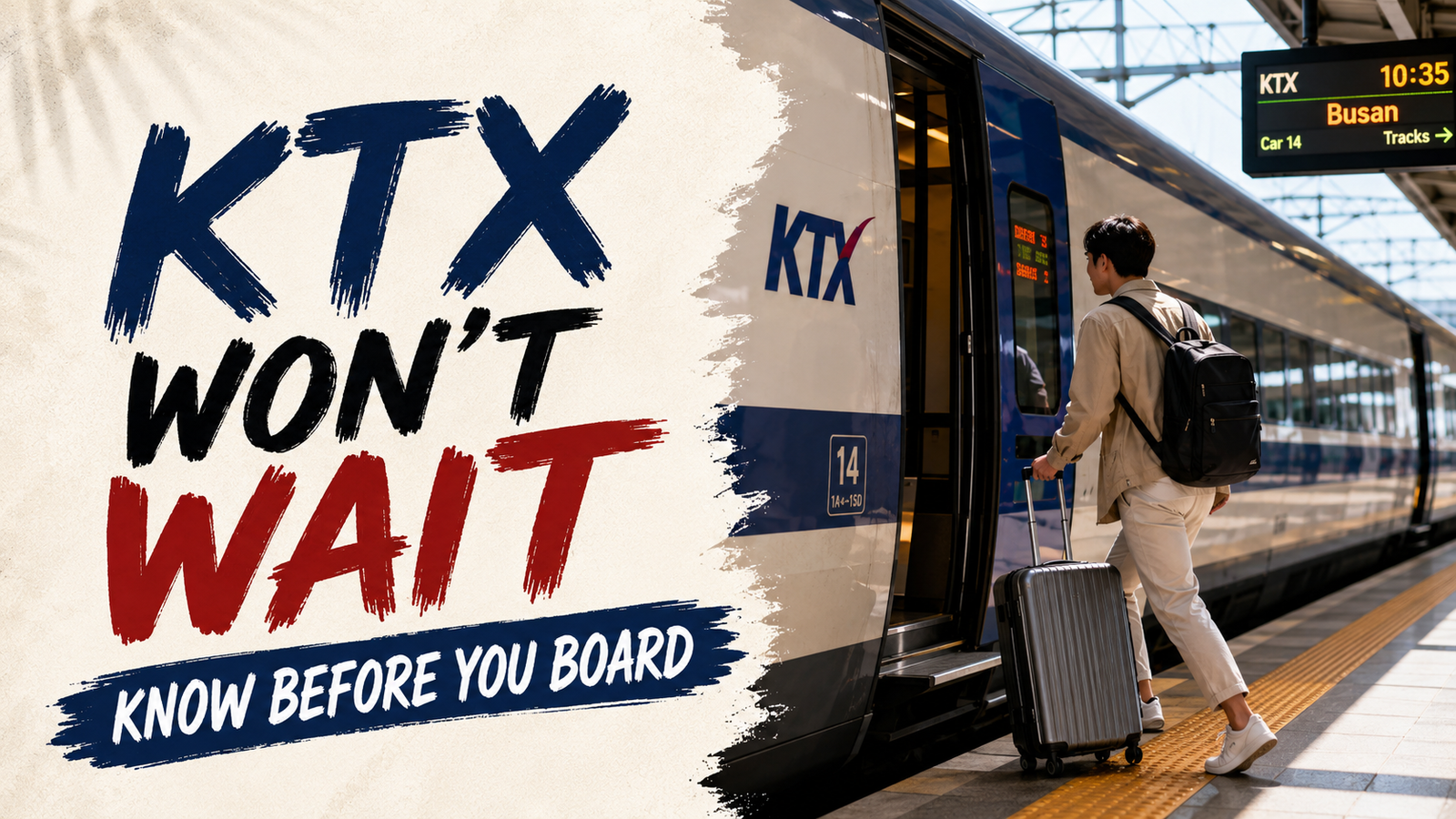
Taking the KTX in Korea is easy once you know what to expect on travel day. Booking a ticket is only the first step. You still need to reach the correct station, find your train number and platform, locate your car, and board before the doors close.
Unlike the subway, KTX passengers usually do not scan a ticket at a gate. This can make boarding feel surprisingly casual, but your ticket is valid only for the exact train, departure time, car, and seat shown on it. A train heading to the same city may not be yours.
Large stations take time to navigate, intermediate stops can be brief, and luggage space is limited. This guide follows the journey from station arrival to getting off, including departure boards, seats, luggage, onboard facilities, and what to do if you miss your train.
Still choosing your train or departure station? Start with our guide to booking KTX tickets in Korea.
Since September 1, 2026, this boarding guide also applies to KTX services departing from or arriving at Suseo Station. Former SRT high-speed services are now handled within the integrated KTX system through Korail+ and the official KORAIL website.
Table of Contents
The Station Feels Open—But the Clock Is Strict
1. How Early Should You Arrive at a KTX Station?
For your first journey, aim to arrive 20 to 30 minutes before departure. This is not an official check-in deadline, but it gives you enough time to confirm the platform, walk to the correct car, use the restroom, or buy food.
At large stations such as Seoul, Yongsan, and Busan, reaching the KTX platform from a subway exit or taxi drop-off point may take longer than expected. About 15 minutes may be enough at a small, familiar station with little luggage. Allow closer to 30 minutes on weekends, public holidays, or when carrying a large suitcase.
You do not need airport-style check-in, but arriving only a few minutes early is risky.
Local tip: Check the departure station on your ticket before leaving. Seoul, Yongsan, Cheongnyangni, Gwangmyeong, and Suseo are separate stations, and choosing the wrong one can cause you to miss your train.
2. Do You Need to Scan Your Ticket Before Boarding?
At most KTX stations, you can walk to the platform without scanning your ticket at a gate. There is usually no subway-style turnstile or airport-style checkpoint.
You still need a valid ticket for the exact train, departure time, car, and seat shown on it. Conductors may verify your reservation electronically or ask to see the ticket during the journey.
Keep the original ticket available until you leave your destination station. For bookings made through Korail+, keep the active mobile ticket available in the app. A screenshot can be useful for remembering the train number, car, seat, or departure time if your connection is unstable, but do not rely on a screenshot as a replacement for the original ticket if staff need to verify your reservation.
Instead of looking for a scanner, compare your ticket with the departure board.
Why it matters: A ticket for another KTX does not allow you to board any train going to the same city.
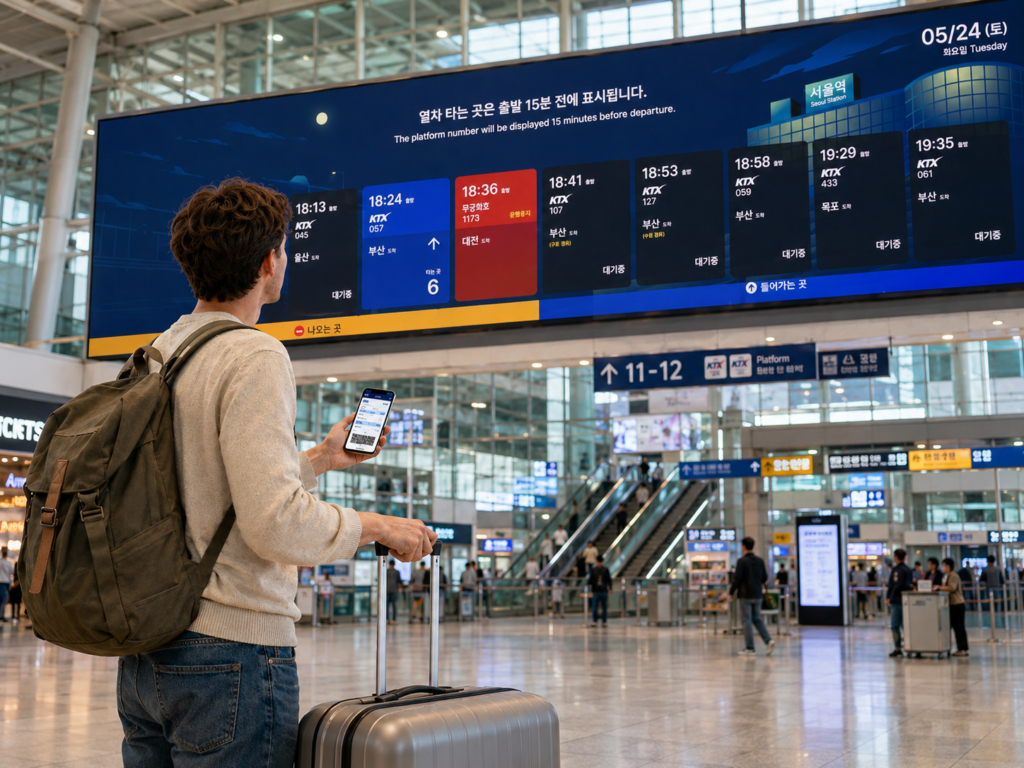
3. How Do You Read the Departure Board Without Following the Wrong Train?
Do not identify your KTX by destination alone. Several trains may travel to the same city within a few minutes of each other.
First match the train number on your ticket. Then confirm the departure time, destination, and platform on the station board.
Use this order:
Train number → Departure time → Destination → Platform
The platform may appear only shortly before departure, and it can change. Check the latest display instead of relying on an earlier announcement or following other passengers.
After reaching the platform, confirm the train information once more.
Local tip: Take a photo of the board after the platform number appears.
From the Departure Board to the Right Seat
4. How Do You Find the Right Platform, Car, and Seat?
Check the car number on your ticket before the train arrives. KTX trains are long, and boarding through the nearest door may leave you walking through several cars with your luggage.
Platform signs, electronic displays, or floor markings show where each car is expected to stop. Wait near your car’s position, then confirm the number beside the train door before boarding.
Your ticket lists:
- Car number: the car you should enter
- Seat number: your assigned seat inside it
For example, Car 8, Seat 6A means you should enter Car 8 and find seat 6A.
Train layouts vary, so follow the information on your ticket and the signs inside the train. If you enter the neighboring car, you can usually walk through the connecting door.
Local tip: Find your car position before the platform becomes crowded.
5. Why Should You Be Ready Before the Train Stops?
At a starting station, the KTX may already be waiting. At an intermediate station, it may stop only briefly.
Move to your car’s boarding position in advance, keep your ticket ready, and stay with your group. Let passengers get off first, then confirm the car number and board promptly.
If departure is very close and your assigned car is far away, do not run along a crowded platform or assume every car is internally connected in the way you expect. Follow the platform signs and, if you are unsure where to board, ask station or train staff immediately.
Why it matters: Staff do not check whether every passenger has boarded. The train leaves on schedule.
Luggage, Seats, and Life On Board
6. Where Should You Put a Large Suitcase on the KTX?
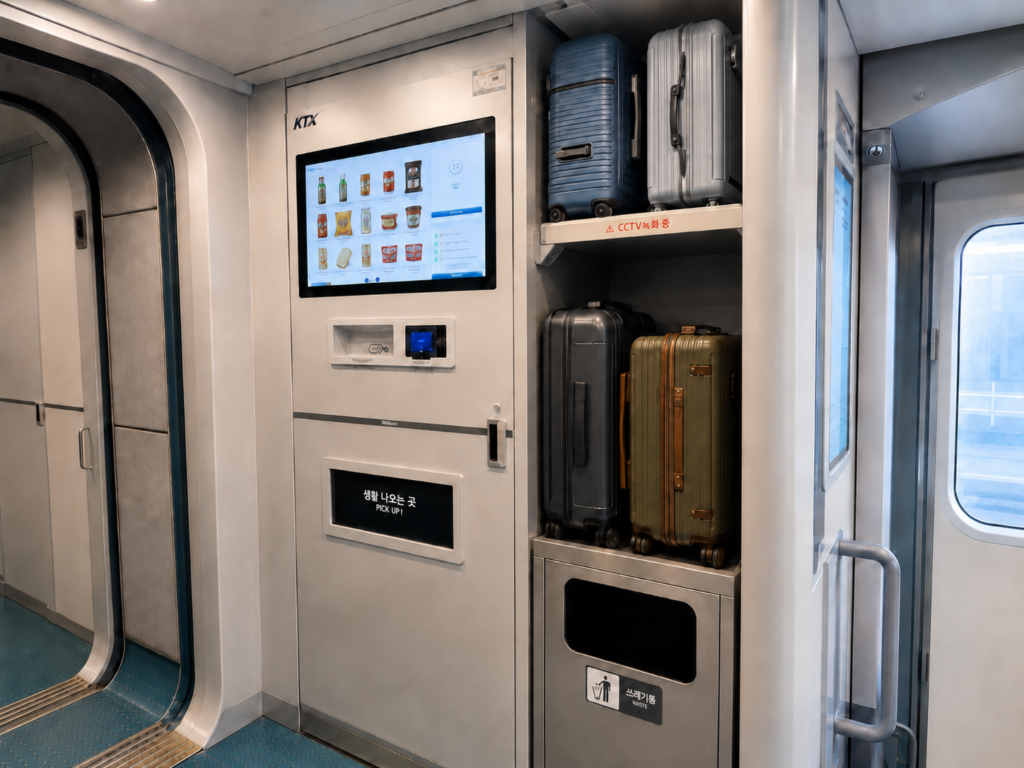
Small bags can go on the overhead rack. Large suitcases should be placed in the shared luggage areas, usually near the ends of the cars.
These spaces are not reserved and may fill quickly. If no space is available, do not leave your suitcase in the aisle, in front of a door, or near emergency equipment. Ask a conductor where it can be stored safely.
KTX does not provide airline-style checked baggage. You must carry and collect your own luggage. Keep valuables such as your passport, wallet, medication, and electronics with you at your seat.
KORAIL’s official carry-on rules state that each passenger should be able to carry their own luggage, with no more than two pieces. Luggage must not occupy a passenger seat or block the aisle.
Why it matters: Luggage space is limited, and room for a large suitcase is not guaranteed.
7. Will Your Seat Always Face Forward—and How Do Window and Aisle Seats Work?
Your seat may not always face the direction of travel. Seat orientation varies by KTX type, and some trains have rotating seats.
Standard-class cars usually have two seats on each side of the aisle. Check the seat number and letter on your ticket rather than guessing which seat is by the window.
A window seat may not line up perfectly with a full window. If someone is sitting in your seat, compare both tickets before asking a conductor for help.
Do not move to an empty seat without checking. It may be reserved by a passenger boarding at a later station.
Local tip: Check behind you before reclining your seat, especially when the passenger behind is using the tray table.
8. Can You Eat, Use Wi-Fi, Charge Your Phone, and Find the Toilet?
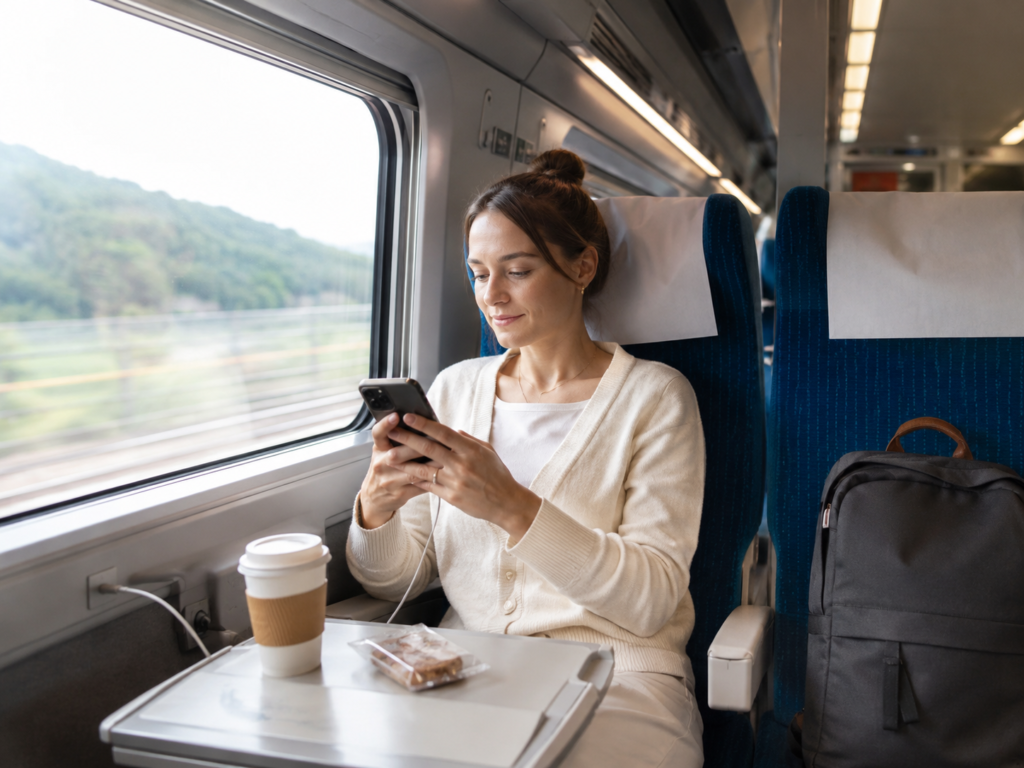
You can bring food and drinks onto the KTX and eat at your seat. Avoid strong-smelling foods, keep noise low, and take your trash with you.
Free Wi-Fi is available, but the connection may slow down on crowded trains or in some areas. Keep mobile data as a backup.
Power outlets are available, but their location varies by train type and may be near the wall, between windows, or under the seats.
Toilets are located near the ends of certain cars. Follow the signs inside the train and avoid waiting until just before your stop.
Local tip: Keep phone calls brief. If necessary, move to the vestibule near the doors without blocking the doorway.
Before Your Stop—and If Things Go Wrong
9. What Should You Prepare Before Your Stop?
When your destination is next, begin preparing before the train arrives.
Check the seat pocket, tray table, floor, and charging outlet. Collect bags from the overhead rack and retrieve large suitcases from the luggage area.
If you notice the missing item immediately after getting off, report it to station staff as soon as possible. Knowing the train number, car number, and seat number can make the search easier.
If you notice the item later, check KORAIL’s official lost-and-found guide and search the Korean National Police Agency’s LOST112 system.
Keep the aisle and doorway clear while moving your luggage. Before leaving the train, confirm your station exit and onward route.
Local tip: Set an alarm a few minutes before arrival if you are tired or wearing headphones.
10. What Should You Do If You Miss Your KTX?
Do not use the same ticket for the next train. A KTX ticket is valid only for the train and departure time shown on it.
If you know before departure that you will miss the train, cancel or refund the ticket as soon as possible through Korail+, the official KORAIL website, or the service where you purchased it.
After the scheduled departure time, KORAIL normally requires refund requests to be handled at a station ticket counter. However, for KTX tickets purchased through Korail+, a refund request may be available in the app for up to 10 minutes after departure if the system confirms that you are not on the train.
Refund fees depend on when you cancel, and a refund cannot be requested after the scheduled arrival time shown on the ticket. See KORAIL’s official refund guide for details.
You still need a new valid ticket for any later train you take.
The next train may also be sold out, especially on weekends and public holidays. Tickets purchased through another booking service must usually be changed or refunded through that company.
Why it matters: A missed ticket does not automatically transfer to the next KTX.
Final Thoughts
Taking the KTX in Korea is not complicated, but it rewards travelers who pay attention to small details.
There may be no ticket gate, no airport-style check-in, and no staff member confirming that every passenger has boarded. Even so, your train number, platform, car, seat, and departure time all matter.
Arrive with enough time, move to the correct boarding position before the train arrives, and keep your luggage where it does not block other passengers. Before your stop, gather your belongings and check what you need to do after leaving the station.
Once you understand this sequence, the KTX becomes one of the fastest, easiest, and most comfortable ways to travel between cities in Korea.
Frequently Asked Questions
Do I Need to Print My KTX Ticket?
Usually not. A valid mobile ticket in Korail+ or the ticket issued through your online reservation is normally sufficient. Keep the original ticket available until your journey is complete. Saving a screenshot as a backup can help if your phone loses its connection, but it should not replace the original ticket.
Can I Bring a Large Suitcase on the KTX?
Yes. Large suitcases can be placed in the shared luggage areas, usually near the ends of the cars. These spaces are limited and cannot be reserved, so ask a conductor for help if they are full. KORAIL allows passengers to carry up to two pieces of luggage that they can handle themselves. Luggage must not occupy a seat or block the aisle.
Can I Eat Food on the KTX?
Yes. You can bring food and drinks and eat at your seat. Avoid strong-smelling food, keep noise low, and take your trash with you when you leave.
Can I Take the Next KTX If I Miss My Train?
No. Your ticket does not automatically transfer to the next train. Before departure, cancel or refund the ticket as soon as possible. After departure, station-counter rules normally apply, although Korail+ may allow a KTX refund request within 10 minutes when the system confirms you are not aboard. You still need a new valid ticket for the later train.
Related Guides
How to Book KTX Tickets in Korea After the KTX–SRT Integration
Learn how to use Korail+, compare Seoul and Suseo stations, pay with a foreign card, and book high-speed trains after the 2026 integration.
Too Early to Check In? Here’s Where to Leave Your Luggage in Korea
Compare hotel storage, station lockers, T-Luggage, and other options when you do not want to carry your suitcase all day.
Why Getting Around Korea Feels Confusing Even When You Have a Map
Plan the subway, bus, taxi, or airport connection you will need after leaving the KTX station.