

Chuseok travel in Korea is a little different from traveling at any other time of year. Train tickets become harder to find, highways get busier, and some small restaurants and neighborhood shops close for a few days. At the same time, Seoul often feels quieter as many residents leave the city to visit their hometowns.
For travel planning in Korea, the bigger question is often not whether the country is “open,” but when everyone is moving at once. A destination may still be operating and yet be a poor plan if trains are sold out or the highways are heavily congested.
Chuseok in Korea is one of the country’s most important traditional holidays. Families gather to give thanks for the year’s harvest, honor their ancestors through a memorial ceremony called charye, and share dishes such as songpyeon, jeon, and galbijjim. In 2026, Chuseok Day falls on September 25, with the official holiday running from September 24 to 26.
For international visitors, Chuseok does not mean that Korea completely shuts down. Public transportation continues to operate, and many major attractions, shopping areas, and restaurants remain open. However, opening hours may change, and traveling between cities requires more planning than usual.
With a little preparation, Chuseok can actually be an interesting time to visit. You may find a calmer side of Seoul, join special cultural programs, and see how a traditional family holiday shapes modern life in Korea. This guide explains what to expect—from train reservations and holiday closures to Chuseok food and practical travel planning.
Why Does Chuseok Change the Way Korea Travels?
Chuseok brings one of Korea’s largest annual movements of people. To understand why train tickets sell out and highways become crowded, it helps to first understand what the holiday means to Korean families.
1. When Is Chuseok in 2026, and What Does the Holiday Mean?
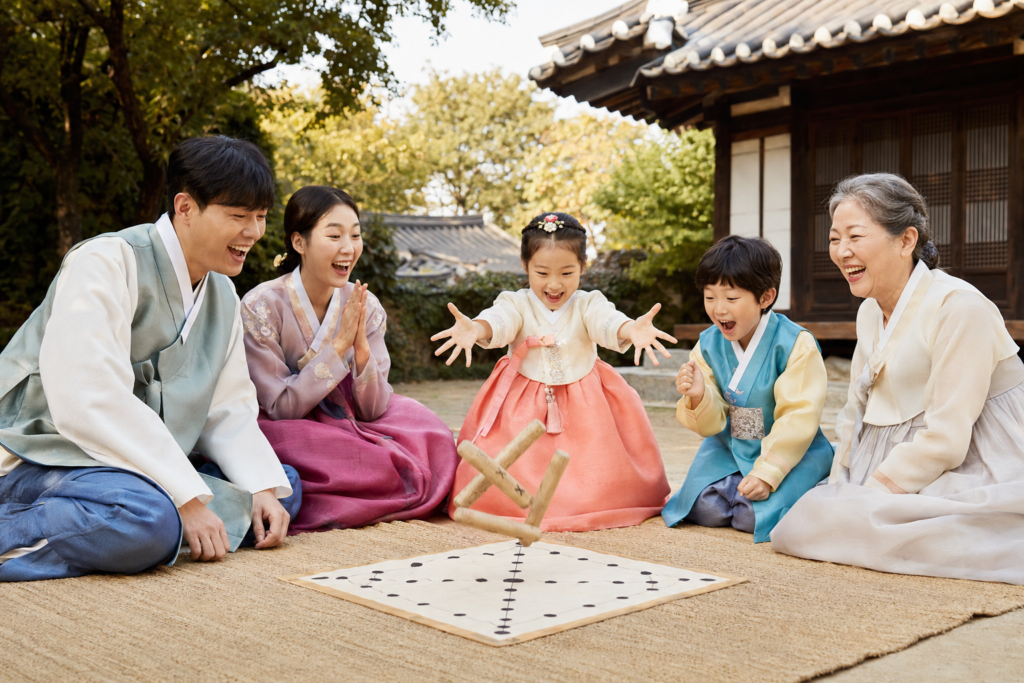
In 2026, Chuseok Day falls on Friday, September 25. The official public holiday runs from Thursday, September 24, to Saturday, September 26. Since Sunday follows immediately afterward, many Koreans will have four consecutive days off from September 24 to 27.
Chuseok is celebrated on the 15th day of the eighth month of the lunar calendar, so its date changes every year. It began as a celebration of the autumn harvest. Traditionally, families gathered to give thanks for the year’s crops, prepare seasonal food, and honor their ancestors.
Even today, many families begin Chuseok morning with charye, a memorial ceremony in which food is prepared and placed on a table for their ancestors. Some also visit ancestral graves for seongmyo, tidying the area and paying their respects. However, not every Korean family follows these customs today. Some hold simpler ceremonies, while others skip them and spend the holiday sharing a meal, resting, or taking a family trip.
Chuseok is often described as “Korean Thanksgiving” because both holidays center on family, food, and gratitude. However, Chuseok is not simply the Korean version of American Thanksgiving. It follows the lunar calendar and has much deeper ties to the harvest, ancestral remembrance, and family hometowns.
This strong focus on family explains why travel patterns change so dramatically during Chuseok. Within just a few days, millions of people leave Seoul and other major cities to visit their parents or return to their family’s hometowns. As a result, parts of Seoul may feel unusually quiet while intercity transportation becomes extremely crowded.
2. Why Do KTX Tickets Sell Out So Quickly?
During Chuseok, millions of people travel between major cities and their hometowns within the same few days. Demand is especially high for trains leaving Seoul before Chuseok and returning near the end of the holiday. Popular routes to Busan, Daegu, Daejeon, Gwangju, and Mokpo can sell out quickly, with convenient departure times disappearing first.
The 2026 Chuseok special reservation covers trains operating from September 23 to 27. According to KORAIL’s official 2026 Chuseok reservation announcement, the reservation process begins September 3.
Advance reservations for eligible passengers run September 3–4 from 9:00 a.m. to 3:00 p.m. General reservations run September 7–11 from 7:00 a.m. to 1:00 p.m., with booking dates divided by train type and route:
- September 7: Regular trains on all routes
- September 8: KTX on Gyeongjeon, Gangneung, Donghae, Jungang, and Jungbunaeryuk routes
- September 9: KTX on Honam and Jeolla routes
- September 10: KTX services departing from or arriving at Suseo on Gyeongbu, Gyeongjeon, Donghae, Honam, and Jeolla routes
- September 11: Gyeongbu Line KTX
For the 2026 Chuseok holiday reservation window, KORAIL says an integrated KORAIL membership is required. Existing KORAIL members were automatically converted. People who previously had only an SR membership need to join or convert through Korail+ or the KORAIL website.
This is different from ordinary train booking, so travelers planning an intercity trip during September 23–27 should check the special holiday reservation page rather than relying on the usual one-month booking schedule. Reservations are handled through Korail+ and the KORAIL Chuseok reservation webpage.
If KTX travel is essential to your itinerary, prepare several departure times and alternative routes in advance.
3. What Should You Do If KTX Tickets Are Sold Out?
A sold-out KTX does not necessarily mean you must cancel your trip. Check other Korail trains, including ITX-Saemaeul and Mugunghwa, and search for seats from nearby stations or at less popular departure times. Canceled seats may become available again, so check the Korail website or app regularly.
KORAIL states that reserved Chuseok tickets must be paid for during the designated payment period. General-reservation tickets must be paid for from September 12 at 00:00 through September 15. Advance reservations for eligible passengers have a payment period from September 12 at 00:00 through September 18. Tickets not paid for by the deadline are automatically canceled and can be reassigned to waiting-list passengers.
Express buses can serve as a backup when no suitable train is available. However, bus tickets are also in high demand during Chuseok, and highway congestion makes arrival times less reliable.
Do not build your itinerary around the possibility of finding a last-minute cancellation. Whenever possible, secure your transportation in advance and reach your main destination before the holiday travel rush begins.
If your intercity ticket is still not secured as the holiday approaches, changing the destination—or keeping that day in Seoul—is often safer than planning the day around a seat that may never become available.
4. Is Driving or Taking an Express Bus a Good Idea?
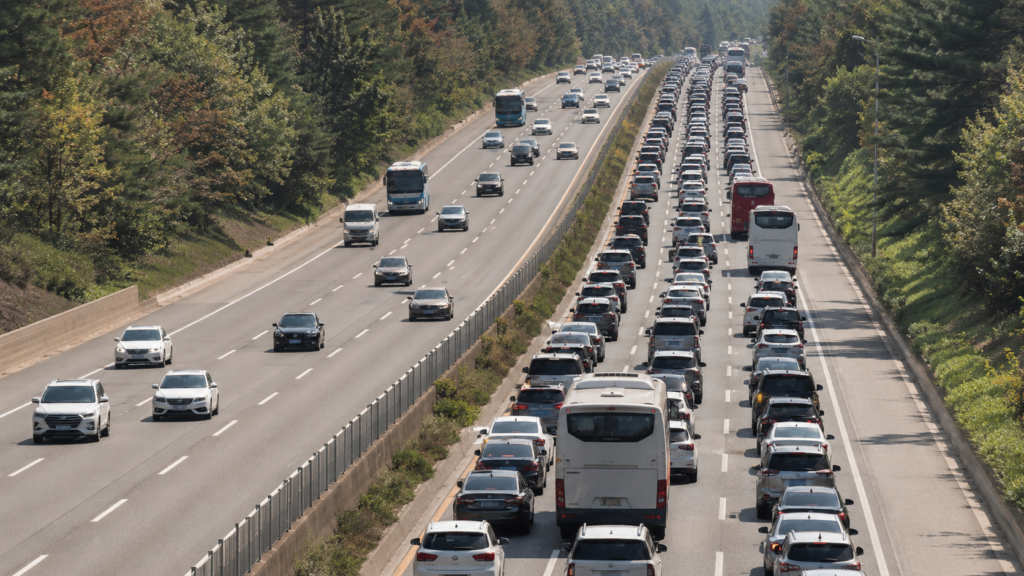
Driving or taking a bus during Chuseok can seriously disrupt your itinerary. Highways are especially congested when people leave major cities before the holiday and return near the end of the break. A trip that normally takes one or two hours may take several hours longer.
Express and intercity bus companies may add extra services during Chuseok, but the buses still use the same congested highways. More departures do not guarantee an on-time arrival, so avoid road travel on days when you have a fixed check-in time, an important tour, or a flight.
If road travel is unavoidable, leave early and keep the rest of the day flexible. Allow several extra hours and leave a generous buffer before anything you cannot afford to miss. Take the train whenever possible. If you are staying in Seoul, use the subway and postpone long-distance travel until the holiday rush is over.
5. Do Subways and Local Buses Operate During Chuseok?
Yes. Subways and local buses continue to operate during Chuseok, making travel within Seoul much easier than intercity travel. The subway is generally the most reliable way to reach major tourist areas without getting caught in holiday road traffic.
However, holiday timetables may differ from regular weekday service. Seoul sometimes extends subway or bus operating hours during Chuseok, but the dates, routes, and last-train times change each year. Check the latest notice from the transit operator or use Naver Map or Kakao Map before traveling, especially late at night.
If you plan to stay in Seoul during Chuseok, choosing accommodation within walking distance of a subway station will make your itinerary much easier to manage.
What Stays Open—and What Closes—During Chuseok?
6. Are Restaurants and Shops Open During Chuseok?
Korea does not completely shut down during Chuseok. Department stores, shopping malls, convenience stores, chain cafés, and restaurants in major tourist areas often remain open during the holiday. However, some may close on Chuseok Day or operate with shorter hours.
Small restaurants, traditional markets, and neighborhood shops are more likely to close for one or several days. Online business hours may not reflect temporary holiday closures, so check recent notices or contact the business before making a special trip.
Before making a special trip, compare recent Naver Place or Kakao Map information with the business’s latest notice or social post, when available. Holiday hours can change temporarily, so treat map listings—including older Google opening hours—as a starting point and check again close to your visit.
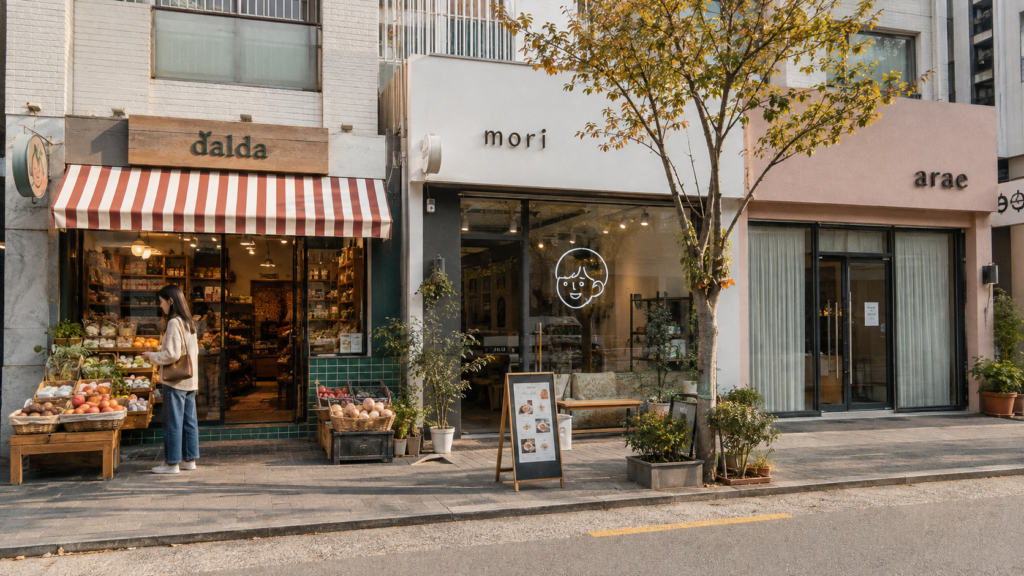
To prepare for unexpected closures, save several dining options near your hotel. Convenience stores are also useful for simple meals, snacks, and travel essentials when nearby businesses are closed.
7. Are Tourist Attractions Open During Chuseok?
Many major tourist attractions remain open for at least part of the Chuseok holiday. Royal palaces, museums, folk villages, theme parks, and other popular sites may also offer traditional performances, games, or craft activities.
However, there is no single holiday schedule followed by every attraction. Some museums and privately operated sites close on Chuseok Day, while others close on a different day after the holiday. Special exhibitions and children’s facilities may require separate reservations even when the main attraction is open.
Check each attraction’s official website shortly before your visit. If advance reservations are required, book early and save an alternative nearby in case opening hours or programs change.
8. Are Banks, Pharmacies, and Hospitals Open During Chuseok?
Most bank branches and public offices close during the Chuseok holiday, although ATMs and mobile banking services remain available. International travelers should still carry some Korean won because certain traditional markets and small businesses may prefer cash or have limited payment options.
Many neighborhood clinics and pharmacies also close or operate limited hours. Hospital emergency rooms remain open, and designated medical facilities and pharmacies provide holiday service on specific schedules.
Use the official E-Gen emergency medical portal to search for an open hospital or pharmacy, and confirm the hours before visiting. For an emergency requiring an ambulance, fire response, or rescue, call 119. Travelers who need multilingual assistance can also contact the 1330 Korea Travel Helpline.
Bring enough essential medication for the entire holiday and keep your travel insurance policy number and assistance contact details easily accessible.
What Can Travelers Experience During Chuseok?
9. What Foods Should You Try During Chuseok?
Songpyeon is the best-known Chuseok food. These small, half-moon-shaped rice cakes contain fillings such as sesame seeds and sugar, beans, or chestnuts and are traditionally steamed over pine needles. Families have long made them together, although many Koreans now buy them from markets or local rice cake shops.
Other common holiday dishes include jeon, galbijjim, japchae, and seasonal fruit. However, there is no single Chuseok menu shared by every household, and many holiday dishes are prepared at home rather than offered as restaurant specials.
Travelers can look for songpyeon at traditional markets, department-store food halls, and neighborhood rice cake shops. Buy a small amount and follow the shop’s storage instructions. Songpyeon is best eaten fresh; refrigeration makes rice cakes hard, while freezing is usually better if they must be stored longer.
10. Where Can Travelers Experience Chuseok Traditions?
Travelers are unlikely to join a private family celebration, but they can still experience Chuseok traditions at public cultural sites. Palaces, folk villages, museums, and cultural centers may organize traditional games, performances, craft workshops, or hanbok activities during the holiday.
In Seoul, check the official websites of the National Folk Museum of Korea and Namsangol Hanok Village for current programs and reservation information. The National Folk Museum of Korea is scheduled to close on Chuseok Day, September 25, 2026, so do not assume that every cultural venue will be open throughout the holiday.
Detailed programs and operating hours can be announced or changed close to the event. Check the official websites again shortly before your visit and confirm whether individual activities require advance reservations.
Rather than filling every day with scheduled events, choose one or two programs that genuinely interest you. Leave some time to walk through a palace district, explore a hanok neighborhood, or enjoy the quieter atmosphere of Seoul.
11. Is There Any Chuseok Etiquette Travelers Should Know?
Chuseok is primarily a private family holiday, so travelers do not need to follow special rules while sightseeing. A simple “Chuseok jal bonaeseyo,” meaning “Have a good Chuseok,” is a friendly greeting you can use with hotel staff, shopkeepers, or Korean acquaintances before the holiday.
If someone invites you to a family gathering, bringing a modest gift such as fruit, dessert, or tea is a thoughtful gesture. Follow your host’s lead during meals and family traditions, especially if the household holds a memorial rite.
Avoid treating memorial ceremonies or people visiting ancestral graves as tourist attractions. Ask permission before taking photographs at family events, religious sites, or memorial rituals. Respectful curiosity is welcome, but Chuseok remains a personal and meaningful occasion for many Koreans.
2026 Chuseok Travel Checklist
Before finalizing your itinerary, use this checklist to avoid the most common Chuseok travel problems:
- Check how the September 24–27 holiday period affects your travel dates.
- Book intercity trains, express buses, and domestic flights as early as possible. If you plan to take an intercity train between September 23 and 27, check the 2026 Chuseok special reservation schedule in Korail+ or on the KORAIL website instead of relying on the normal one-month booking window.
- Do not plan a long-distance trip around the possibility of finding a canceled ticket.
- If possible, reach your main destination before the holiday travel rush begins.
- Avoid long-distance road travel on days with an important tour, fixed check-in time, or flight.
- Leave a generous buffer between intercity transportation and anything you cannot afford to miss.
- Choose accommodation near a subway station if you plan to stay in Seoul.
- Confirm holiday hours on the official websites of restaurants, attractions, and cultural venues.
- Save several backup dining options near your hotel.
- Carry some Korean won and bring enough essential medication for the entire holiday.
- Keep your travel insurance details and emergency numbers easily accessible.
- Download Naver Map or Kakao Map and arrange a reliable eSIM or mobile data connection before traveling.
Frequently Asked Questions About Chuseok Travel
When is Chuseok in Korea in 2026?
Chuseok Day is Friday, September 25, 2026. The official three-day public holiday runs from Thursday, September 24, through Saturday, September 26, 2026.
Is Chuseok a good time to visit Seoul?
Yes, if you prefer a quieter city and plan ahead for holiday closures. Some residential and business districts may feel unusually calm as residents leave Seoul to visit family. Major attractions and tourist areas can still be busy, however, and individual businesses may operate on reduced hours.
Can tourists travel on Chuseok Day?
Yes, but transportation and opening hours require careful planning. Subways and local buses continue to operate, while intercity trains, express buses, and domestic flights may be heavily booked. Intercity train travel during September 23–27 may require the special Chuseok reservation process. Confirm every important reservation and check official holiday schedules shortly before traveling.
Does everything close on Chuseok Day in Korea?
No. Convenience stores, some restaurants, shopping malls, attractions, and businesses in major tourist areas may remain open. Smaller family-run businesses, traditional markets, banks, and public offices are more likely to close or reduce their hours. Check each place individually rather than assuming it will be open.
Is Seoul empty during Chuseok?
Not completely. Some neighborhoods and commuter districts become quieter because many residents leave the city, but palaces, parks, shopping areas, and holiday events may attract local visitors and tourists. The contrast between quiet streets and crowded attractions is part of Seoul’s unusual Chuseok atmosphere.
Will Chuseok affect travel to or from the airport?
It can. Airport trains provide a more predictable journey than road transportation, while taxis and airport buses may be delayed by highway traffic. Leave extra time for your airport transfer, especially near the beginning or end of the holiday, and avoid connecting a long-distance road journey directly to an international flight.
Related Guides
How to Book KTX Tickets in Korea 2026: Korail+ Guide
Planning an intercity trip during Chuseok? Learn how to book train tickets, choose the right station, and prepare for sold-out routes.
→ Read the Korea train booking guide
Google Maps in Korea 2026: Naver Map, KakaoMap & What Changed
Holiday hours and transportation routes can change during Chuseok. Learn how Naver Map and KakaoMap help you check places and navigate Korea more easily.
→ Read the Korea map guide
Official 2026 Korean Public Holiday Information
Confirm the official 2026 Chuseok dates and other Korean public holidays before finalizing your travel schedule.
→ Check Korea’s official public holiday guide