Korean summer culture can look a little unusual if you are seeing it for the first time.
Families disappear into mountain valleys and spend hours beside icy streams. Beach towns suddenly fill with vacationers. Some people check into a hotel not to explore a new city, but simply to swim, eat, and stay inside. After sunset, the Hangang fills with picnic mats and food deliveries.
And on some of the hottest days of the year, people line up for steaming bowls of samgyetang (삼계탕).
This is Korean piseo (피서) culture — literally, escaping the heat. But piseo is not just about finding somewhere cooler. It is shaped by Korea’s geography, food culture, and the way people change their routines in summer.
This is not simply a list of places to cool down. It is what summer actually looks like when you live in Korea.
Where Do Koreans Go When Summer Gets Really Hot?
1. Why Are Mountain Valleys Such a Korean Summer Tradition?
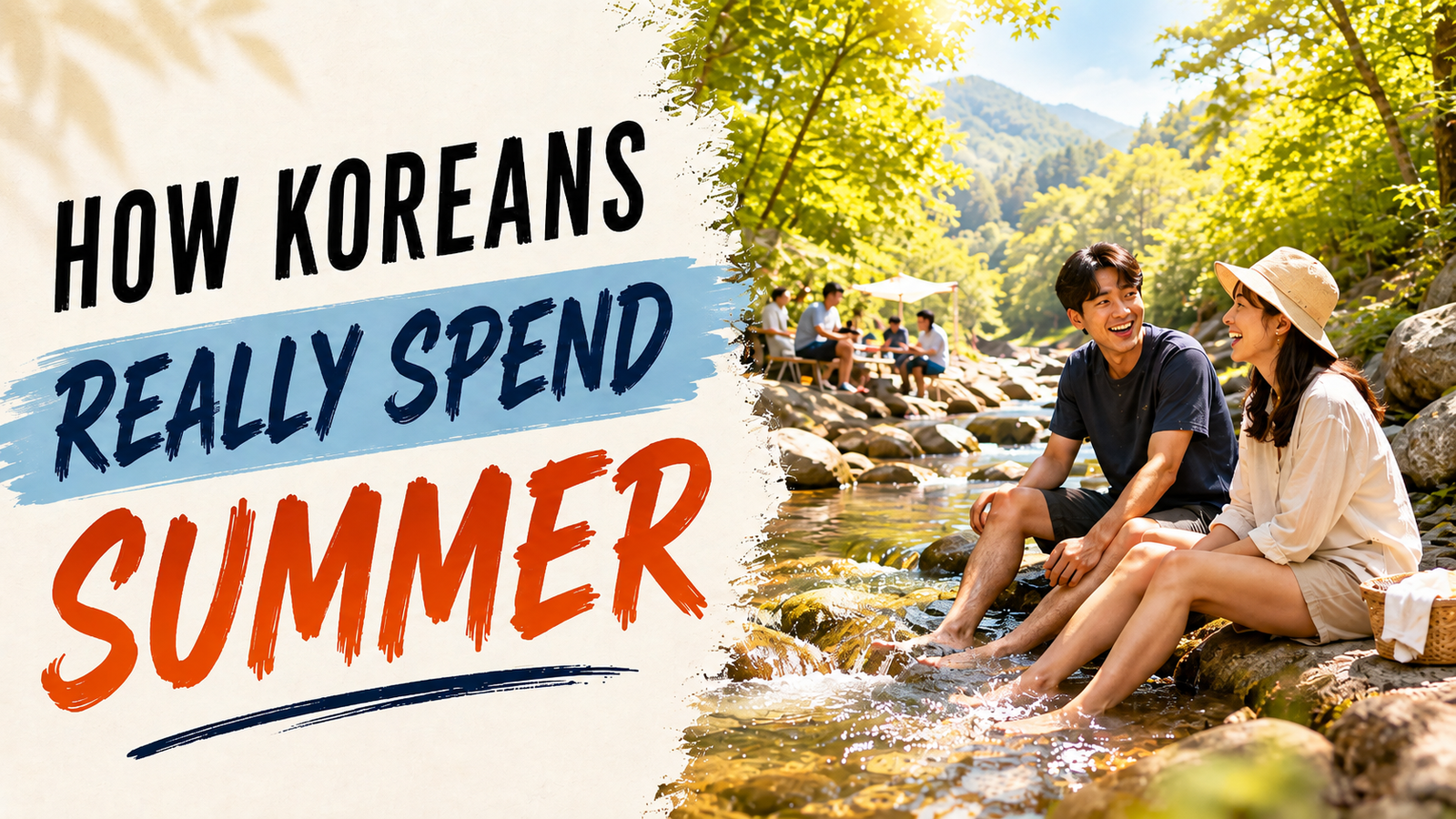
Drive into the mountains on a hot summer weekend and you may see families sitting under trees, children splashing in shallow streams, and adults cooling their feet in water that feels shockingly cold compared with the city.
This is a gyegok (계곡) — a mountain valley with a stream — and it is one of Korea’s most traditional summer escapes.
Korea’s mountainous geography helps explain why. Forested valleys and streams are relatively easy to find outside many cities, so generations of Koreans have used them as natural places to escape the heat.
A gyegok trip is usually less about serious swimming and more about spending a slow day beside the water: eating, talking, and enjoying the shade. Some people visit for the day, while others stay overnight at a nearby pension (펜션).
For foreign travelers, transportation can be the tricky part. Many popular valleys are outside major cities and may require a car, bus, or taxi. If you are relying on public transportation, Korea’s local map apps can be much more useful than Google Maps for checking bus stops, walking routes, and Korean place names. See which map apps Koreans actually use.
Also check local rules before entering the water; swimming, cooking, or camping may be restricted in protected areas.
And after heavy rain, stay out of mountain streams. Water levels and currents can rise very quickly.
If you want to experience a Korean summer tradition many international visitors miss, a gyegok is hard to beat.
2. Why Does Everyone Seem to Head to the Coast at the Same Time?
Visit a popular Korean beach during peak summer vacation and it can feel as if half the country had the same idea.
Nearby hotels and pensions fill up, coastal restaurants get busy, and the trip becomes about more than a few hours in the water. For many Koreans, the classic beach break means staying one or two nights, eating seafood, and walking along the coast after sunset.
The experience also changes by region. The east coast is known for open-sea scenery and popular beaches, while the south coast offers islands, bays, and a different coastal landscape. Busan combines a major city with beaches, making it easy to mix sightseeing with time by the sea.
The main thing travelers should know is timing. Summer weekends and peak vacation dates can get crowded, so popular coastal accommodation is worth booking ahead.
3. Why Would Koreans Take a Vacation at a Hotel Near Home?
Not every Korean summer vacation involves mountains or the sea.
Some families spend the day at a large water park and sleep at the connected resort. Others book a hotel in their own city — sometimes not far from home — and barely go sightseeing at all.
That second style has its own Korean name: hocance (호캉스), a blend of “hotel” and “vacance.”
The idea is simple. Instead of dealing with traffic, long-distance travel, and a packed itinerary, you check into a comfortable hotel, use the pool, enjoy the air conditioning, have breakfast or a buffet, and spend a night away from everyday life.
In summer, the hotel itself becomes the destination.
Water-park resorts are especially convenient for families with children, while hocance works well for couples, friends, or anyone who wants a short break without going far. For travelers, both can also be easy ways to experience Korean summer vacation culture without planning a remote trip.
In Korean Cities, Summer Often Starts After Sunset
4. Why Does the Hangang Fill Up After Dark?
Go to the Hangang on a hot summer evening and you may wonder where all these people suddenly came from.
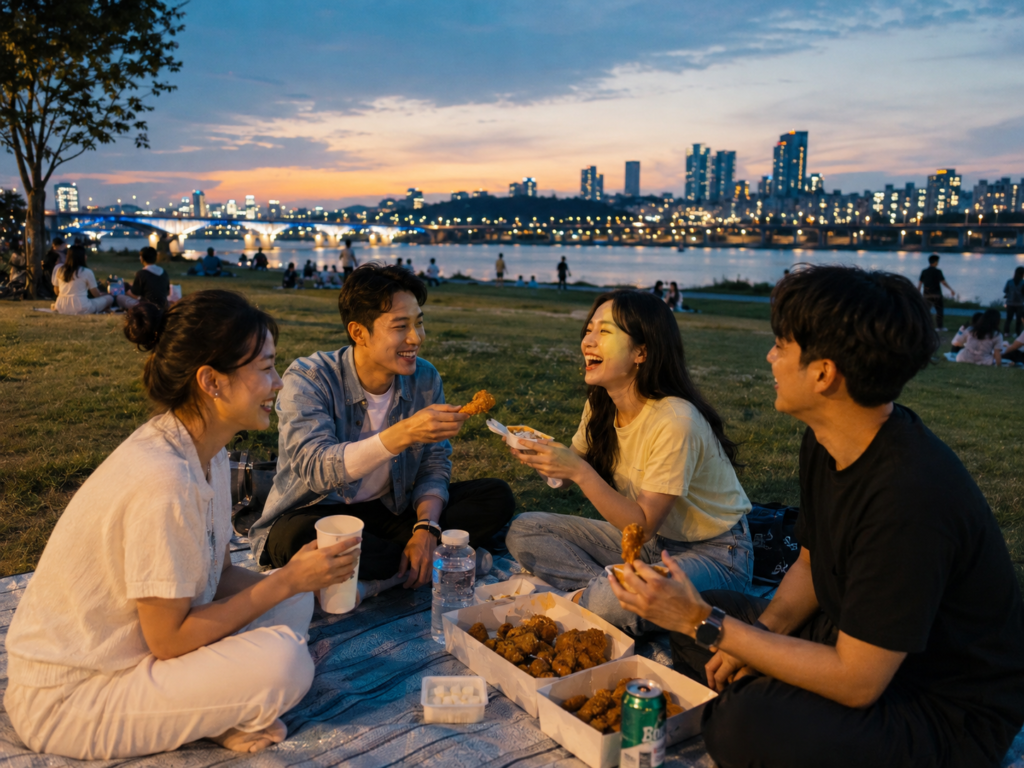
As the sun goes down, picnic mats spread across the grass. Friends sit by the river, couples walk or cycle along the paths, and families come out to spend the evening together.
Then you may notice something even more surprising: people are having dinner delivered to the park.
Fried chicken is the classic choice, but tteokbokki, pizza, gimbap, and other foods can all become part of a Hangang picnic. Many parks have designated delivery zones (배달존) where customers meet delivery drivers and collect their orders.
You will also see people making instant ramyeon at convenience-store machines near the river.
To Seoulites, none of this is particularly unusual. The Hangang is not just somewhere tourists go for the view. It is part of everyday city life — a place to eat, exercise, meet friends, and spend a long summer evening outdoors. Summer in Korea often changes the clock more than the itinerary: a place that feels exhausting at 2 p.m. can feel completely different after sunset, which is one reason riverside parks and outdoor spaces become livelier at night.
For travelers, a picnic with delivered food after sunset is one of the easiest ways to experience a Korean summer night like a local. For locals, ordering food to a Hangang delivery zone can feel routine. For short-term visitors, the ordering step may be the harder part: many mainstream Korean delivery services can involve Korean-language interfaces, phone verification, or local payment requirements.
Korea Tourism Organization currently lists Shuttle Delivery as a foreigner-friendly delivery platform. Service availability varies by area, so check whether your Hangang location is covered before depending on it. When planning the meeting point, look for “배달존” or “Hangang delivery zone” in your map app.
5. Can You Have a Summer Getaway Without Leaving Seoul?
Yes. Seoul even turns parts of the Hangang into seasonal swimming and water-play areas during summer.
For 2026, Seoul operated six Hangang Park swimming pools and water playgrounds from June 19 through August 30.
During the 2026 season, most locations stayed open until 10 p.m., while Yanghwa and Gwangnaru closed earlier.
For travelers with only a few days in Seoul, this is useful: you can add some summer fun without sacrificing an entire day for a beach or resort trip.
Season dates and operating hours can change each year, so check the official Hangang or Seoul Metropolitan Government page when planning a future summer trip.
Korean Summer Escape Is Also About Food
6. Why Do Koreans Eat Hot Samgyetang on the Hottest Days?
This is one Korean summer tradition that can seem completely backwards at first.
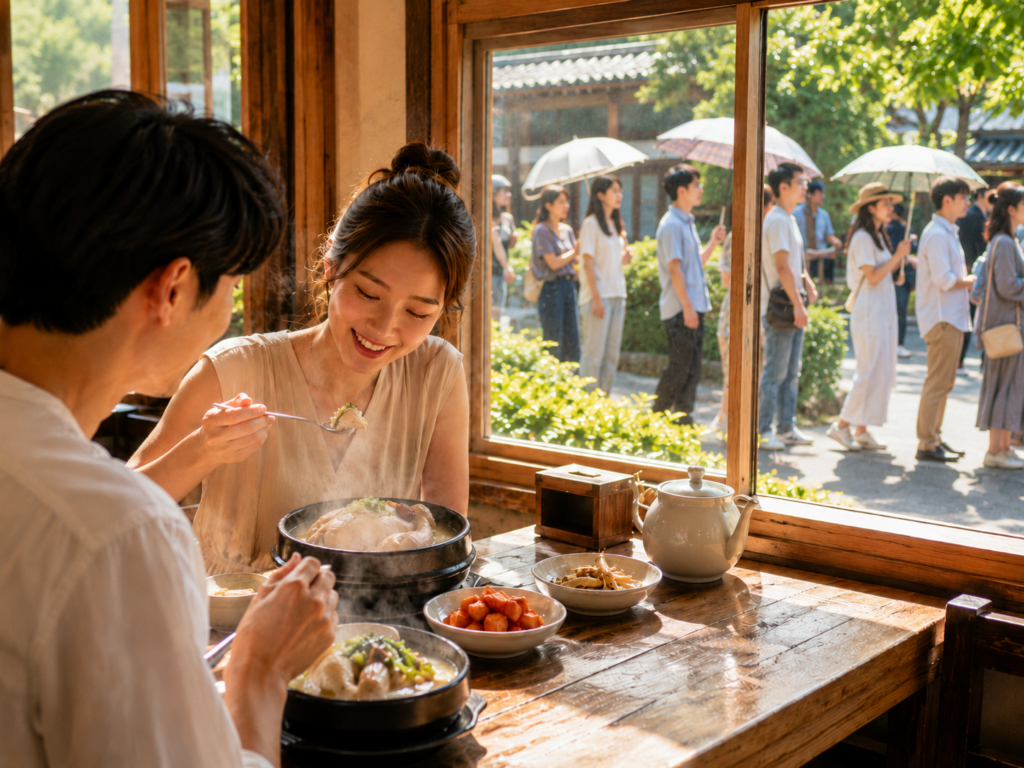
On some of the hottest days of the year, popular restaurants get even busier with people ordering samgyetang (삼계탕), a hot chicken dish traditionally prepared with ingredients such as ginseng, garlic, and glutinous rice.
Why eat something steaming when you are already sweating?
The answer is connected to boknal (복날), the traditional hot-weather days collectively known as sambok (삼복): Chobok (초복), Jungbok (중복), and Malbok (말복). Koreans have long eaten nourishing foods during this period to restore energy lost in the heat.
You may also hear the expression iyeol chiyeol (이열치열) — roughly, “fight heat with heat.”
Not every Korean spends boknal waiting for samgyetang, of course. But the tradition is familiar enough that popular restaurants can develop long lines on Sambok days.
For travelers, the culture behind the bowl is what makes the experience memorable. In Korea, summer food is not always supposed to be cold.
7. What Do Koreans Eat When They Actually Want Something Cold?
Of course, Koreans do not spend the entire summer fighting heat with hot soup.
Naengmyeon (냉면) is one of Korea’s classic cold noodle dishes, with Pyeongyang naengmyeon (평양냉면) and Hamhung naengmyeon (함흥냉면) being two of the best-known styles.
Pyeongyang naengmyeon is known for noodles made primarily with buckwheat and a mild, subtle broth. Hamhung naengmyeon, by contrast, is known for springier noodles made with potato or sweet-potato starch and is often served with a spicy sauce.
Kongguksu (콩국수) is another classic Korean summer dish. It consists of noodles served in a cold, creamy soybean broth, and its seasonality is so strong that some restaurants add it to the menu only during summer.
And then there is bingsu (빙수).
Traditional bingsu was relatively simple, often made with shaved ice and sweet red beans. Today, finely shaved milk ice with a soft, snow-like texture is common, topped with everything from red beans and injeolmi rice cakes to strawberries, melons, peaches, and mangoes.
Fruit bingsu can become surprisingly elaborate. Every summer, even Seoul’s luxury hotels join the competition, creating seasonal bingsu piled with premium fruit such as Jeju apple mangoes. Eating bingsu in a hotel lounge has become a summer outing of its own, and some versions cost more than a full meal.
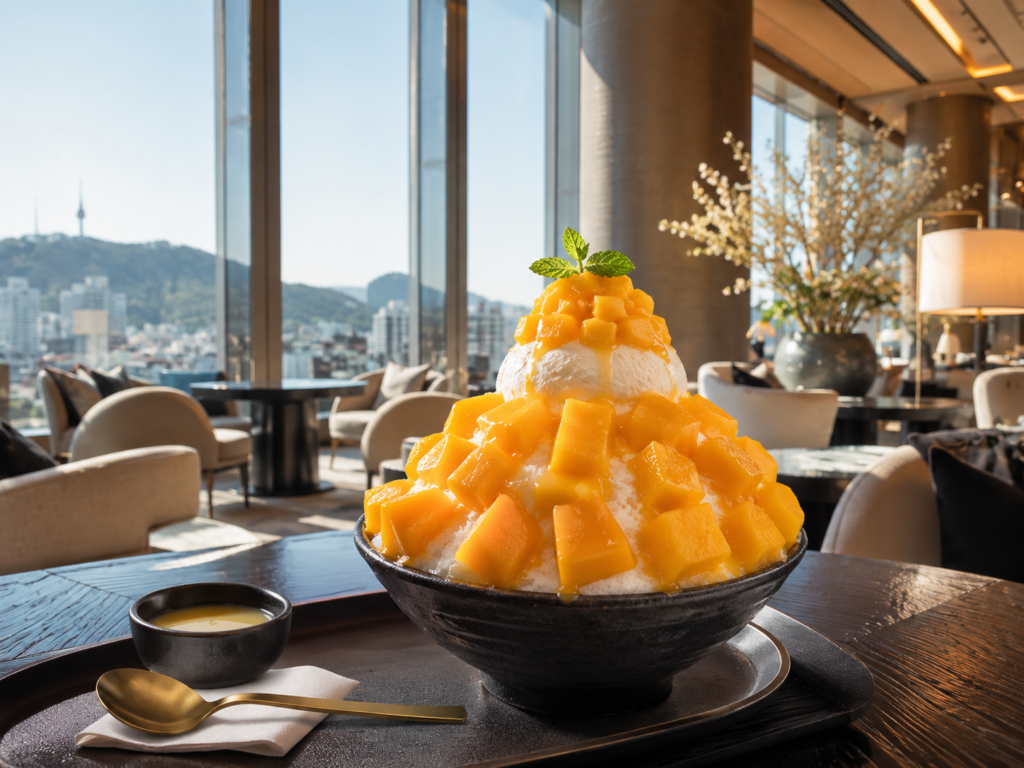
So bingsu in Korea can be two very different experiences: an affordable dessert shared at a neighborhood cafe, or a small luxury at a five-star hotel.
That range is part of the fun. Korean summer food can be steaming hot, icy cold, completely casual — or unexpectedly extravagant.
Which Korean Summer Escape Fits Your Trip?
You do not need to build your entire itinerary around summer culture. But if you are still wondering what Korea’s heat and humidity actually feel like, start with our honest guide to Korea summer weather before deciding how much outdoor time to plan.
If you only have a few days in Seoul, a Hangang picnic after sunset is easy to add to a normal sightseeing day. During their operating season, Hangang pools and water-play areas can also fit into a Seoul itinerary.
If you want something more distinctly local and have the transportation, try a gyegok. For an overnight break, the coast works well. Families may prefer a water-park resort, while couples or friends who want to avoid long-distance travel can try a hocance.
Whatever you choose, plan around peak summer crowds. Popular beaches, resorts, and pensions can fill quickly, and valley trips require a little more attention to transportation, weather, and local rules.
You do not have to escape the city to understand Korean summer. Sometimes delivered chicken by the Hangang or sharing a bowl of bingsu tells you just as much.
Final Thoughts
The interesting thing about Korean summer is not simply where people go to cool down.
It is how an uncomfortable season has developed its own routines, foods, expressions, and ways of taking a break. That is what piseo (피서) is really about.
You do not need to copy every tradition. Just notice how summer changes everyday life around you — and try one experience that fits naturally into your trip.
Sometimes understanding how locals live through a season is more memorable than escaping it.
Frequently Asked Questions
What Does “Piseo” Mean in Korea?
Piseo (피서) literally means escaping or avoiding the heat. In everyday use, it can refer broadly to summer getaways and activities people enjoy to get a break from hot weather.
When Are Korean Summer Destinations Most Crowded?
Late July through early August is traditionally one of the busiest periods for domestic summer travel. Popular beaches, resorts, pensions, and family vacation spots can be especially crowded on weekends.
Do I Need a Car to Enjoy Korean Summer Getaways?
No. Seoul offers plenty of summer experiences without one, and major beach cities are accessible by public transportation. A car becomes more useful for remote valleys, smaller coastal areas, and countryside pensions.
Can I Experience Korean Summer Culture Without Changing My Itinerary?
Absolutely. A summer evening by the Hangang, a seasonal bowl of kongguksu, or sharing bingsu at a cafe can fit easily into a normal sightseeing day.
Related Guides
Is Korea Too Hot in Summer? An Honest Local Guide
Before planning your summer escape, see what Korea’s heat, humidity, tropical nights, and regional differences actually feel like.
→ Read the summer weather guide
Google Maps in Korea 2026: Naver Map, KakaoMap & What Changed
Heading to a valley, beach, or somewhere outside central Seoul? Learn why Naver Map and KakaoMap can make local transportation much easier.
Official Hangang Swimming Pool Information
Check the official Seoul/Hangang page for each year’s seasonal dates and operating notices.