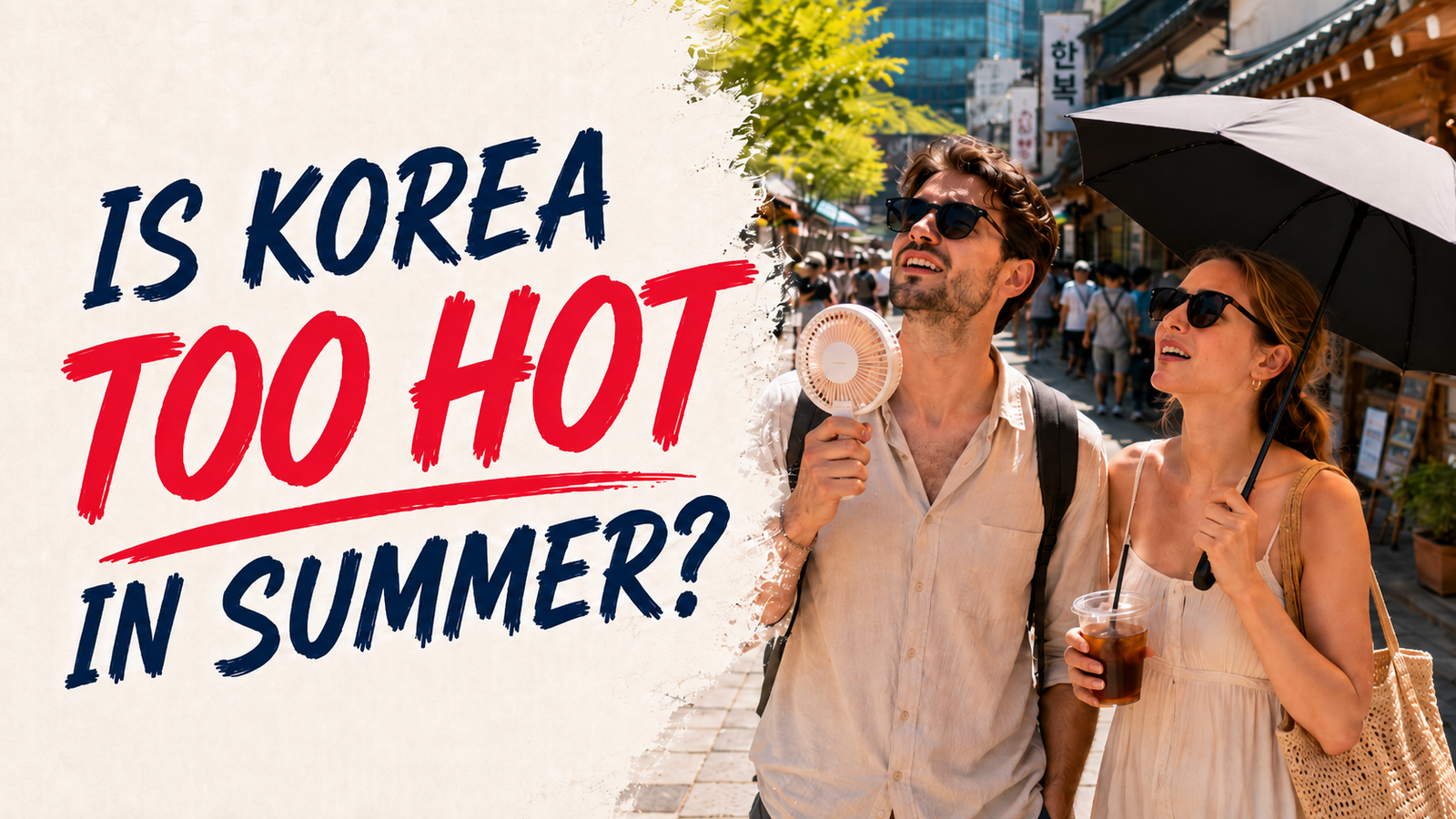
Korea summer weather is hot, humid, and often rainy — especially in July and August.
But the number on the forecast does not tell the whole story.
A 30°C day can feel much harder when the air is humid, the pavement is radiating heat, and you have been walking between subway exits, palaces, markets, and neighborhoods for hours.
For a first-time traveler, the simplest answer is:
July is often wetter and very humid. August is usually the hottest month. Both can feel exhausting during a heat wave.
Summer is still completely travelable, but I would not use the same itinerary pace I would use in April or October.
The useful adjustment is not “avoid Korea in summer.”
It is plan around heat, rain, and recovery time instead of distance alone.
How Hot Does Korea Get in Summer?
Typical July and August daytime highs are around the upper 20s to low 30s Celsius.
VISITKOREA’s climate averages list:
| City | July average high | August average high |
|---|---|---|
| Seoul | 29°C | 30°C |
| Busan | 27.5°C | 29.5°C |
| Gwangju | 30°C | 30.9°C |
Typical nighttime lows remain warm too.
Seoul averages about 22.3°C in July and 22.9°C in August. Busan and Gwangju are similar or slightly warmer at night.
That is one reason summer heat can feel cumulative.
You may finish a long day expecting the evening to cool down, then discover that the air still feels warm and heavy at 9 or 10 p.m.
These numbers are climate averages, not a forecast for your trip.
A heat wave can push conditions far above the average, while a rainy or cloudy period can feel very different.
For long-range planning, use the averages.
For what you should actually wear and do tomorrow, check the live forecast.
The official VISITKOREA climate page is useful for normal seasonal ranges.
Why Does 30°C in Korea Sometimes Feel Much Hotter?
Humidity.
That is the part many visitors underestimate.
When the air already contains a lot of moisture, sweat evaporates less efficiently. You can feel sticky and overheated even when the thermometer is not showing an extreme number.
This is also why Korea’s current heatwave warnings are based on feels-like temperature, not just air temperature.
The Korea Meteorological Administration currently uses:
- Heatwave watch: maximum feels-like temperature of 33°C or higher expected for at least two consecutive days
- Heatwave warning: maximum feels-like temperature of 35°C or higher expected for at least two consecutive days
If you see a heatwave alert during your trip, treat it as an itinerary signal.
That is not the day I would schedule a palace, Bukchon, a long outdoor market walk, and a riverside park back-to-back.
Use the official KMA severe-weather page for current warnings.
Why Can Seoul Feel Hotter Than the Number Suggests?
Seoul is not automatically the hottest city in Korea.
But it can feel particularly tiring because so much sightseeing happens on heat-storing surfaces.
Roads, sidewalks, stone palace courtyards, buildings, traffic, and dense neighborhoods all hold heat.
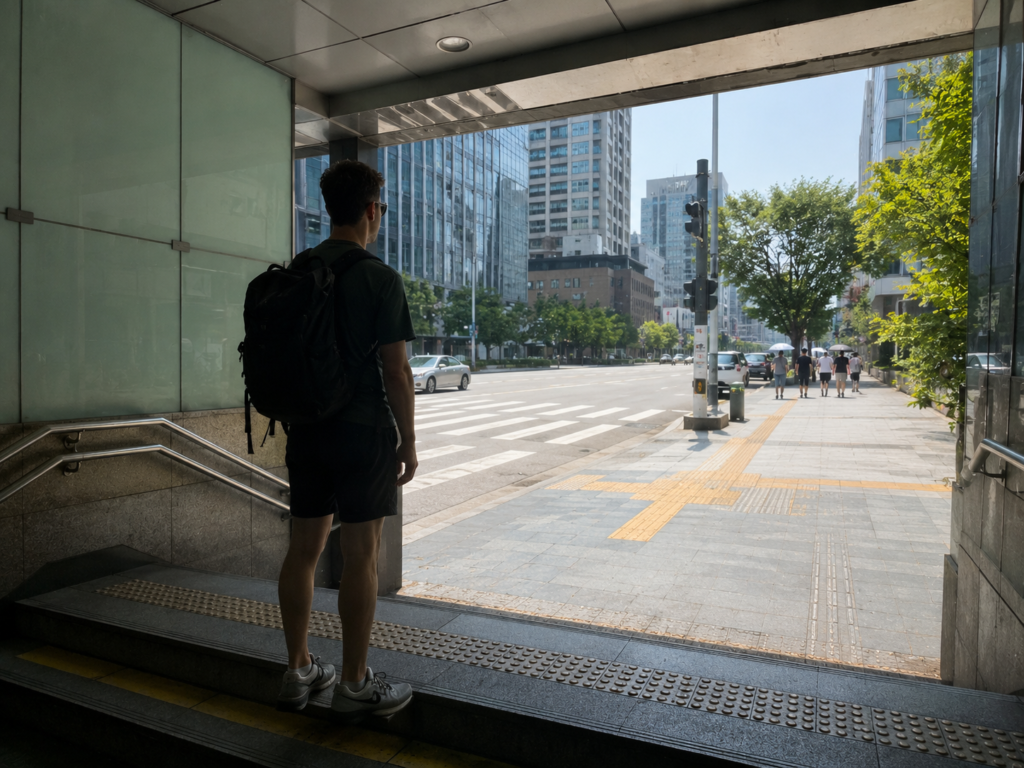
A route that looks like “only a 15-minute walk” on your phone can feel very different at 2 p.m. in July.
That is why I pay more attention to sun exposure than to distance in summer.
A longer subway ride with air-conditioned stations can be easier than a shorter outdoor walk with no shade.
The same is true when choosing accommodation.
A hotel that is five minutes from a useful subway station can matter more in August than a slightly nicer hotel that adds a 15-minute exposed walk to every trip.
Is July or August Hotter in Korea?
August is generally the hotter month in the official climate averages.
July, however, can feel just as difficult because it overlaps more with jangma, Korea’s summer rainy season.
That creates a different kind of discomfort:
- high humidity
- cloudy but muggy days
- sudden heavy rain
- wet shoes and clothes
- warm nights
So I would not describe July as “easier” simply because the average temperature is slightly lower.
A July trip often feels wetter.
An August trip often feels hotter.
Both vary significantly from year to year.
When Is Korea’s Rainy Season?
Korea’s rainy season is called jangma (장마).
KMA climate statistics show that jangma typically begins around:
- June 19 in Jeju
- June 23 in southern Korea
- June 25 in central Korea
The typical rainy-season period lasts about a month.
But those dates are climatology, not a calendar appointment.
Some years start earlier or later. Rainfall can be concentrated into a few intense periods, and heavy rain can also happen outside the traditional jangma window.
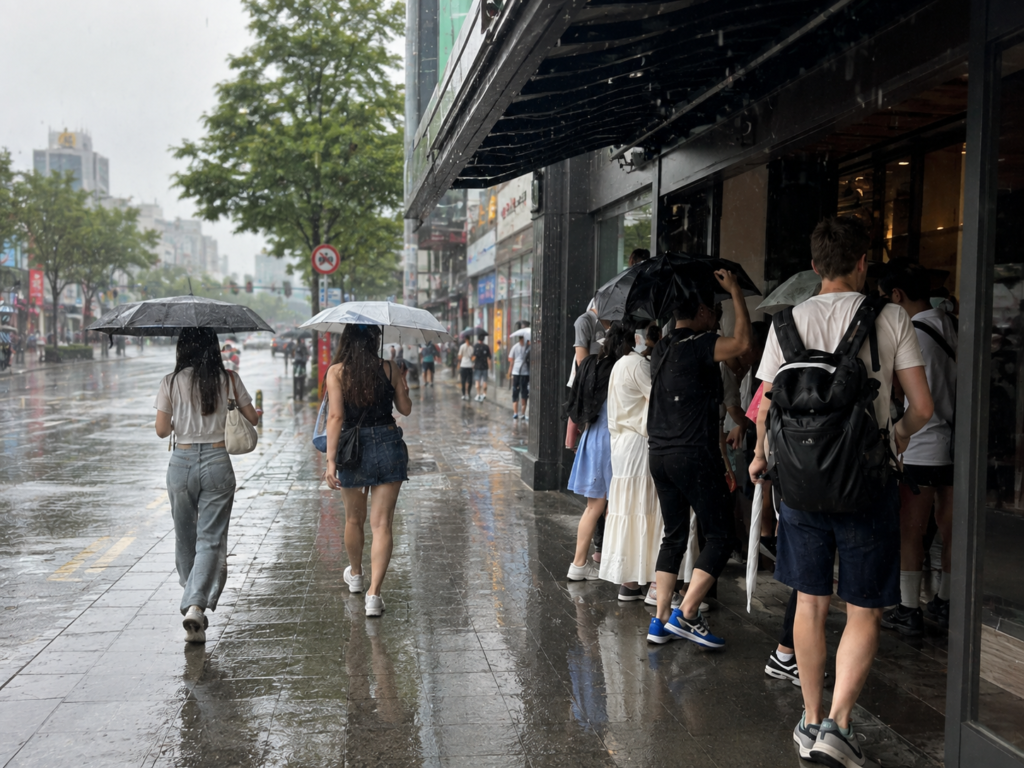
The important travel point is:
Jangma does not mean it rains continuously all day for a month.
You may get a dry morning and a heavy afternoon downpour, several cloudy days, or a short period of very intense rain.
Use the official KMA climate statistics for the normal pattern, then use the live forecast for your actual travel dates.
What Should You Carry During a Korean Summer?
You do not need complicated summer gear.
The items I find most useful are small:
- water
- sunscreen
- a compact sun-and-rain umbrella
- a portable fan
- a small towel or tissues
- a thin layer for strong indoor air-conditioning
- shoes that are still comfortable when the pavement is wet
In Korea, a compact umbrella that works for both sun and rain is commonly called an uyangsan (우양산).
It is especially practical because summer can give you strong sunlight and sudden rain on the same day.
A portable fan is also common, but think of it as a comfort tool, not protection from dangerous heat.
Shade, water, breaks, and reducing outdoor exposure matter more.
When Should You Plan Outdoor Sightseeing?
Morning and evening are usually much easier than the middle of the afternoon.
For summer, I would build the day differently:
Morning: palace, neighborhood walk, market, park, or other outdoor attraction
Afternoon: lunch, museum, cafe, department store, underground shopping area, hotel break, or travel between neighborhoods
Evening: outdoor neighborhood, Hangang, night market, dinner, or another walking area
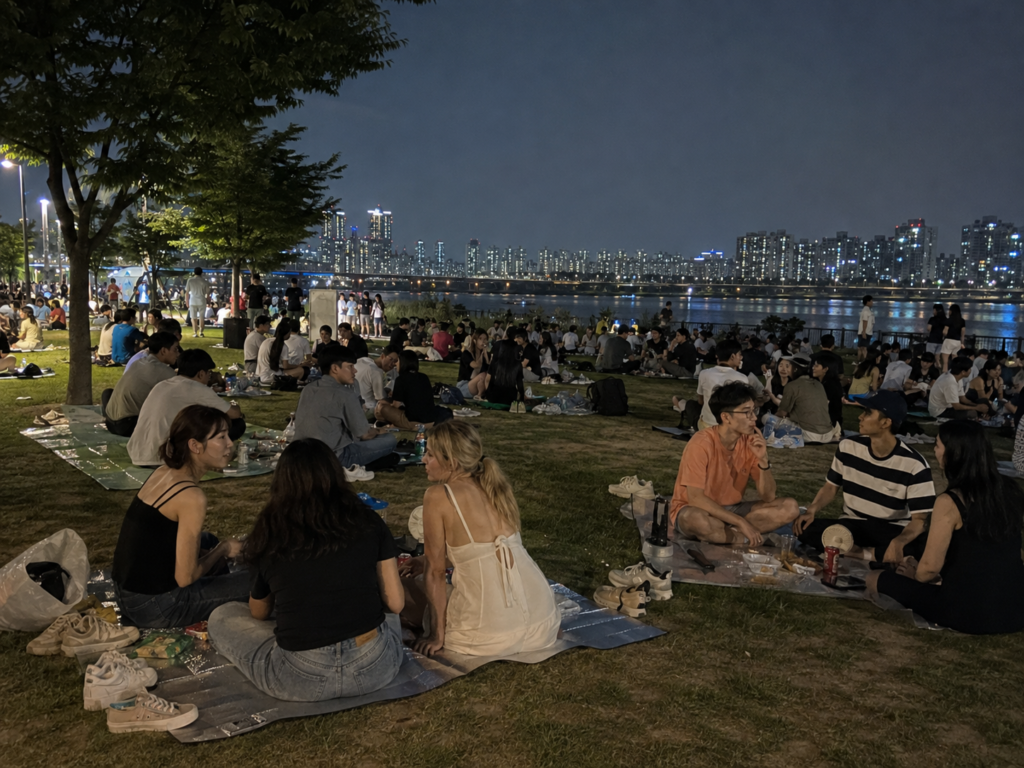
That does not mean every day needs a strict schedule.
It means you should leave yourself somewhere to cool down.
One of the easiest summer mistakes is filling the day with attractions that all look close together on a map but all require exposed walking.
In summer, an indoor break is part of the itinerary.
It is not wasted time.
Is Busan or Jeju Cooler Than Seoul in Summer?
Sometimes during the day, but not always in the way travelers expect.
Coastal cities can have slightly lower daytime temperatures because of the sea.
But coastal humidity can still make the air feel heavy.
Busan’s official average high is lower than Seoul’s in July, for example, but that does not guarantee a comfortable day of walking.
Jeju can also stay humid and warm at night.
So I would not choose a coastal destination only because you expect it to be “cool.”
Choose it because you want the beach, scenery, food, or island trip.
The weather may still feel very summery.
Is Korea Too Hot to Visit in July or August?
For some travelers, yes.
If you strongly dislike humidity, have difficulty with heat, or want to spend entire days walking outdoors, July and August may not be your favorite months.
But summer is not automatically a bad time to visit.
It works much better if you are comfortable changing the pace.
A good summer itinerary has:
- fewer long outdoor blocks
- accommodation near useful transportation
- one indoor alternative for bad-weather days
- flexibility around heatwave and heavy-rain alerts
- enough time to stop without feeling that the schedule is “falling behind”
That last point matters.
Korean summers are easier when you stop trying to win against the weather.
What Is the Simplest Way to Plan Around Korea Summer Weather?
Before leaving your hotel each morning, check three things:
temperature, feels-like temperature, and rain.
Then look at your itinerary and ask:
Which part of today requires the most exposed walking?
Move that part earlier, later, or to another day if the forecast is difficult.
That small change matters more than carrying every cooling product you can buy.
And if you are curious about what Koreans actually do with the season rather than just how to survive the weather, our Korean Summer Culture guide covers the local side separately.
The weather guide should help you answer one question:
Can I still enjoy my trip in this heat?
Usually, yes — as long as you plan the day for the weather you actually have, not the weather you hoped for.