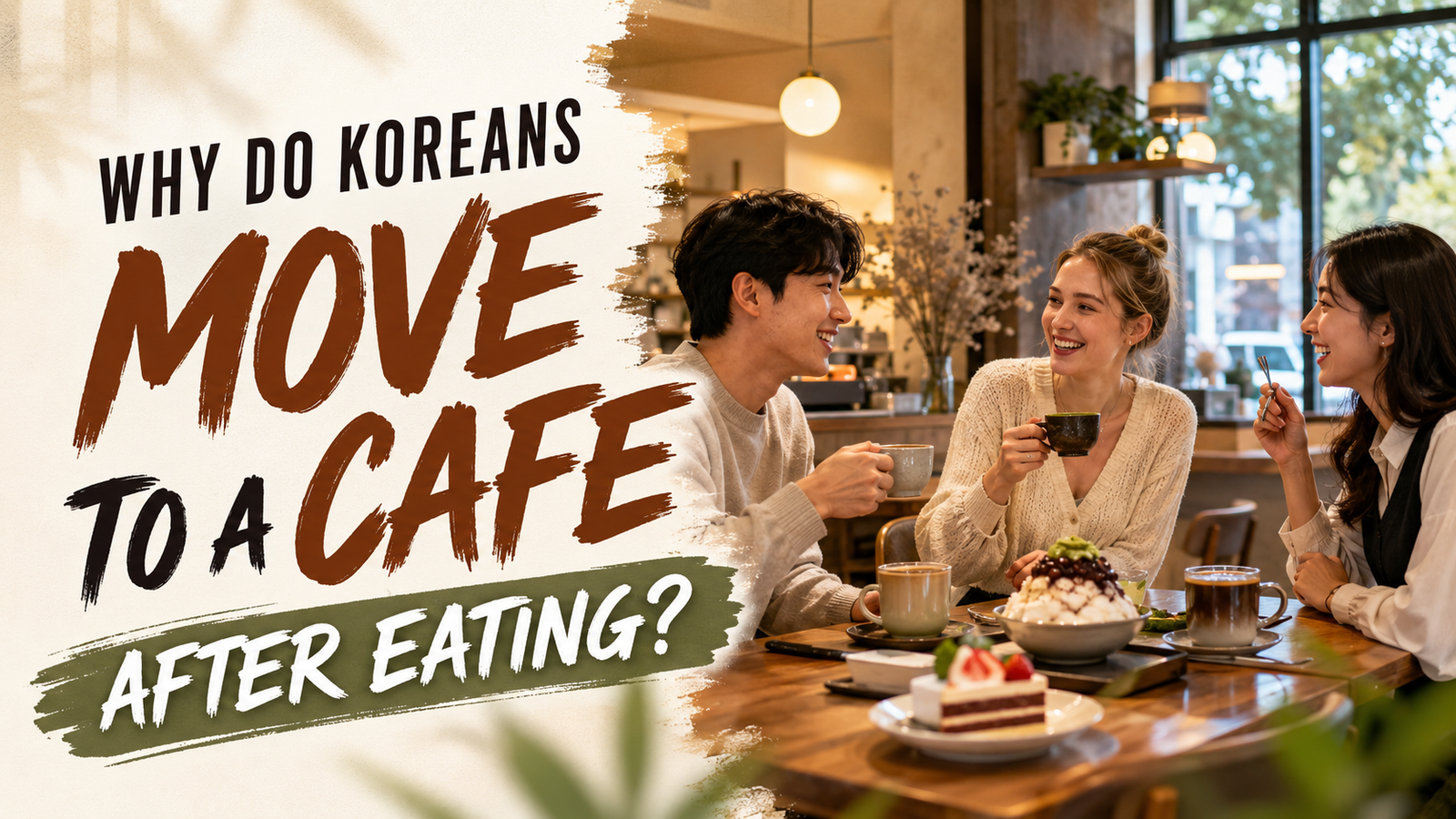
The plates are empty, the bill has been paid, and everyone stands up to leave. You assume the get-together is over—until someone asks a very familiar question in Korea:
“Shall we go to a cafe?”
For a first-time visitor, the next move may seem puzzling. You have already eaten and talked together. Why leave the restaurant, order another round of drinks somewhere else, and sit down all over again?
The reason why Koreans move to a cafe after eating often has less to do with coffee than with continuing the time together. The restaurant may end the meal, but the cafe gives the group a quieter and more comfortable place to keep talking.
Coffee after a meal is not uniquely Korean. What is distinctive here is how naturally the group may change places and continue the gathering at a separate cafe.
The food is finished. The people, however, may still have plenty left to say.
Table of Contents
Why Koreans Move to a Cafe After the Meal
1. Why Not Stay and Talk at the Restaurant?
In many countries, diners stay at the same table for coffee, dessert, and conversation. In Korea, many casual restaurants are more focused on eating than lingering.
A barbecue restaurant, noodle shop, or busy neighborhood diner may have no dessert menu or comfortable setting for a long conversation. During peak hours, the table may also be needed for waiting customers.
That does not mean restaurants always rush people out. Still, once the meal is over, moving to a cafe often feels more natural: the restaurant is for eating, and the cafe is for continuing the conversation.
2. How Is Korea’s After-Meal Routine Different From Staying at the Table?
Continuing the conversation after a meal is not unique to Korea. In some countries, people remain at the restaurant for coffee, dessert, or a long conversation. Spain even has the word sobremesa for the time spent talking at the table after eating.
Korea’s version often involves a clearer change of place. The group finishes the meal, pays, leaves the restaurant, and starts the next part of the gathering at a nearby cafe.
The purpose is similar—spending more time together—but the space changes. Instead of turning the restaurant table into a place for both dining and lingering, Koreans often separate the two: one place for eating and another for talking.
3. Why Does Moving Somewhere Else Change the Mood?
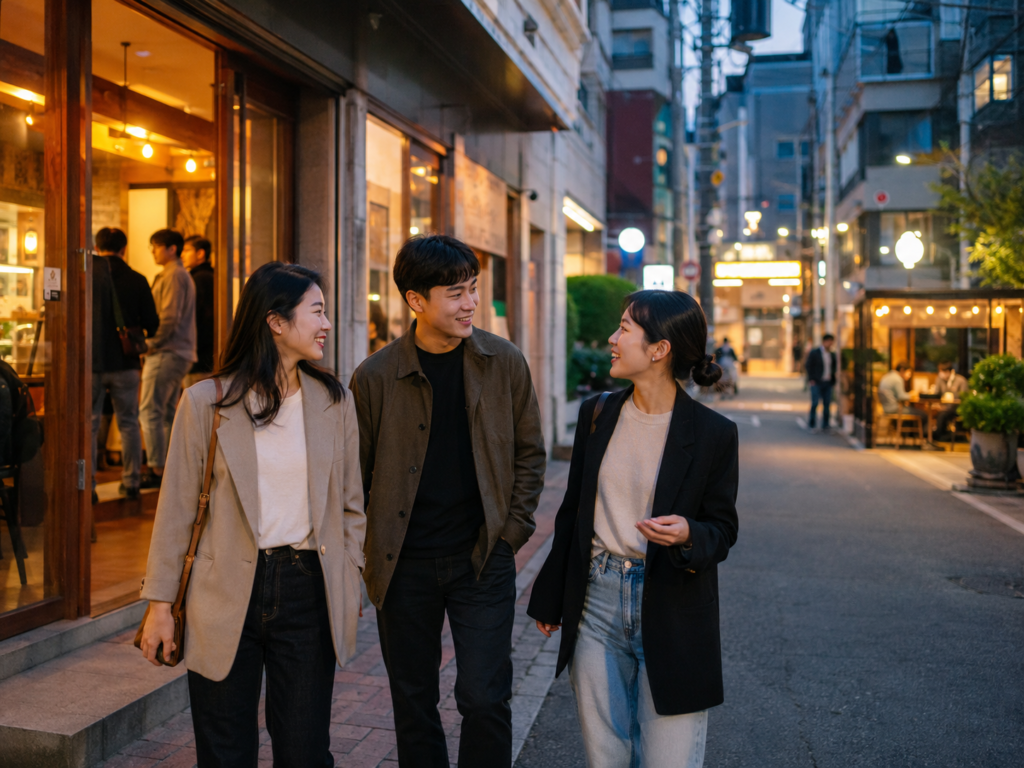
A restaurant keeps food at the center of the gathering. People are ordering, sharing dishes, grilling, and watching the table. Even when the conversation is lively, everyone is still following the pace of the meal.
At a cafe, those small tasks disappear. Drinks can sit on the table for much longer, the seating is often more comfortable, and no one feels they must keep eating. This makes it easier for the conversation to become slower, longer, and sometimes more personal.
The short walk between the restaurant and the cafe also works as a natural reset. People can decide whether to continue, change seats, or start a new topic once they arrive. The group is still together, but the atmosphere feels less structured than it did during the meal. People who need to leave can also do so without making the dinner itself feel abruptly finished.
The Cafe Is the Second Half of the Get-Together
4. Is Going to a Cafe a Korean “Second Round”?
Koreans often describe a social gathering in stages. The first place is ilcha (1차), and the next is icha (2차). The expression is most closely associated with nights out involving alcohol, but the same rhythm can appear more casually after a meal.
Dinner can be the first stage, followed by a cafe as the next stop. This is less about changing the mood—which the new space naturally does—and more about how the gathering continues in stages.
Changing locations also gives people a natural chance to decide whether to continue. Someone with an early morning may leave after dinner, while the rest of the group moves on to coffee. In larger gatherings, the people at the cafe may be fewer than those at the meal.
Most people do not formally call every cafe visit icha. Usually, “Shall we go to a cafe?” is enough. This helps explain why Koreans move to a cafe even when no one particularly needs another drink: the meal is over, but some people are not ready to end the gathering yet.
5. Why Does One Person Often Buy the Coffee?
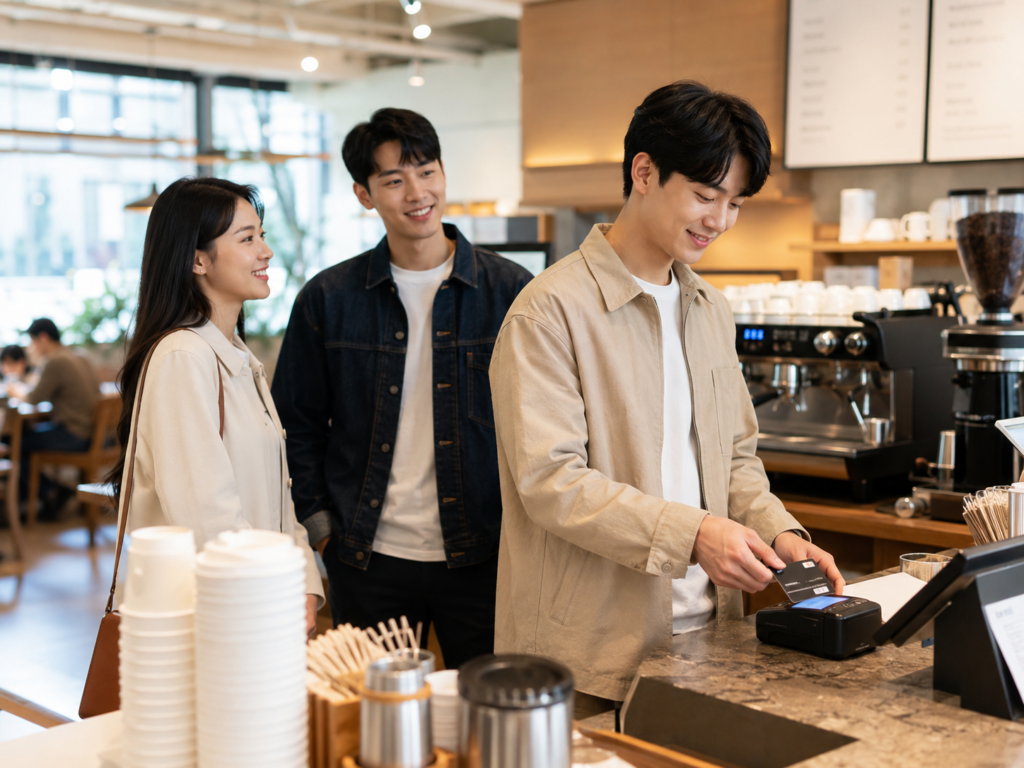
A common line after dinner is:
“You bought the meal, so I’ll get the coffee.”
In Korea, this is an easy way to return the favor without dividing every bill exactly. The person who did not pay for the meal may buy the drinks, while someone else orders dessert.
The point is usually not perfect arithmetic. Dinner may cost much more than coffee, but offering the coffee is often a small way of acknowledging that someone else paid for the meal.
The pattern also depends on the relationship. Friends may pay separately, split the bill, or take turns treating each other. In some family or workplace relationships, an older relative or senior colleague may insist on paying for the meal, while a younger person offers to cover the cafe afterward.
It is not a strict rule, and visitors should not feel pressured to guess who must pay. Offering to buy the coffee is simply one natural way to share the cost and return the hospitality.
Coffee Is Not Always the Real Reason
6. Why Order Dessert After a Full Meal?
After a large meal, no one may actually be hungry. Still, a slice of cake, bread, or bingsu (빙수, a Korean shaved ice dessert) often appears on the cafe table.
Dessert is usually less about starting another meal and more about sharing something while the conversation continues. One cake or bowl of shaved ice may be placed in the center for several people to taste together.
Koreans often joke, “The dessert stomach is separate.” The phrase does not mean everyone wants a full second course. It simply captures how a small sweet treat can still feel appealing after a savory meal.
Dessert can also help the group slow down. Instead of finishing a drink quickly and leaving, everyone can share a few bites and keep talking.
The Habit Changes With the People and the Occasion
7. When Is the After-Meal Cafe Most Common?
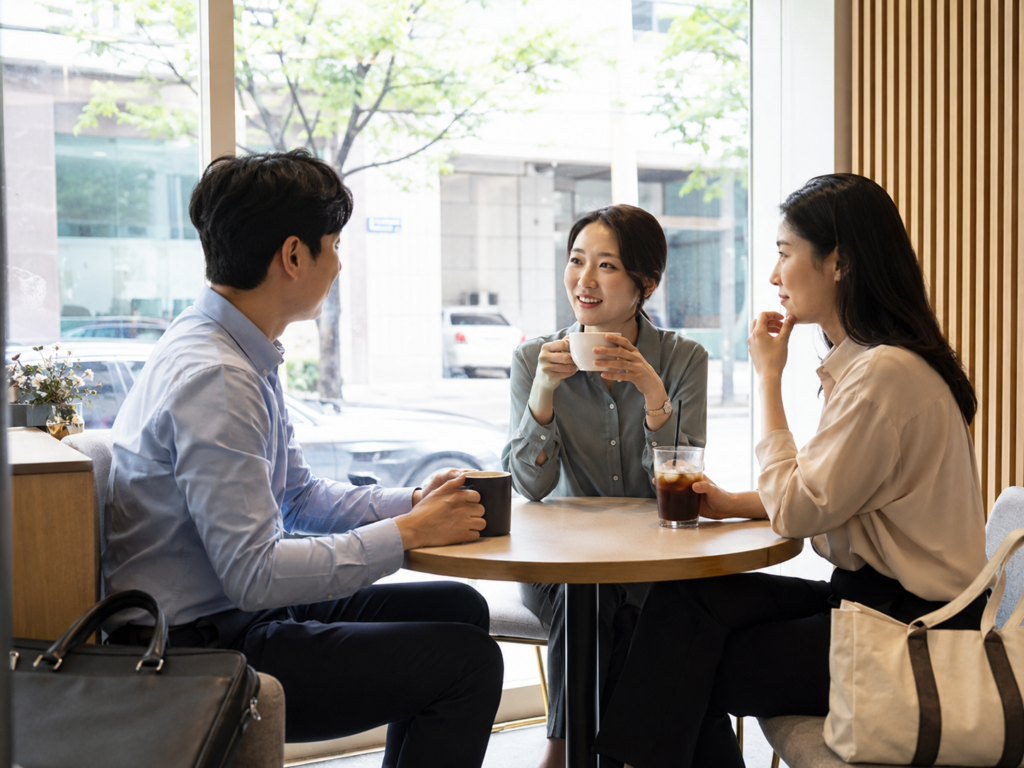
The restaurant-to-cafe routine is especially common on dates, friend meetups, and weekend family meals, but the length and purpose of the visit can vary.
On a date, the cafe may become the quieter second half of the evening, where conversation feels less formal and there is no pressure to keep ordering food. Friends who have not met for a long time may stay for another hour or more, especially when the meal itself felt too busy for deeper conversation.
Families often choose a cafe with desserts, spacious seating, or enough room for children and older relatives. The cafe gives everyone a chance to rest before heading home or moving on to the next activity.
Office workers may grab takeaway coffee or sit nearby for a short break before returning to work. In this case, the cafe visit is less about extending the entire outing and more about creating a brief pause in the day.
8. How Do Koreans Choose the Cafe After a Meal?
The cafe after a meal is not always the most famous or photogenic one. Convenience usually matters more.
People often look for a place nearby with enough seats for the group. A couple may choose a small, quiet cafe, while a larger group may prefer a spacious chain or bakery cafe where finding a table is easier.
The choice can also depend on what the group wants next. If everyone wants dessert, they may look for cake, bread, or bingsu (빙수). After a late dinner, closing time becomes more important than atmosphere, and the nearest cafe that is still open may win.
Noise level, stairs, parking, and space for children or older relatives can matter too. The goal is usually not to add another tourist attraction to the day. It is to find a comfortable place where everyone can sit down and keep talking.
9. Should Travelers Plan for a Cafe After Every Meal?
Not every meal in Korea ends at a cafe. A quick lunch, a busy day, or a short meeting may finish at the restaurant.
When Koreans move to a cafe after a social meal, the length of the visit can vary widely. For travelers, the practical point is simply that a social meal may create an optional next stop.
Travelers should leave some flexibility after a social meal, especially when meeting Korean friends. A dinner invitation may take longer than the restaurant reservation suggests, and drinks or dessert will add to the cost.
You do not have to accept every invitation. If you already have another plan, simply say so. Most people will understand. Going to the cafe is an invitation to continue spending time together, not a rule you must follow.
Final Thoughts: The Cafe Is Where the Gathering Continues
Koreans are not the only people who enjoy coffee or conversation after a meal. What feels different in Korea is how naturally the gathering may move from a restaurant to a separate cafe.
The change of place gives the gathering a natural pause and offers more time with fewer meal-related distractions. Since cafes are easy to find in many busy neighborhoods, moving somewhere else may not feel like a major plan.
So when someone asks, “Shall we go to a cafe?” they may not be asking about coffee at all. They may simply be saying that the meal is over, but the time together does not have to end yet.
Frequently Asked Questions
Do Koreans Always Go to a Cafe After Eating?
No. It is a common next stop after dates, friend meetups, and family meals, but many meals end at the restaurant. It depends on the schedule, the occasion, and whether the group wants more time together.
Is It Rude to Skip the Cafe?
Usually not. A cafe invitation is an offer to continue the gathering, not an obligation. If you have another plan, a brief and polite explanation is enough.
Who Usually Pays for the Coffee?
There is no fixed rule. The person who did not pay for the meal may offer to buy the drinks, but friends may also split the bill, pay separately, or take turns treating each other.
How Long Does an After-Meal Cafe Visit Usually Last?
There is no standard length; it varies widely by the people, schedule, and occasion. It may be a brief coffee break or a much longer conversation.
Related Guides
Korean Cafe Culture: Why Cafes Are More Than Coffee
Discover why Korean cafes serve as meeting places, workspaces, study rooms, and everyday places to relax.
Dining Together in Korea: Ordering, Sharing & Paying
Learn how sharing a meal changes what you can order and how food is served in Korea.
Solo Dining in Korea: 13 Tips for Honbap & Korean BBQ
Find out which Korean dishes are easy to enjoy alone and which are usually designed for groups.
The Dynamic Evolution of Korea’s Coffee Scene
Explore how Korea’s coffee culture developed from everyday mix coffee into specialty cafes and an important part of modern social life.