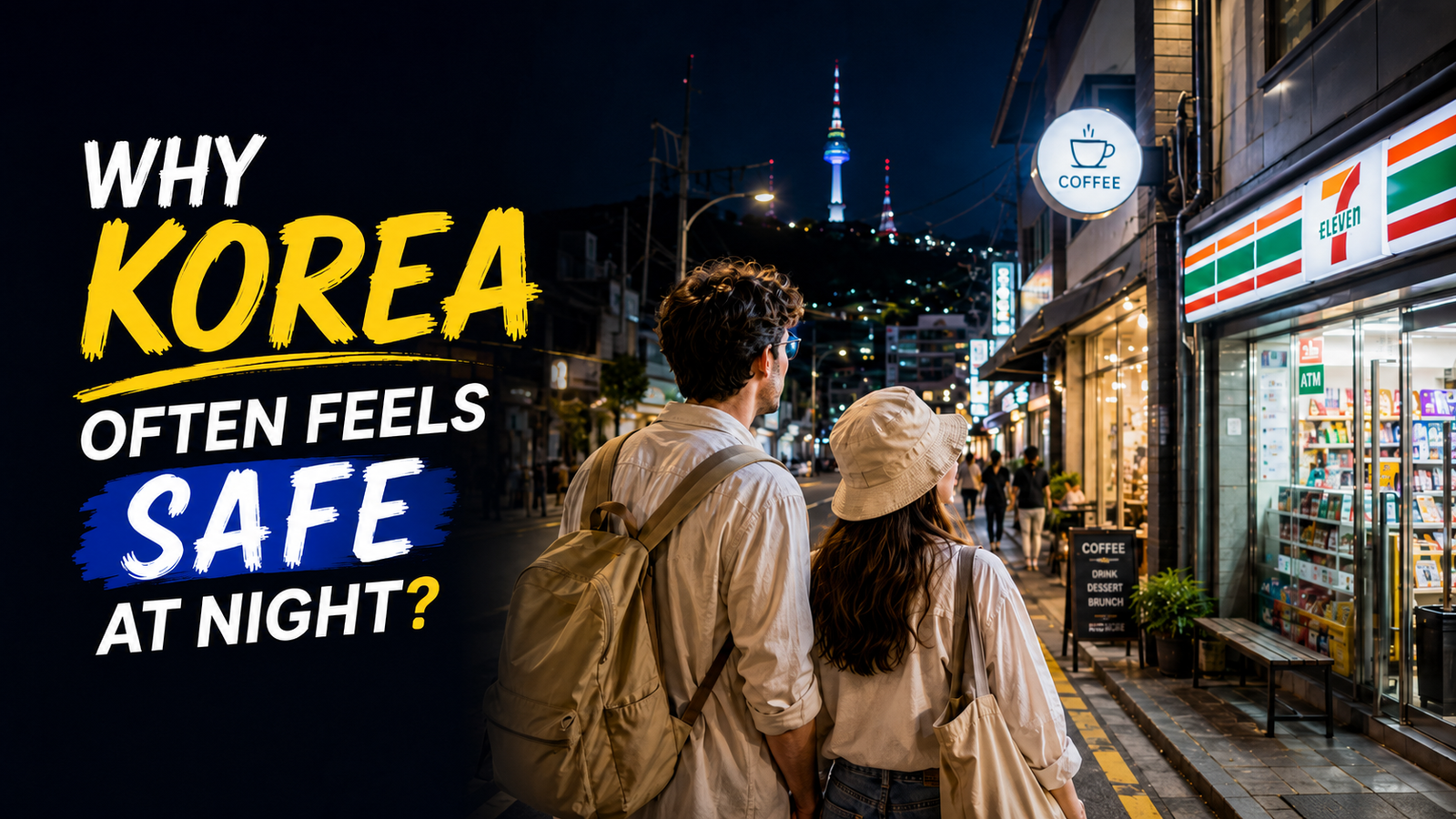
Is Korea safe at night? Many travelers feel comfortable walking around Seoul after dark, especially in busy, well-lit areas. Convenience stores glow, buses keep moving, and people are still heading home, walking dogs, or grabbing a late meal.
That everyday activity can make Korea feel unusually comfortable after dark. But feeling safe is not the same as being risk-free.
So why does Korea’s night often feel different?
Table of Contents
Korea’s Night Does Not Really Go to Sleep
1. Why Are So Many People Still Outside at Midnight?
In busy urban neighborhoods and major city areas in Korea, late-night streets are not filled only with partygoers.
Office workers may be heading home after overtime, students are leaving study rooms, residents are walking their dogs, and families are stopping by a convenience store. In busy neighborhoods, these ordinary routines can continue well past 10 or 11 p.m.
This matters because an active street feels very different from an empty one. Even when you are walking alone, you may still see other people moving through the same space.
The night feels less isolated—not because everyone is watching over you, but because everyday life is still happening around you.
2. The Convenience Store Is More Than Just a Store
Convenience stores are extremely common in Korean cities—even in places where visitors may not expect to find them. You will often see one next to an apartment entrance, near a bus stop, or on the corner of a residential street, not only in busy shopping areas.
Their bright signs and glass windows are easy to spot after dark. Many urban branches stay open late or operate 24 hours, though not every location does. Where a branch remains open, people may stop by for drinks, late-night food, parcel pickups, and everyday essentials, which can help the surrounding area feel less empty.
For travelers, a convenience store can be especially useful at night. You can check directions under bright lights, confirm your hotel address, buy a charging cable or portable battery, or wait somewhere that is easy for a taxi driver to locate. Some larger stores also have indoor or outdoor seating.
If a situation feels uncomfortable, going inside puts you in a brighter public space with staff and other customers nearby. Even if you do not speak much Korean, you can show a map, your hotel address, or a translation app when asking for help.
At night, a convenience store is more than a place to buy snacks. It is one of the everyday places that helps keep the neighborhood bright, active, and connected.
3. Late at Night, the City Is Still Moving
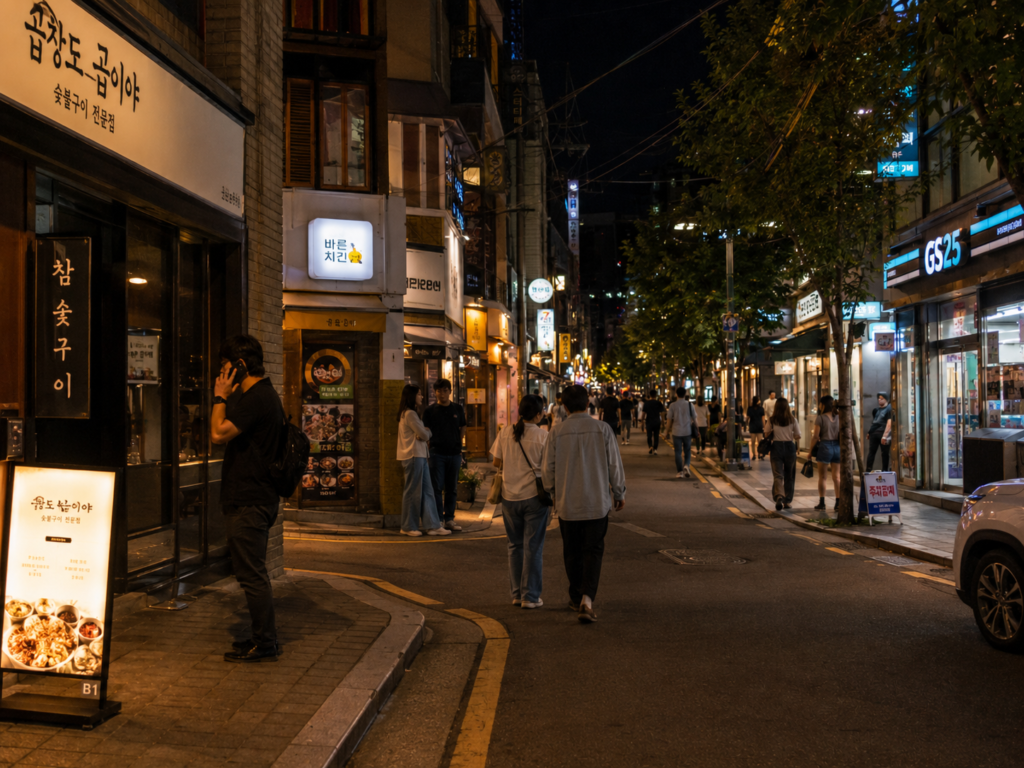
In busy districts of major Korean cities, streets can remain active late into the night. Taxis continue to pass, some convenience stores stay open, restaurants serve late customers, and delivery riders move between neighborhoods even after most offices have closed.
The atmosphere varies by area. Busy districts may still have open restaurants, late-night deliveries, and a steady flow of people after midnight. Residential neighborhoods are usually quieter, but they do not always become completely still.
This ongoing activity changes how the city feels. Open businesses, passing cars, lit apartment entrances, and people making their way home can make the surroundings feel less isolated.
For travelers, it can feel as though the neighborhood has slowed down for the night without fully going to sleep.
The City Rarely Leaves You Completely in the Dark
4. Why Korean Neighborhoods Often Stay Bright at Night
In many Korean neighborhoods, apartments, shops, cafés, restaurants, and bus stops sit close together. Light comes not only from streetlamps but also from apartment entrances, store signs, building lobbies, parking areas, and subway exits.
This mix can make many residential neighborhoods feel brighter and easier to navigate at night than visitors expect. Apartment entrances, building lobbies, and parking areas often remain lit even after the streets grow quiet.
However, the level of lighting can change quickly within just a few blocks. A main road may still be bright and active, while a narrow alley, park, riverside path, or outer neighborhood may feel much darker and quieter.
That is why many locals choose a well-lit main road at night, even when a map suggests a shorter route through smaller streets.
5. CCTV and Emergency Call Devices Are Easy to Spot
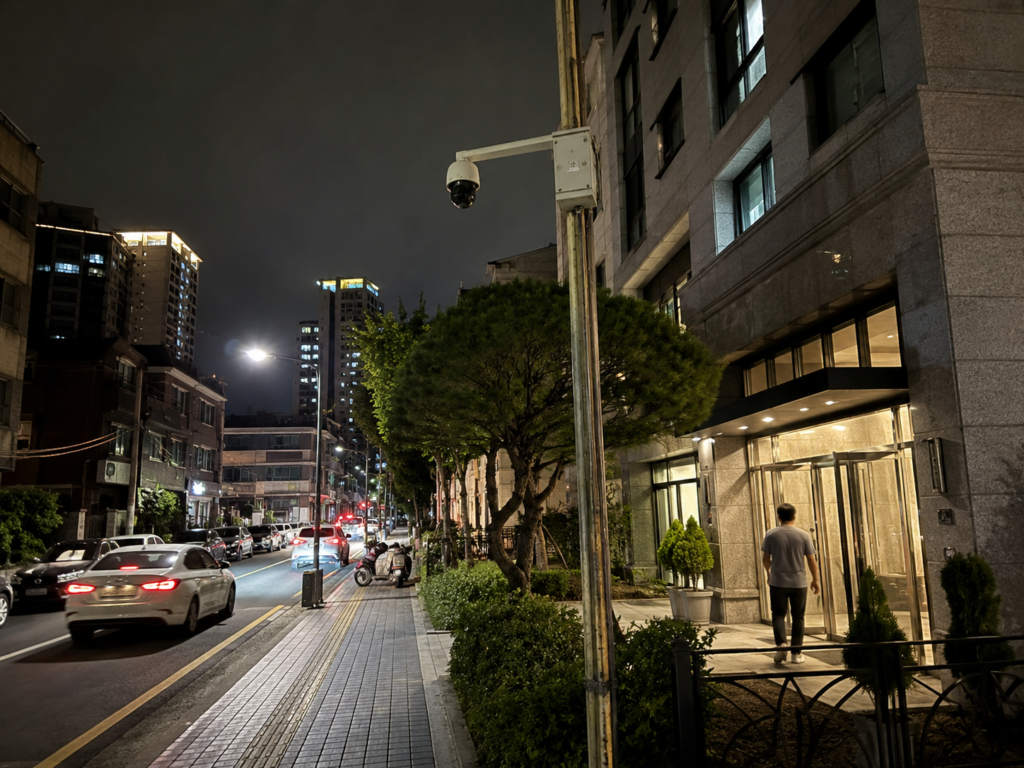
As you walk through a Korean city, you may notice CCTV cameras along streets, near apartment buildings, around parking areas, and inside subway stations.
Subway stations and some public facilities also have emergency call buttons or intercoms that connect users with staff. In major cities, some street CCTV systems are linked to local control centers that assist when crimes, accidents, or emergencies are reported.
For travelers, seeing these systems can make public spaces feel organized and prepared. The point is not that every street is being watched at all times, but that there are visible ways to record an incident or ask for help.
CCTV cannot prevent every problem, but these systems can make it feel easier to get help if something happens.
6. Getting Back to Your Accommodation Is Part of Feeling Safe
A city feels easier to explore at night when you know how you will get back to your accommodation.
In major Korean cities, subways and buses continue running late, and busy stations are often surrounded by shops, restaurants, taxis, and people heading home. Seoul also has a limited network of late-night buses after regular services begin to end.
However, public transportation does not run all night everywhere. The last subway and bus times vary by route, station, direction, and day. Before heading out, travelers should check the last train or bus that will take them back to their accommodation.
After regular services end, taxis and taxi-hailing apps provide another option. Late-night fares may be higher, especially during surcharge hours, but having access to a taxi makes it easier to change plans if an area feels uncomfortable or the accommodation is too far away to reach on foot.
Having a clear way back to your accommodation can make a real difference. A nearby station, a late-night bus, or an available taxi can make the city feel easier to navigate at night.
Walking Alone Rarely Makes You Stand Out
7. Why Solo Walkers Rarely Draw Attention
On busy urban streets, you will often see people out on their own. Some are returning from work, leaving a café, heading back after meeting friends, or taking a quiet walk before bed.
Seeing people walking alone is ordinary in these settings, so a solo traveler may attract less attention than they expect. People often pass by without starting a conversation or showing unusual interest in someone they do not know.
For solo travelers, this can make busy streets feel more comfortable. You can move through public spaces without feeling expected to talk to or engage with the people around you.
Unwanted approaches or uncomfortable situations can still happen, but people often keep to themselves in everyday public spaces.
When the Night Starts to Feel Different
8. Alcohol and Nightlife Can Change the Mood
Busy nightlife districts can feel reassuring at first because the streets are bright, businesses are open, and plenty of people are around. As the night gets later, however, heavy drinking can change the atmosphere.
In areas such as Hongdae, Itaewon, and Gangnam, you may come across packed sidewalks, heavily intoxicated people, unwanted attention, or occasional arguments. Inside a busy bar or club, it can also be easier to misplace your phone, wallet, or bag—or lose track of the friends you arrived with.
A lively area may feel more comfortable than an empty street, but brightness and foot traffic do not remove every risk. Noise, alcohol, and constant movement can make it harder to notice when a situation is becoming uncomfortable.
Keep your belongings close, stay in contact with the people you came with, and make sure everyone knows how they will return to their accommodation. If a person or place begins to make you uneasy, move to a staffed venue or leave the area.
9. The Shortest Walking Route Is Not Always the Best One
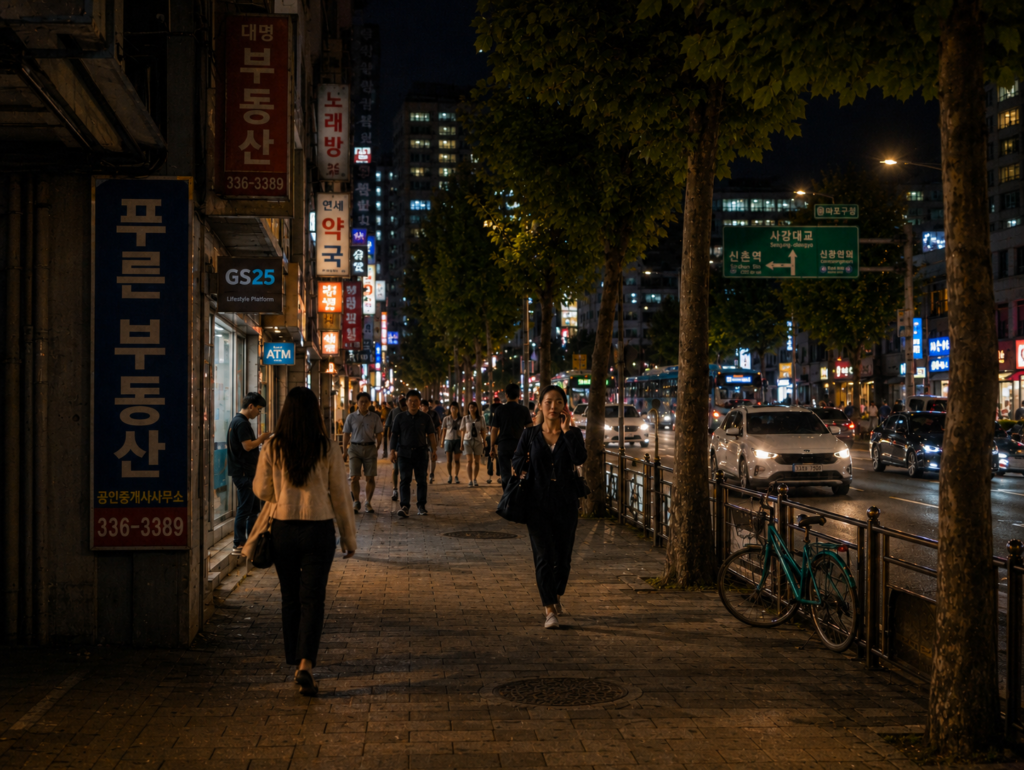
When walking back to your accommodation, a navigation app may suggest a narrow alley, quiet park, or riverside path because it saves a few minutes. At night, however, the brighter and busier route is often the better choice.
A street that felt comfortable earlier in the evening may feel very different after nearby shops close and foot traffic disappears. This is especially true in unfamiliar residential areas, around parks, and on paths separated from main roads.
If a route feels uncomfortable, do not continue simply because the map says it is the fastest way. Return to a main road, enter an open convenience store or hotel, or call a taxi.
Keep your phone charged and save the name and address of your accommodation in Korean.
In an actual emergency, call 112 for police assistance if you are being followed, threatened, or are in immediate danger. For a fire, serious injury, or medical emergency, call 119 for fire and ambulance services.
For non-emergency travel help or interpretation, the Korea Tourism Organization operates the 1330 Korea Travel Helpline. It is not a replacement for 112 or 119 in an actual emergency.
Final Thoughts
Korea often feels comfortable at night because everyday life continues after dark.
Convenience stores stay open, streets remain lit, public transportation runs late, and walking alone does not usually attract much attention.
CCTV, emergency call devices, active neighborhoods, and easy access to taxis can also make the city feel more manageable after dark.
However, that sense of comfort does not remove every risk. Nightlife districts, heavy drinking, quiet shortcuts, and unfamiliar neighborhoods still require basic awareness.
Keep your phone charged, know how you will return to your accommodation, and trust your instincts when something feels wrong.
Korea may feel more comfortable at night than many travelers expect, but that feeling should never be mistaken for a guarantee of safety.
Frequently Asked Questions
Is Korea safe at night for solo travelers, including women?
Many solo travelers feel comfortable in Korea at night, especially on busy, well-lit streets.
However, everyone should avoid isolated shortcuts, stay aware in nightlife areas, and leave if a person or situation feels uncomfortable.
What should I do if I feel unsafe in Korea?
Move to a well-lit main street or enter a staffed convenience store, hotel, or restaurant. If you are in immediate danger, call 112 for police assistance; call 119 for a fire or medical emergency. For non-emergency tourist information or interpretation, contact the 1330 Korea Travel Helpline.
Do buses and subways run all night in Korea?
No. Subway and regular bus schedules vary by city, route, direction, and day, so always check the last departure time on NAVER Map. Seoul has a limited network of late-night N buses, but they do not cover every area.
Are convenience stores open all night in Korea?
Many convenience stores in busy urban areas operate late or 24 hours, but not every location does. Some smaller neighborhood stores close late at night, so check the posted opening hours before relying on one.
Related Guides
These guides will help you navigate Korea more easily and plan your route home after dark.
Google Maps in Korea 2026: Naver Map, KakaoMap & What Changed
Google Maps does not work as well in Korea. Learn which map apps locals use so you can find walking routes, public transportation, and nearby businesses more easily.
Getting Around Korea: 6 Easy Subway, Bus, Taxi & Airport Tips
A route may look simple on your phone but feel different once you start moving. Learn how to use Korea’s transportation system and plan your journey more confidently.