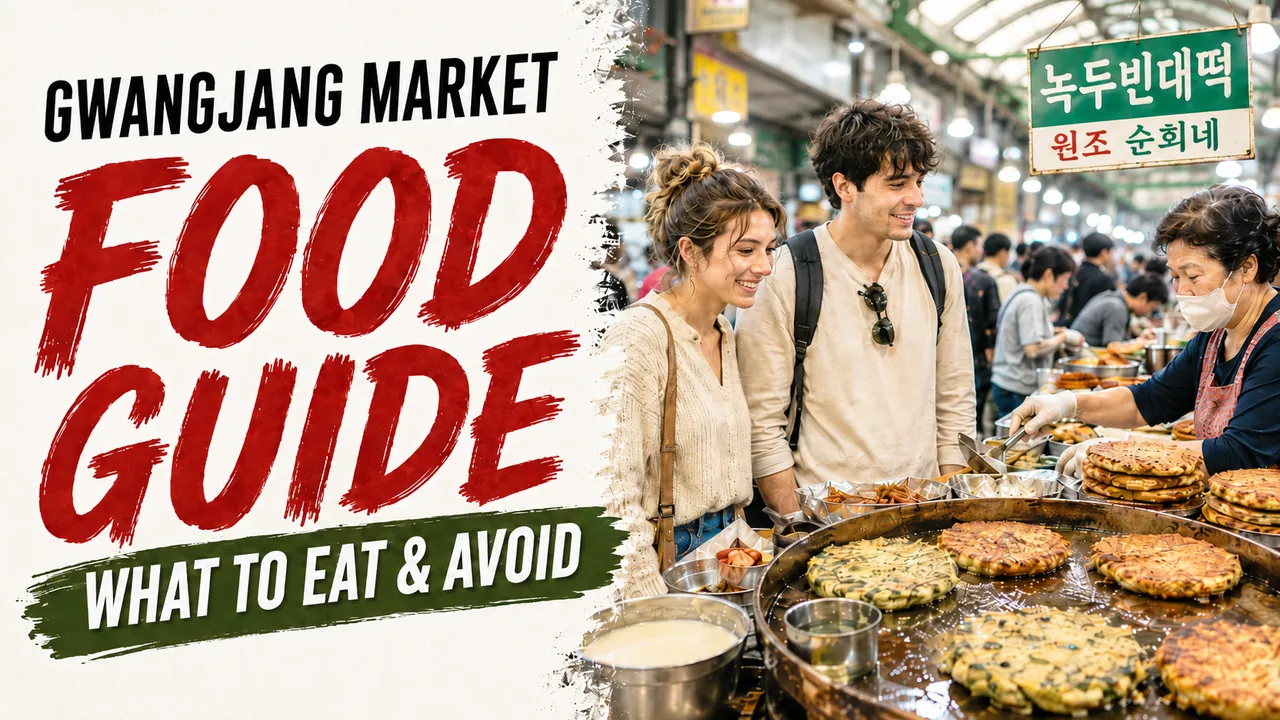
Gwangjang Market is worth visiting — but I would not go there with a checklist of ten foods and the idea that you need to try everything.
The market is better when you do the opposite.
Walk through once. Look at what is actually being cooked. Notice where locals and visitors are sitting. Then choose two or three things that genuinely look good.
That works better because Gwangjang is not one restaurant.
It is a large traditional market with food stalls, small restaurants, textile shops, hanbok stores, vintage clothing, and wholesalers packed into the same area.
The food street is the part most travelers know, but the wider market is still a working commercial space.
For a first visit, the useful questions are simple:
When should you go? What should you eat? Do you need cash? And how do you choose a stall without getting overwhelmed?
Is Gwangjang Market Worth Visiting?
Yes, especially on a first trip to Seoul.
But not because it is a “hidden local secret.”
It is famous, busy, tourist-heavy, and much more photographed than most neighborhood markets.
What makes it worth visiting is concentration.
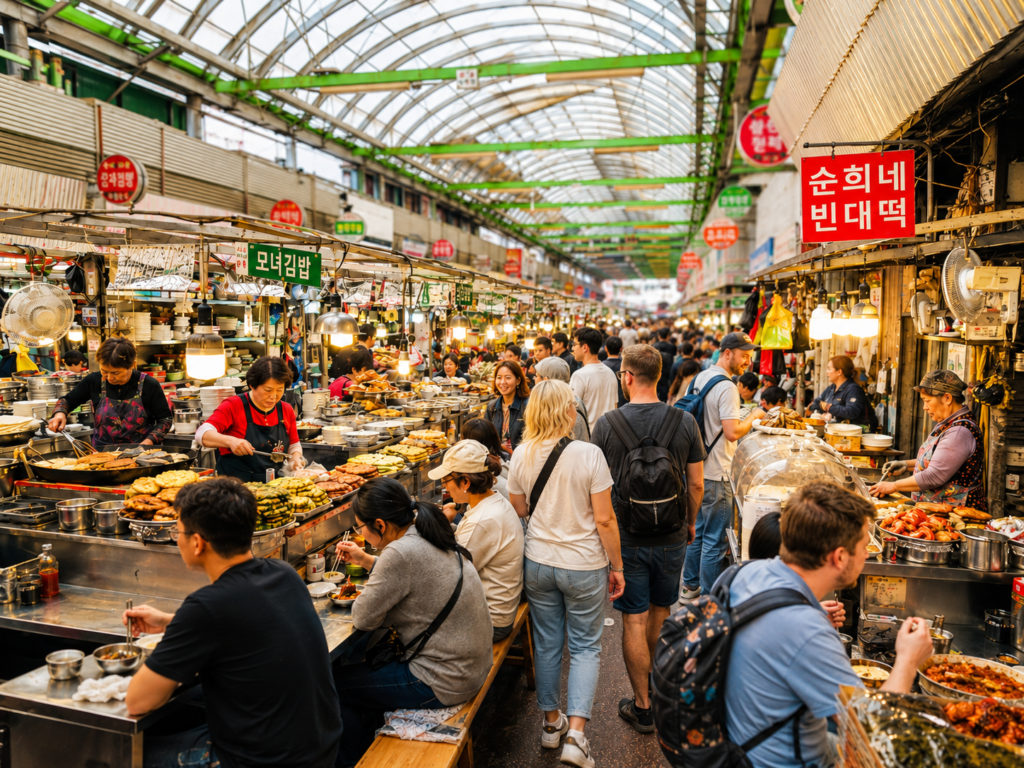
Within a short walk, you can see mung-bean pancakes frying on wide griddles, tiny gimbap rolls stacked beside mustard sauce, bowls of handmade noodles, yukhoe restaurants, fabric shops, and vintage-clothing stalls.
That makes the market easy to understand even if you know very little about Korean food.
You can see what people are eating before you order.
For me, that is the best reason to go.
Gwangjang lets you browse with your eyes first.
What Are Gwangjang Market’s Opening Hours?
The general market and the food street do not keep exactly the same schedule.
Current official visitor information lists:
- General market: 9:00 a.m.–6:00 p.m.
- Food street: 9:00 a.m.–11:00 p.m.
- General market: closed Sundays
- Food street: listed as open year-round
Individual shops and restaurants can keep different hours.
That distinction matters.
If you arrive at 8:30 p.m. expecting to browse fabric, hanbok, and general market shops, you may be disappointed even though the food area is still active.
If food is your main reason for going, evening can work well.
If you want to see the broader market, go during the day.
For current hours, use the official VISITKOREA Gwangjang Market listing.
Is Gwangjang Market Open on Sunday?
The food street is officially listed as open year-round.
The general market is closed on Sundays.
So a Sunday visit can still make sense if your main goal is street food.
It is a different experience from visiting on a weekday afternoon when more of the textile, clothing, and general market businesses are open.
If you want “Gwangjang Market” as a food stop, Sunday can work.
If you want the whole market, choose another day.
Is Gwangjang Market Open During Chuseok?
Do not rely on the normal schedule alone during Chuseok.
In 2026, the Chuseok holiday runs from September 24 to 26.
The food street is officially listed as open year-round, but holiday hours can still vary by individual stall or restaurant.
That means “the food street is open” does not guarantee that the exact vendor you saved from TikTok, YouTube, or Google will be serving that day.
If you are visiting during Chuseok, check the specific business on Naver Map or KakaoMap the same day.
For a market like Gwangjang, that is more useful than relying on an old blog post with one holiday timetable.
What Should You Eat at Gwangjang Market?
You do not need a ten-item food challenge.
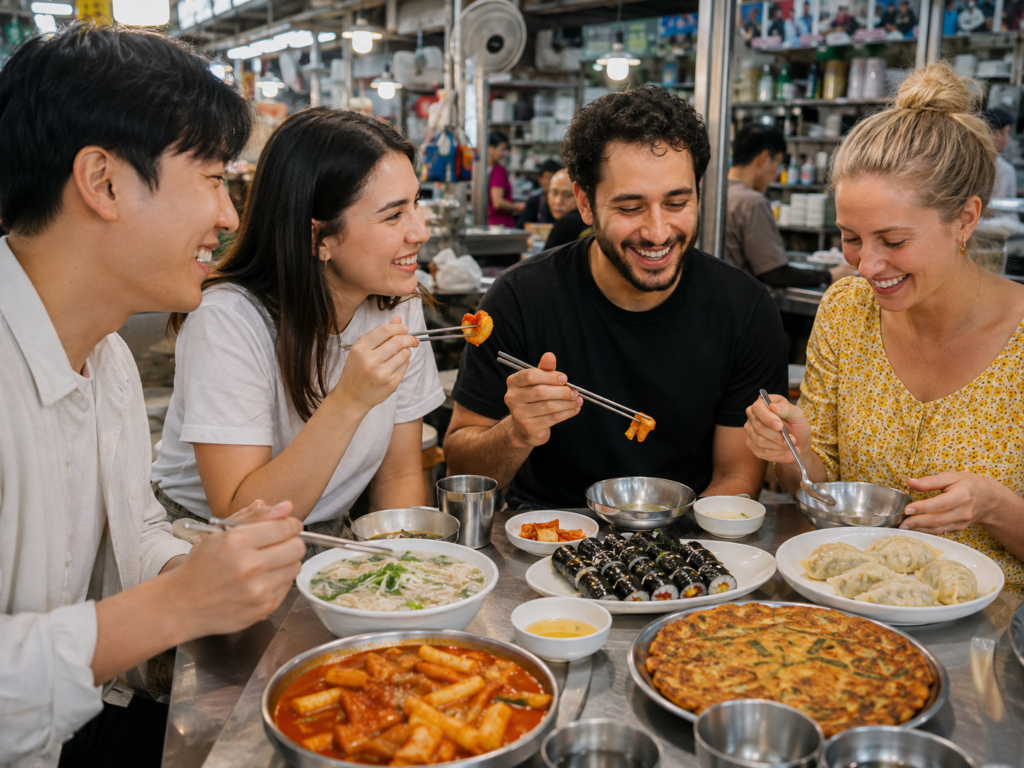
For a first visit, I would choose one filling item, one snack, and then leave room for whatever catches your eye.
A simple combination could be:
bindaetteok + mayak gimbap + one bowl of noodles
or
yukhoe + one market snack
That is enough to understand why the market is famous without spending the whole visit eating because a checklist told you to.
Bindaetteok
Bindaetteok is one of the easiest foods to recognize.
Ground mung beans are cooked into thick savory pancakes on large griddles until the outside becomes crisp.
The smell usually reaches you before the stall does.
It is filling.
If you want to try several foods, sharing one is often smarter than ordering one per person.
Mayak gimbap
These small gimbap rolls are simpler than the large, ingredient-packed gimbap many travelers imagine.
The mustard-soy dipping sauce is part of what makes them distinctive.
They work well as a snack because you can try them without committing to a full meal.
Kalguksu
If you want one proper meal instead of several snacks, kalguksu is easy.
It is warm, filling, and usually straightforward to order as one bowl for one person.
That also makes it a comfortable choice for solo travelers.
Yukhoe
Gwangjang Market is well known for yukhoe, Korean seasoned raw beef.
If you already enjoy raw beef dishes, it is one of the market’s more distinctive choices.
If you do not normally eat raw meat, there is no reason to order it simply because it appears on every “must eat” list.
A famous food is still optional.
Do You Need Cash at Gwangjang Market?
Not necessarily.
VISITKOREA’s current market listing says cards are accepted.
In practice, I would still carry a modest amount of Korean won because payment can vary between small vendors and individual businesses.
The easiest habit is to ask before ordering:
카드 돼요?
Kadeu dwaeyo?
“Can I pay by card?”
If the stall accepts cards, use your card.
If it does not, either use cash or choose another stall.
You do not need to carry a thick envelope of cash just because you are visiting a traditional market.
For the wider question of when travelers still need won in an otherwise card-friendly country, see our Cash in Korea guide.
How Do You Choose a Stall Without Feeling Pressured?
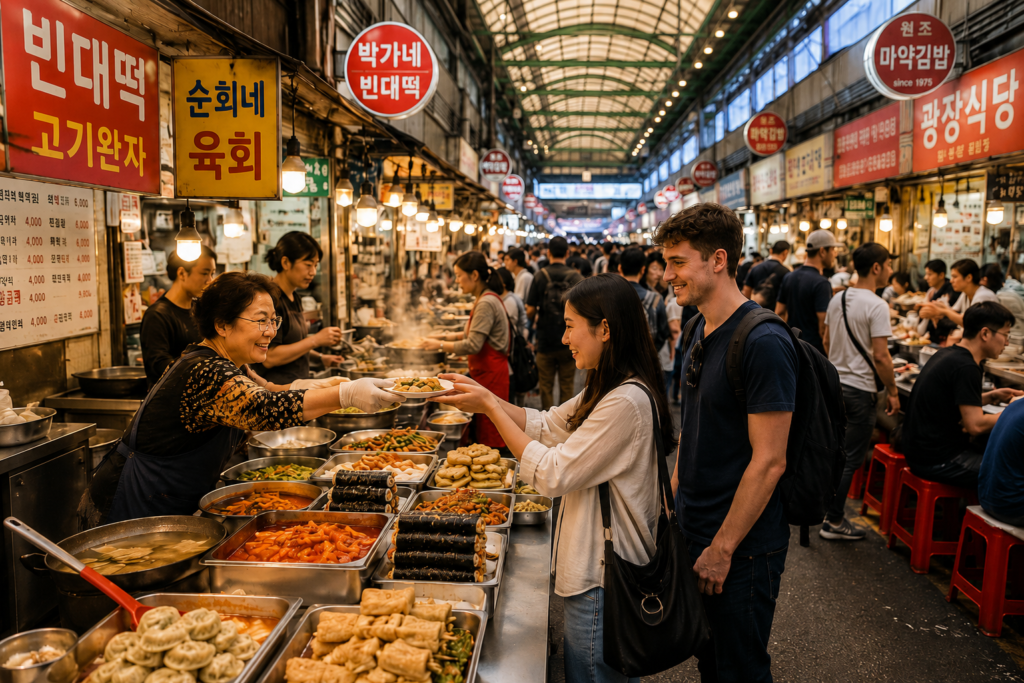
Walk through the food street once before sitting down.
That is the simplest advice I can give.
At busy times, vendors may call to people walking past or gesture toward empty seats.
You are not required to sit because someone invited you.
Look at:
- the displayed menu
- the price
- the portion
- what is actually being served
- whether you want that food
Then choose.
Seoul has previously introduced price-and-quantity display measures and monitoring at Gwangjang Market after complaints about unclear pricing and sales practices.
That does not mean you should distrust every vendor.
It means the sensible behavior is the same here as anywhere else: know the price and portion before ordering.
If something is unclear, ask first.
What Is the Best Time to Visit Gwangjang Market?
For a first visit, I prefer late morning or early afternoon.
The food area is active, but you can also see more of the wider market before general shops begin closing.
Evening is better if atmosphere matters more than browsing.
The food alleys feel livelier, but the crowds can be heavier.
So I would choose based on what you actually want:
Late morning / afternoon: easier for exploring the whole market.
Evening: better for food-street energy.
There is no single perfect hour.
The better question is whether you want to browse a market or eat in a busy food alley.
How Do You Get to Gwangjang Market?
For most visitors, Jongno 5-ga Station on Line 1 is the easiest approach.
Current Visit Seoul information points travelers to Exit 8, just a short walk from the market.
Euljiro 4-ga Station on Lines 2 and 5 is another practical option depending on where you are coming from.
Once you arrive, you do not need a complicated route through the market.
If food is your goal, follow the activity toward the food street.
If you also want textiles, vintage clothing, or other parts of the market, arrive earlier and give yourself time to wander beyond the most photographed food aisle.
How Long Should You Spend at Gwangjang Market?
For most first-time visitors, one to two hours is enough for the food area and a short walk through the market.
Stay longer if you want to browse clothing, textiles, or vintage shops.
The mistake is not leaving too early.
It is trying to turn the market into an all-day attraction when you are already full and have stopped noticing what is around you.
Eat a few things. Walk through the market. Then move on while the experience still feels fun.
Gwangjang Market works best as a lively piece of a Seoul day — not a test of how many famous foods you can complete.