
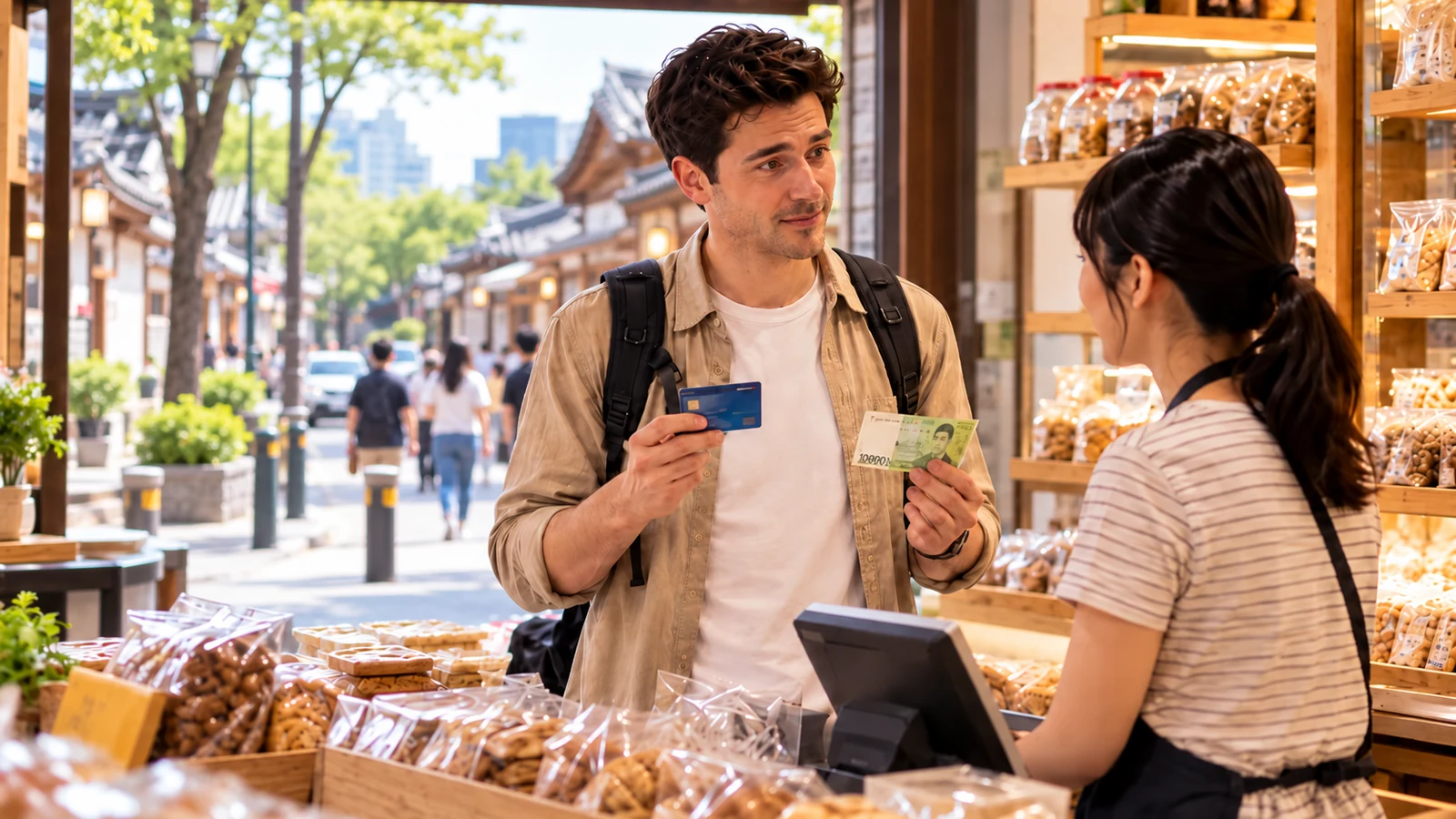
If you are wondering whether you need cash in Korea, the answer is usually less than you expect—but not necessarily none.
A bottle of water at a convenience store? Card.
A coffee that costs only a few thousand won? Card.
Lunch, shopping, a taxi, a bakery? Usually card again.
In everyday life, I use a credit card even for very small purchases. At convenience stores especially, paying by card for something inexpensive feels completely normal. I never feel that I should use cash just because the amount is small.
But I still would not tell a traveler to arrive in Korea with no cash at all.
The best way to think about it is this:
In Korea, cash is no longer the default. It is the backup for the places where card culture does not quite reach.
Why Does Korea Feel Almost Cashless?
For many Koreans, taking out a credit card for a small purchase requires almost no thought.
There is generally no awkward moment at a convenience store where you wonder whether the purchase is “too small” for a card.
A drink, a snack, a single item from a pharmacy, or an inexpensive coffee can all be paid for by card without attracting attention.
That is one reason Korea can feel almost cashless to visitors.
You may go through an entire morning without seeing anyone around you use paper money.
But what a local experiences and what a traveler experiences are not always exactly the same.
Koreans are often using Korean-issued cards, Korean bank accounts, local payment apps, and payment systems that were designed around local users.
A visitor may be standing in the same store with a perfectly valid overseas card and still encounter a machine or payment system that does not cooperate.
That difference matters more than whether Korea itself is “cashless.”
Small Purchases Are Completely Fine by Card
This is one of the things visitors often overthink.
You do not need to use cash in Korea simply because the purchase is small.
At a convenience store, I would normally use my credit card even if I were buying only one inexpensive item.
That feels completely ordinary here.
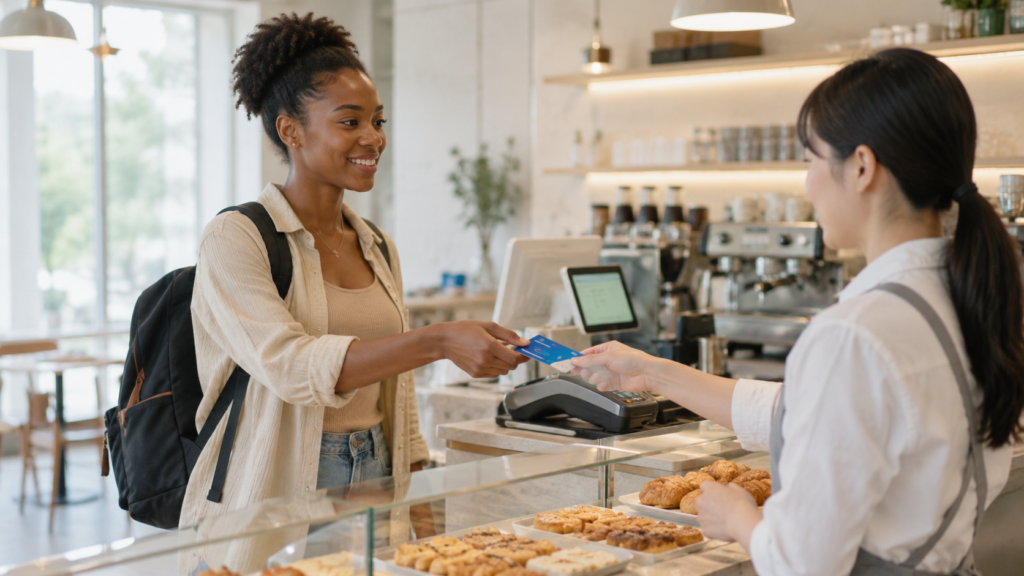
The same is true in many cafés, bakeries, restaurants, pharmacies, supermarkets, and chain stores.
You do not need to look through your wallet for coins because you feel guilty about presenting a card for a small amount.
If the store accepts cards, using one is normal.
That is especially useful to know if you come from somewhere where small businesses sometimes have a card minimum or where customers feel pressure to pay cash for inexpensive purchases.
Korea generally does not have that same social feeling around small card payments.
Where Does Cash Still Feel Useful?
Traditional markets feel different to me.
I may use a card in everyday life almost everywhere else, but at a traditional market I sometimes instinctively reach for cash because it simply feels more natural in that setting.
That does not mean every traditional market stall is cash-only.
Many vendors accept cards.
But markets contain a mixture of permanent shops, small stalls, street food vendors, and very small businesses, so payment habits are less uniform than they are inside a department store or convenience store.
Street vendors are another situation where I am more likely to think about cash first.
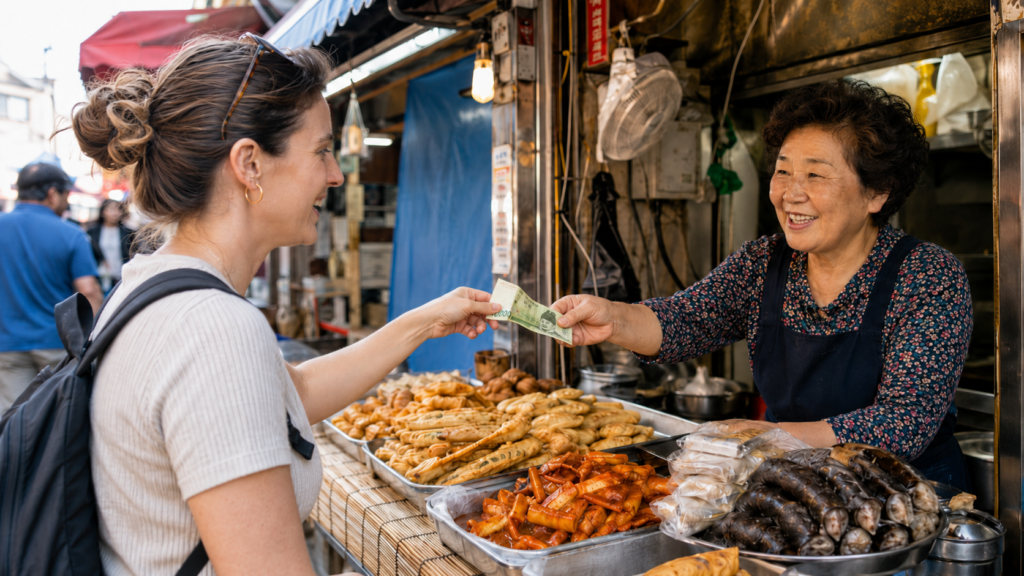
And sometimes the reason is not complicated at all.
If I already have the exact small bills or coins in my wallet, I may simply use them.
For a traveler, this means a little cash can be useful around:
- traditional markets
- street stalls
- very small independent vendors
- some older or unattended machines
- situations where a foreign card is unexpectedly rejected
The point is not that these places always require cash.
It is that card payment is less predictable at the edges of Korea’s otherwise very card-friendly system.
Why Might a Traveler Need Cash More Often Than a Korean?
This is where many Korea payment guides become confusing.
A Korean saying “I hardly ever use cash” may be completely truthful.
But that does not automatically mean a visitor can copy the same setup.
A local may have a Korean credit card, a debit card connected to a Korean bank account, a transportation function built into a card, and access to Korean mobile-payment systems.
Travelers usually do not arrive with that infrastructure.
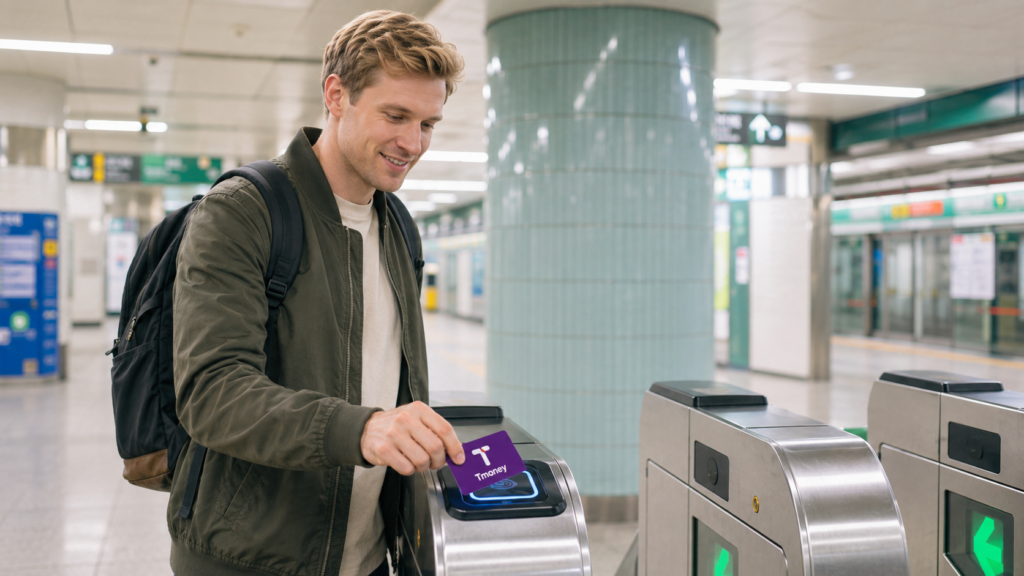
That is why situations involving transportation cards, certain kiosks, machines, local apps, or foreign-card processing can feel inconsistent even though everyday card acceptance in Korea is excellent.
The practical details about which cards to bring, transportation cards, WOWPASS, Climate Card, and what to do when a foreign card fails belong in our separate How to Pay in Korea guide.
For this article, the important distinction is simpler:
Koreans and tourists can stand at the same counter but still have different payment options available to them.
That is why a Korean local can comfortably live with almost no cash while a traveler may still benefit from keeping some won in a wallet.
What Should You Do When Your Card Does Not Work?
A rejected card does not automatically mean the business is cash-only.
Sometimes the problem is the particular terminal, machine, or foreign card.
If a physical store rejects your payment, I would first try the simplest alternatives:
- use the physical card instead of a phone wallet
- try a second card
- ask whether payment can be made at another counter
- use cash if the other options fail
There is no need to turn one failed transaction into a rule about all of Korea.
Your card may fail at one kiosk and work perfectly at the café next door.
This is also why carrying two cards and a little cash is more useful than trying to predict every payment system before your trip.
Cash is there to solve the exception.
It does not need to become your main way of paying.
Cash Is a Backup, Not Your Main Payment Method
If I were explaining Korea to a friend visiting for the first time, I would not tell them to carry a thick envelope of Korean won.
I would also not tell them to arrive with zero cash.
Most of the time, your card will probably stay in your hand and your cash will stay in your wallet.
That is exactly how it should be.
Use your card for normal everyday purchases without worrying about whether the amount is too small.
At a convenience store, paying a few thousand won by card is completely ordinary.
When you visit a traditional market or street stall, look at how the place operates. If cash feels easier—or you already have the right small bills—use it.
And keep some Korean won available for the occasional moment when a card, machine, or foreign payment system simply does not work.
In Korea, cash is not something you need to use every day. It is something you are glad to have on the day you unexpectedly need it.