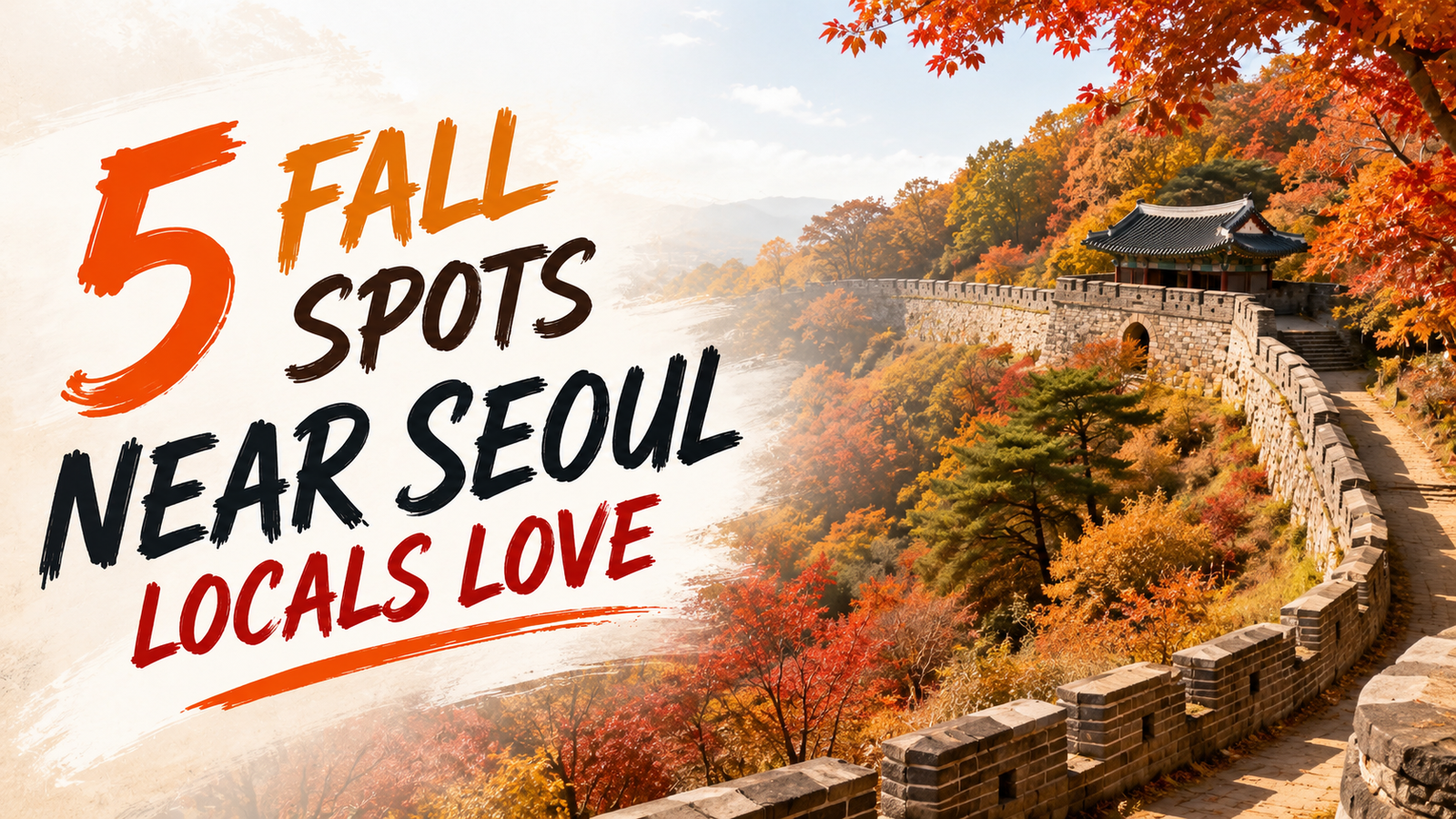
Search for autumn foliage near Seoul, and the same names show up again and again: Nami Island, Hwadam Forest, and a few famous mountain parks.
They’re beautiful.
But Koreans don’t spend every autumn weekend at Nami Island.
We also walk along old fortress walls, slip into a valley hidden behind a Seoul neighborhood, circle a lake beneath changing leaves, head north for silver-grass-covered mountains, or wake up ridiculously early to photograph mist rising where two rivers meet.
And when I travel, there’s something I always wish “best places” lists would tell me:
How difficult is it to actually get there — and is it worth the effort?
So I used a few rules for this list.
Each place had to be possible as a round trip while staying in Seoul, feel more local than the standard international tourist checklist, offer real natural scenery, have enough people around that it doesn’t feel isolated, and give you enough to see or experience to justify the journey.
Hidden is good. Lonely isn’t.
Most importantly, each of the five had to show a completely different side of autumn in Korea.
One more thing: these are not autumn-only attractions. All five can be enjoyed in other seasons too. I’m recommending them here because fall gives each landscape an especially memorable character.
For most of these spots, late October to early November is a good window to watch, although peak foliage shifts every year with the weather.
Table of Contents
How to Choose Your Autumn Foliage Spot Near Seoul
Difficulty: ★☆☆☆☆ = very easy / ★★★★★ = more effort
Worth the Effort: More stars = stronger recommendation
| Place | Difficulty | Fall Crowds | Worth the Effort | Best For |
|---|---|---|---|---|
| Namhansanseong | ★★☆☆☆ | Medium–High on weekends | ★★★★★ | Fortress + mountain foliage |
| Suseongdong Valley | ★☆☆☆☆ | Low–Medium | ★★★★★ | Hidden nature inside Seoul |
| Seoul Grand Park Fall Trails | ★☆☆☆☆ | Medium | ★★★★☆ | Easy lake + forest walk |
| Sanjeong Lake & Myeongseongsan | ★★★☆☆–★★★★☆ | Medium–High in peak season | ★★★★★ | Lake + foliage + silver grass |
| Dumulmeori | ★★☆☆☆ | Medium–High on weekends | ★★★★★ | River mist + photography |
The easiest place isn’t automatically the best one.
Sometimes a little extra effort is exactly why a place stays in your memory.
Map: Where Are These Five Places?
They all work from a Seoul base, but they spread in very different directions. Check your hotel location before choosing — it can save more travel time than you expect.
5 Local Spots for Autumn Foliage Near Seoul
1. Namhansanseong — When You Want Autumn to Actually Look Like Korea
Difficulty: ★★☆☆☆
Walking: Easy to challenging depending on your route
Worth the Effort: ★★★★★
Best for: History + mountain scenery
Best Autumn Timing: Usually late October to early November
Year-round? Yes
Reservation: Not required
Hours: The fortress landscape is an outdoor area. Namhansanseong Temporary Palace is open 10:00–18:00 from April–October and 10:00–17:00 from November–March; closed Mondays except public holidays.
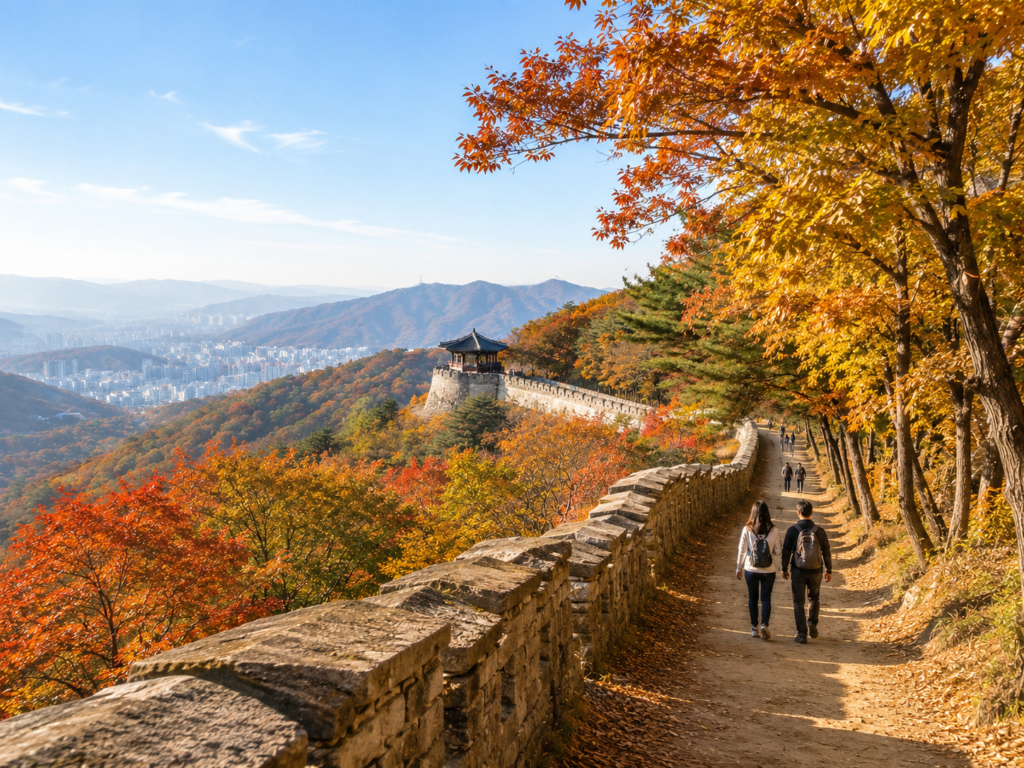
If you only choose one place on this list, Namhansanseong may be the safest all-around pick.
Why?
Because you didn’t fly to Korea just to photograph red leaves.
Here, autumn colors wrap around old stone fortress walls running across the mountain. Historic gates appear between the trees, and the scenery keeps changing as you follow the wall.
It feels unmistakably Korean.
Namhansanseong is more than a scenic mountain walk. It is a UNESCO World Heritage Site, originally designed as an emergency capital for the Joseon Dynasty. In autumn, that history becomes part of the scenery: old stone fortress walls curve along the mountain ridge while the surrounding forest turns red, orange, and gold. It is one of those places where you are not simply looking at fall foliage — you are walking through a landscape that feels distinctly Korean.
You don’t need to turn your visit into a serious hike either.
Stay around the easier fortress and palace sections for a relaxed outing, or continue along the wall if those hiking shoes deserve some exercise.
From Seoul, a practical route is Subway Line 8 to Sanseong Station, followed by a local bus toward Namhansanseong.
Local verdict: If you want a fall photo that immediately says Korea, start here.
2. Suseongdong Valley — The “Wait, This Is Seoul?” Pick
Difficulty: ★☆☆☆☆
Walking: Easy–Moderate
Worth the Effort: ★★★★★
Best for: Short itineraries + Seochon
Best Autumn Timing: Usually late October to early November
Year-round? Yes — spring greenery and summer valley scenery are also attractive
Hours: This is an outdoor valley area rather than a ticketed attraction. Access conditions and nearby facilities can change, so check current local information if visiting very early or late.
Reservation: No
Admission: Free
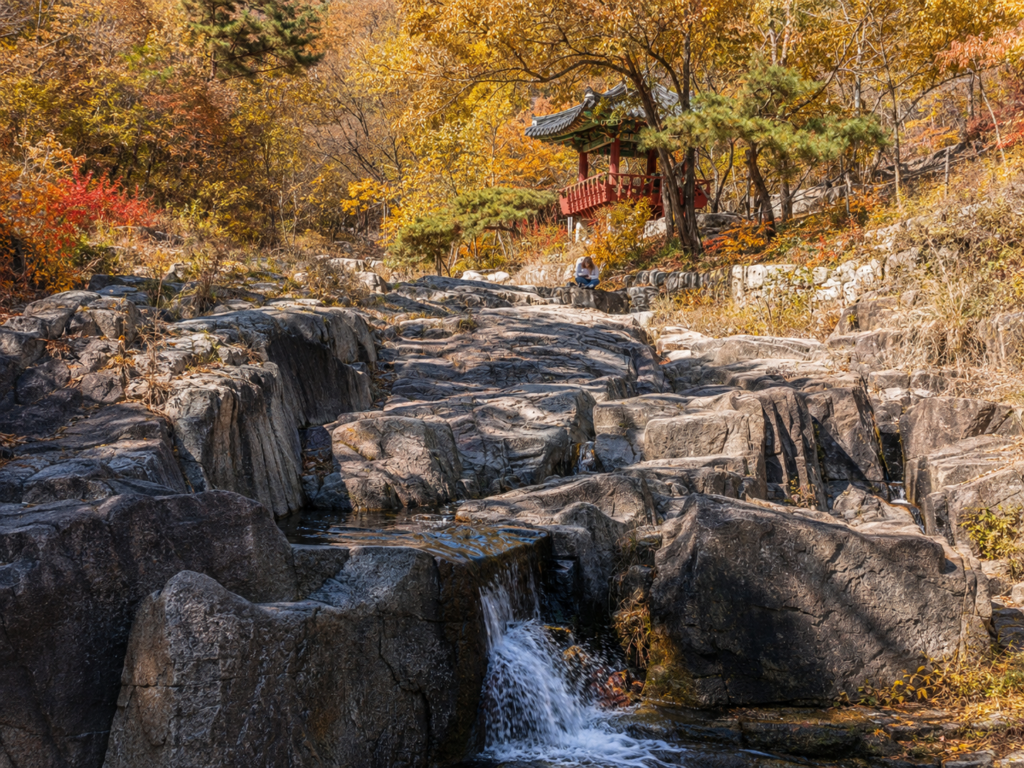
This is the surprise pick.
Spend your morning around Gyeongbokgung and Seochon. Walk past old residential streets, cafés and Tongin Market.
Then keep going.
Suddenly, beneath Inwangsan, the city gives way to rocks, trees and a natural valley.
And yes, you are still in central Seoul.
That contrast is what makes Suseongdong Valley interesting.
A beautiful valley alone may not surprise someone from Canada, Europe or Japan. But finding one tucked behind an old Seoul neighborhood, minutes from a royal palace, is a different experience.
The landscape has history too. The area appears in the work of celebrated Joseon painter Jeong Seon, and the valley was later restored after apartment buildings that once occupied the site were removed.
Getting there is almost suspiciously easy.
From Gyeongbokgung Station, take the Jongno 09 neighborhood bus and get off near the Park No-soo Art Museum.
Or, on a crisp autumn day, do what I would do:
Walk up through Seochon.
Local verdict: Maximum “hidden Seoul” feeling for minimum transportation trouble.
3. Seoul Grand Park Fall Trails — Much More Than a Zoo
Difficulty: ★☆☆☆☆
Walking: Easy–Moderate
Worth the Effort: ★★★★☆
Best for: Easy walking + lake + forest
Best Autumn Timing: Usually late October to early November
Year-round? Yes — the landscape changes dramatically with the seasons
Reservation: Not required for the free walking trails
Hours: Specific facilities and trails use seasonal hours. For the free forest-bathing and zoo perimeter trails, the official Seoul Grand Park guidance lists autumn entry from 09:00 to 16:00, with the trails closing at 18:00. Hours can change, so check the official site before visiting.
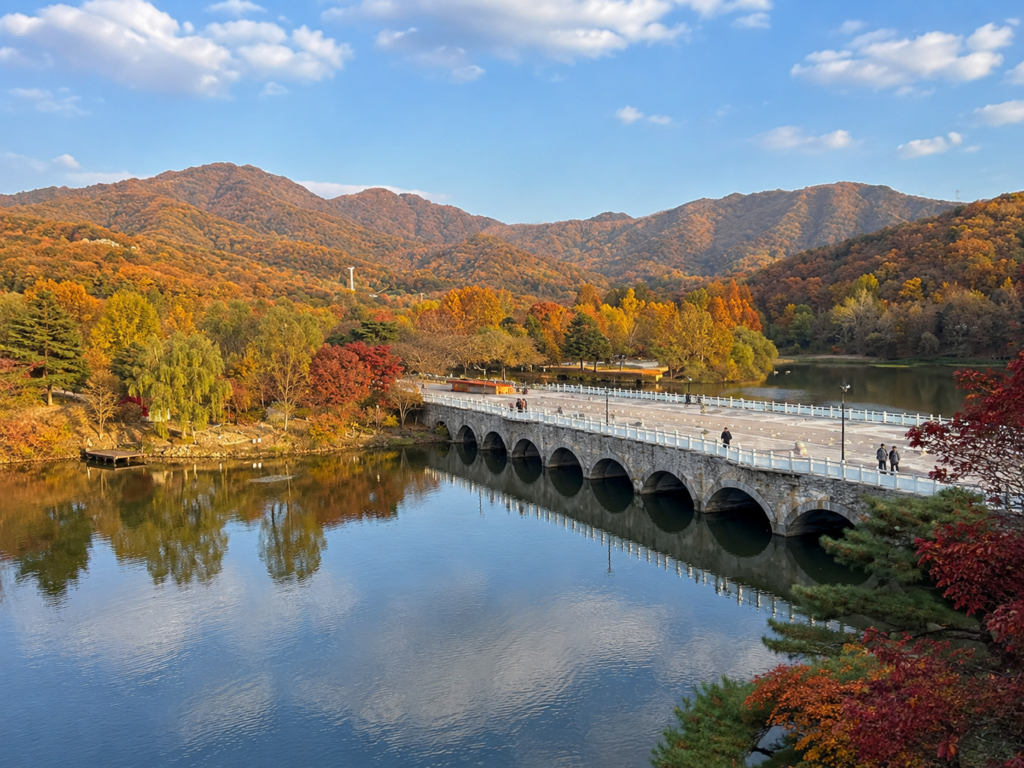
Mention Seoul Grand Park, and many international visitors immediately think “zoo.”
But in autumn, the real attraction can be outside the animal exhibits.
The park has several walking routes where the lake, forested hills, and changing leaves create an easy fall escape from the city. You can follow the lakeside paths for a relaxed walk or spend more time on the longer forest trails around the park.
In fall, the combination of water, wooded hills, and colorful foliage gives this area a completely different character from the historic scenery at Namhansanseong or the rocky valley at Suseongdong.
Because the terrain is relatively gentle, this is one of the easiest places on this list if you want autumn scenery without a serious hike. The Sky Lift is also an option if you want a different view without adding too much walking.
Getting here is refreshingly simple. Take Subway Line 4 to Seoul Grand Park Station, and you are already close to the main park area.
Because trail access and operating hours can change with the season or weather, check the official Seoul Grand Park website before heading out.
Local verdict: If you want an easy fall escape with a lake, forest, and straightforward subway access, this is one of the safest choices on the list.
4. Sanjeong Lake & Myeongseongsan — The Full Autumn Package
Difficulty: ★★★☆☆ around the lake / ★★★★☆ if hiking toward the silver-grass fields
Walking: Choose your own level
Worth the Effort: ★★★★★
Best for: A full autumn day
Best Autumn Timing: October for silver grass; late October is often stronger for surrounding fall color
Year-round? Yes — Sanjeong Lake is a four-season destination
Reservation: No
Hours: The lake area itself is open year-round. Mountain hiking should always be planned around daylight, weather and current trail conditions.
This one is farther from Seoul.
It also gives you more in return.
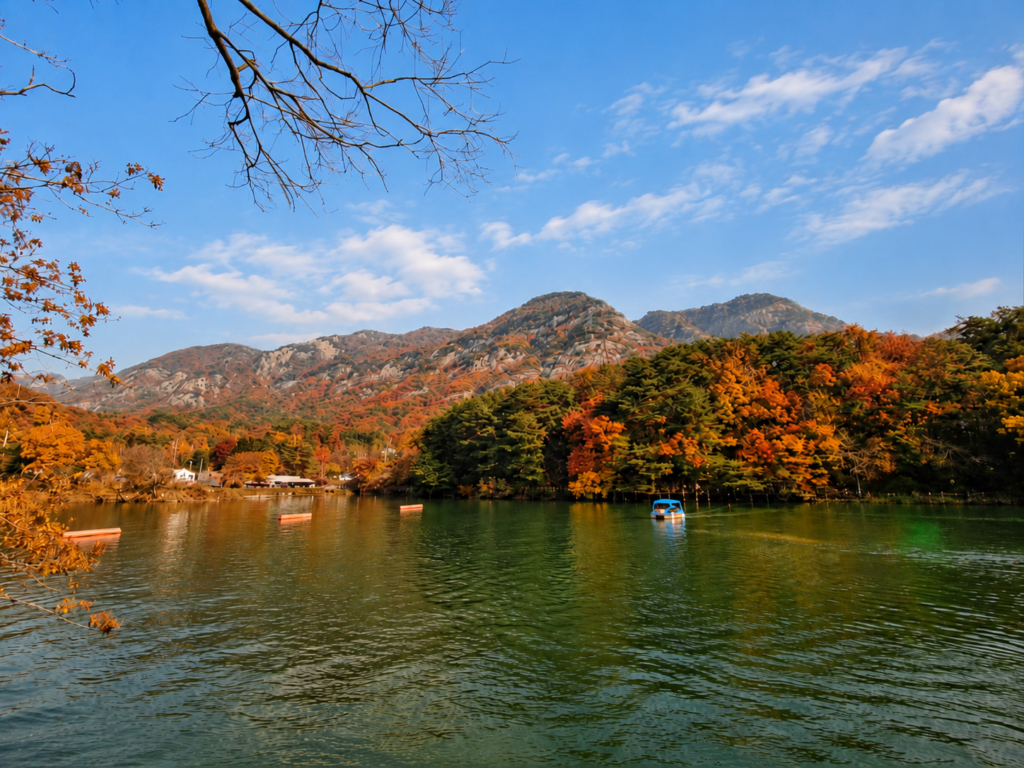
Sanjeong Lake sits below Myeongseongsan in Pocheon, surrounded by mountain scenery. The lake itself was created as an agricultural reservoir in 1925, but today the surrounding mountains, forest, waterfalls and walking routes are the reason people come.
You can simply walk beside the lake and enjoy the autumn landscape.
Or keep going.
Myeongseongsan is one of the best-known silver-grass mountains in the Seoul region. A popular hiking route passes Biseon Falls and Deungnyong Falls before reaching the silver-grass fields and continuing toward the summit.
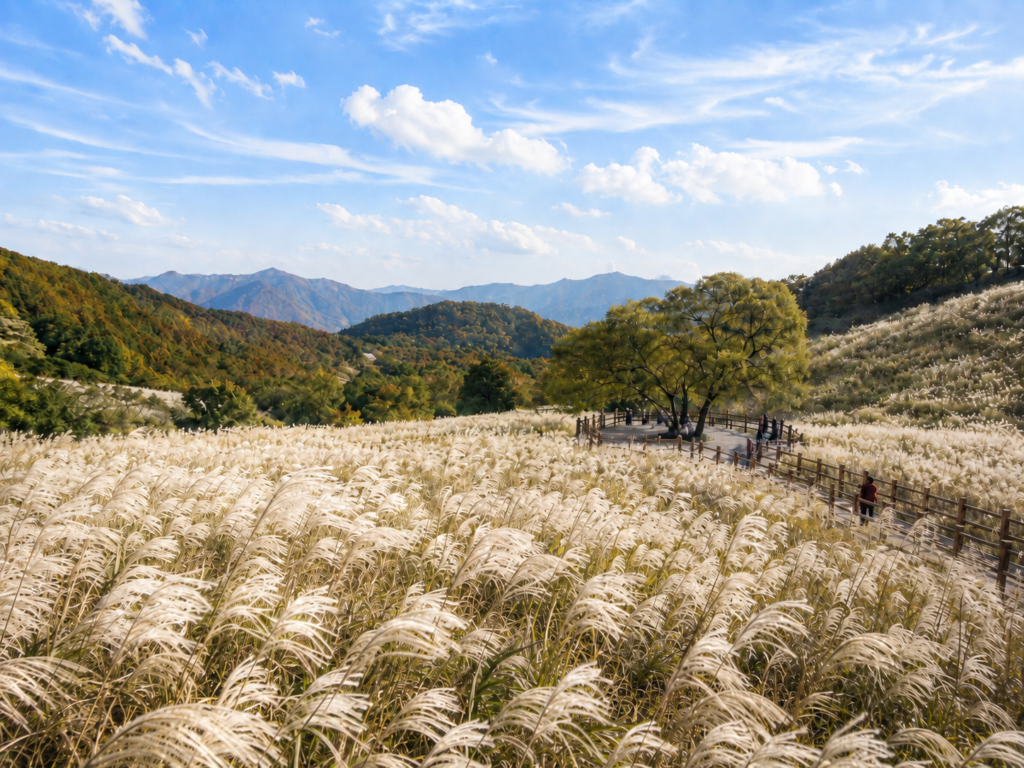
So this is not a destination where you travel far, take one photograph and wonder what to do next.
There are levels.
Easy mode: Sanjeong Lake.
More effort: waterfalls + silver-grass fields.
Serious mode: continue higher into Myeongseongsan.
That flexibility is exactly why it makes this list.
Because Myeongseongsan is near a military training area, trail access can occasionally be restricted. Check current Pocheon or VISITKOREA information before making the longer trip.
The disadvantage is transportation. It takes considerably longer than Seoul Grand Park or Suseongdong Valley, so this is the place to choose when you’re willing to spend most of a day outside Seoul.
And don’t expect it to be lonely during peak autumn weekends. Koreans know this place.
Local verdict: Travel farther, but get a real autumn day in return — lake, mountains, waterfalls, foliage and silver grass.
5. Dumulmeori — Where Korean Photographers Arrive Before You Wake Up
Difficulty: ★★☆☆☆
Walking: Easy
Worth the Effort: ★★★★★
Best for: Photography + riverside scenery + slow mornings
Best Autumn Timing: Late October to early November for autumn atmosphere; early morning for mist
Year-round? Absolutely — each season looks different here
Hours: Dumulmeori itself is an outdoor riverside destination. Nearby cafés, parking areas and facilities keep their own hours.
Reservation: No
Admission: Free
Dumulmeori isn’t a hidden spot for Koreans. But for many international travelers, it still flies under the radar.
That gap is exactly why it belongs on this list.
It’s a local favorite that many international visitors still miss while building a Seoul itinerary around palaces, shopping neighborhoods, and better-known day trips such as Nami Island.
The name refers to two waters meeting.
This is where the Bukhangang and Namhangang rivers join, forming the beginning of the Hangang.
The scenery is simple but memorable: broad water, reeds, an old zelkova tree, distant mountains and — if the conditions cooperate — mist floating above the river.
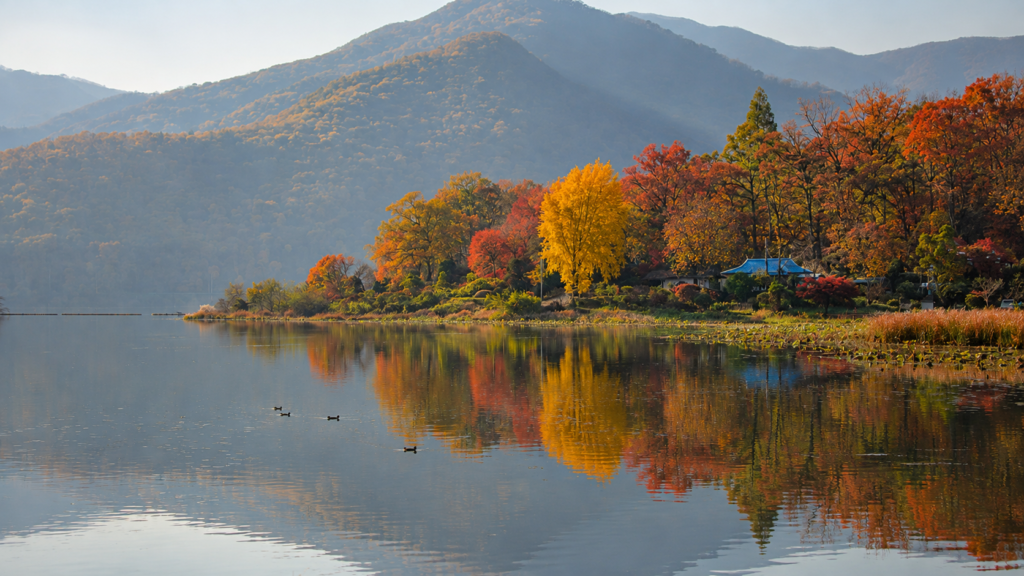
Korean photographers know this very well.
Many arrive before sunrise, hoping to catch the old tree, morning mist and first light in the same frame.
Do you have to wake up that early?
Absolutely not.
But if photography is one of the reasons you travel, this is one place where losing a little sleep can pay off.
From Yangsu Station on the Gyeongui-Jungang Line, local buses connect toward Dumulmeori, or a taxi takes roughly 10 minutes.
And you don’t have to take one photo and leave.
The wider area connects naturally with Semiwon, riverside walking paths, reed areas, Yangsu Traditional Market and the old Bukhangang railway bridge.
One honest note: Dumulmeori is not the place on this list with the densest red-and-orange foliage.
Its strength is something different.
It feels like autumn.
Cold morning air, river mist, reeds, changing trees and slow water.
Local verdict: Come at a normal hour for a beautiful riverside walk. Come at dawn if your camera is more dedicated than you are.
What About Hwadam Forest?
You probably noticed that Hwadam Forest didn’t make the five.
I’ve been there myself, and yes — autumn there can be spectacular.
But getting the right peak-season reservation was almost a hobby of its own.
After I had already booked, I kept checking for cancelled tickets day after day and at different times, hoping a better date or time slot would appear.
Eventually, I managed to change my schedule.
So I’m not going to casually tell an international traveler:
“Just go to Hwadam Forest.”
If you secure a good reservation, fantastic.
If you don’t, Korea still has plenty of autumn left.
And Hwadam Forest isn’t an autumn-only attraction either. It can be visited in other seasons; fall simply gets the most attention because the foliage is spectacular and demand becomes especially intense.
It deserves a separate guide covering reservations, cancellation tickets, changing your date and what international visitors need to know.
Consider this your preview.
Which Autumn Spot Should You Choose?
If your brain now has five tabs open, here’s the shortcut.
Most distinctly Korean: Namhansanseong
Easiest hidden surprise: Suseongdong Valley
Easiest nature day: Seoul Grand Park
Best full-day autumn adventure: Sanjeong Lake & Myeongseongsan
Best for photographers: Dumulmeori
That’s really the point of this guide.
The “best” destination isn’t necessarily the one with the most Instagram posts.
It’s the one that fits your schedule, your legs and your tolerance for Korean bus adventures.
Practical Tips for Autumn Day Trips from Seoul
Peak foliage dates move every year with temperature and weather.
Late October into early November is often an important window around Seoul and Gyeonggi-do, but don’t build an entire trip around one forecast published weeks in advance.
Check current foliage conditions shortly before you go.
Reliable mobile data is also surprisingly important for independent trips. A working Korea eSIM makes checking Naver Map, real-time bus arrivals and last-minute route changes much easier.
If you’re still choosing a hotel in Seoul, good subway connections may be more useful for these trips than staying directly beside one famous attraction.
For Namhansanseong or Myeongseongsan, wear shoes you can actually walk in.
Korea will provide enough stylish people around you.
You do not need to represent fashion on a mountain.
Final Thoughts
Famous autumn destinations are famous for a reason.
But they don’t show you every version of Korean fall.
These five give you five very different landscapes:
a mountain fortress, a valley hidden inside Seoul, an easy lakeside forest, a lake beneath silver-grass mountains, and two rivers disappearing into morning mist.
That is much more interesting than five versions of “pretty trees.”
And remember: none of these places stops being worthwhile when autumn ends.
This guide simply catches them at one of their most beautiful moments.
If you’re looking for autumn foliage near Seoul but want to step slightly outside the standard international tourist itinerary, start here.
Choose how much effort you want to make.
Then ask one more question:
Is the place worth that effort?
Sometimes, absolutely.
Frequently Asked Questions
When is the best time for autumn foliage near Seoul?
Peak foliage changes every year depending on temperature and weather. Late October through early November is often a good window around Seoul and Gyeonggi-do, but don’t rely on one fixed date. Check current foliage conditions shortly before your trip.
Are these places only worth visiting in autumn?
No. All five are year-round destinations. Autumn is the focus of this guide because cooler walking weather, changing leaves, silver grass, and seasonal scenery make them especially memorable. Several are also beautiful in spring and summer, while Dumulmeori attracts photographers throughout the year.
Which place is easiest to visit without a car?
Suseongdong Valley and Seoul Grand Park are the easiest choices. Both have straightforward Seoul subway access and require far less transportation planning than Sanjeong Lake or other farther destinations.
Which place is best if I only have half a day?
Choose Suseongdong Valley. You can easily combine it with Gyeongbokgung Palace, Seochon, and Tongin Market without spending most of the day getting there and back.
Which place is worth spending a full day on?
Sanjeong Lake and Myeongseongsan. Getting there takes longer, but you can combine the lake, mountain scenery, waterfalls, fall foliage, and silver-grass fields instead of traveling far for a single viewpoint.
Related Guides
Google Maps in Korea 2026: Naver Map, KakaoMap & What Changed
These local autumn trips become much easier when you know how to check Korean bus routes, walking directions, and real-time transportation like a local.
Taking a Taxi in Korea 2026: Apps, Fares & First-Time Tips
A taxi can save a surprising amount of time when the last part of a day trip is awkward by bus. Learn which taxi apps to use, how fares work, and what first-time visitors should know.
Chuseok Travel in Korea 2026: Trains, Closures & Tips
Visiting Korea earlier in the fall? Chuseok can change traffic, opening hours, and transportation across the country, so check how the holiday may affect your plans.