

The National Museum of Korea is worth visiting for most first-time travelers — but I would not automatically tell everyone to give it half a day.
If your Seoul trip is short and you do not enjoy museums, two focused hours are enough. If you like Korean history, ceramics, Buddhist art, design, or simply want to understand what you are seeing elsewhere in Korea, three to four hours can disappear surprisingly quickly.
The permanent galleries are free, the museum is easy to reach from Ichon Station, and you do not need to arrive with a detailed knowledge of Korean history.
The biggest mistake is trying to “finish” the museum.
There are more than 12,000 objects on display in the permanent galleries. A first visit works much better when you choose a few things you actually want to see and let the rest go.
For most travelers, I would plan the visit like this:
Two hours if the museum is one stop in a busy Seoul day. Three to four hours if you genuinely enjoy museums. Half a day only if you already know you like this kind of place.
Is the National Museum of Korea Worth Visiting?
Yes — especially if your Seoul itinerary is starting to feel like a list of palaces, markets, cafés, and shopping streets without much connection between them.
The museum gives context to things you will see throughout the trip.
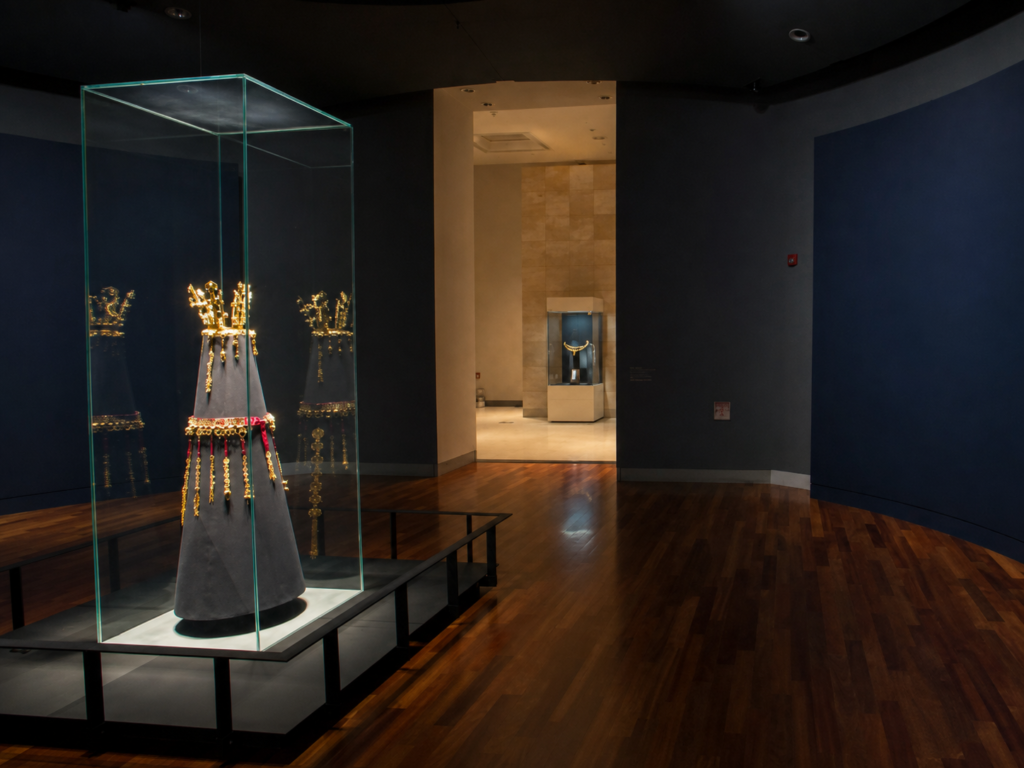
A Silla gold crown is not just a beautiful object in a glass case. It helps explain why Gyeongju feels so different from Seoul.
Goryeo celadon and Joseon white porcelain make more sense once you see how dramatically Korean aesthetics changed between periods.
Buddhist sculpture connects naturally with temples you may visit later.
And if you enjoy contemporary Korean design, the museum is one of the easiest places to see how old forms keep reappearing in modern products, graphics, and objects.
That said, I would not force the museum into every itinerary.
If you have only two full days in Seoul, the weather is good, and museums are usually something you visit out of obligation, I would rather spend that time exploring a neighborhood you are genuinely curious about.
The museum becomes much more valuable when you want your trip to go one layer deeper — not when you are trying to collect another famous attraction.
How Long Should You Spend at the National Museum of Korea?
For a first visit, two to three hours is the sweet spot.
Two hours gives you enough time to see a few major highlights without turning the visit into a marathon.
Three to four hours works well if you like ceramics, sculpture, archaeology, or Korean history and want to slow down.
I would only plan half a day if museums are already one of the main reasons you travel.
The building is large, and the problem is not a lack of things to see. The problem is decision fatigue.
If you walk into every gallery simply because it is there, the objects start blending together.
A better approach is to choose three or four anchors before you arrive.
For a first visit, mine would be:
- the Room of Quiet Contemplation
- Silla gold
- Korean ceramics
- one gallery that matches your own interests
Then stop when your attention starts dropping.
You are not taking an exam.
If You Have Two Hours, Start With These Highlights
If someone asked me for one room that makes the museum feel different from a generic history museum, I would send them to the Room of Quiet Contemplation.
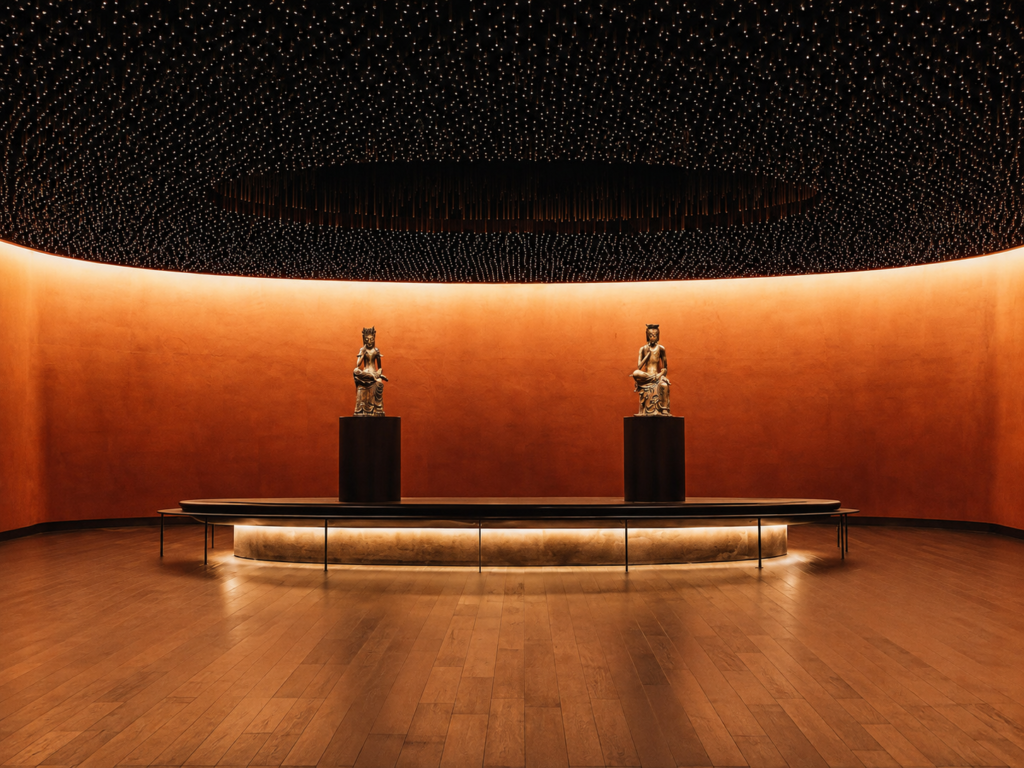
Two gilt-bronze Pensive Bodhisattva statues stand in a dark, deliberately quiet room. Both are designated National Treasures.
The space matters almost as much as the objects.
You enter through a darker passage, the sound drops, and the visit suddenly slows down. Even guided groups are asked to remain quiet.
You do not need to know Buddhist iconography to appreciate it.
After that, I would see the Silla material.
Gold objects from Silla are among the museum’s easiest exhibits to understand visually. You can see them without reading every label and still feel the difference between this kingdom and later periods of Korean history.
Then choose one craft tradition.
If you like subtle design, go toward Goryeo celadon or Joseon white porcelain. Looking at them back to back is more interesting than trying to memorize dynasty dates.
If you still have energy, add the Ten-Story Pagoda from Gyeongcheonsa Temple Site or another section that caught your attention on the way.
That is enough for a good first visit.
Is the National Museum of Korea Free?
The museum’s general admission and permanent exhibitions are free.
Some special exhibitions can charge separately.
That makes the museum unusually easy to fit into a Seoul day because you do not need to “get your money’s worth” by staying longer than you want.
If you have ninety minutes before another plan, you can still go in and see a few highlights.
You also do not normally need an advance reservation for the permanent galleries.
There are important exceptions.
The Children’s Museum requires an online reservation, and the museum’s VR experiences in Immersive Digital Gallery 2 also use reservations.
So if you are visiting as a family or specifically want the VR experience, check the official reservation page first.
For a normal adult visit to the permanent collection, you can keep the plan much simpler.
When Is the Best Time to Visit?
I would choose your visit based on the rest of your Seoul day rather than trying to find a magical “least crowded” hour.
The regular schedule currently keeps the museum open later on Wednesday and Saturday, which makes those days useful if you want to visit after another daytime activity.
On the other regular days, it closes earlier.
The museum’s official hours can change for seasonal schedules, holidays, or special circumstances, so check the visitor-information page before you go rather than relying on an old blog timetable.
For me, the bigger timing question is energy.
A museum this large is much better before you are exhausted.
If you have already walked through a palace, crossed a market, and spent the afternoon shopping, arriving at a huge museum late in the day may turn a good attraction into homework.
How Do You Get to the National Museum of Korea?
For most visitors, the subway is easiest.
Take Line 4 or the Gyeongui-Jungang Line to Ichon Station and follow the museum signs.
The official route uses Exit 2 and the Museum Nadeulgil, an underground passage connecting the station toward the museum.
If you need help choosing a map app in Korea, our Korea map apps guide explains the main options.
This is one of those Seoul attractions where I would not overcomplicate transportation.
Unless the subway is inconvenient from where you are staying, there is usually no reason to take a taxi just to avoid the walk from the station.
If you do use a taxi, the Korean name is:
국립중앙박물관
Showing that on your phone is easier than trying to pronounce the full name.
Do You Need an Audio Guide or Tour?
Not necessarily.
If you prefer to wander, the museum’s official Exhibition Guide app is free and supports English. It includes gallery maps, recommended routes, and location-based exhibit guidance.
That is useful in a museum where the bigger problem is often orientation rather than lack of information.
I would use it selectively.
You do not need audio commentary for every object.
Pick the pieces that actually stop you, then use the app when you want more context.
The museum may also operate guided programs, but schedules can change. If a guided tour is important to your visit, check the museum’s current official tour information rather than planning around an old timetable copied into a travel blog.
Who Should Prioritize This Museum?
I would put the National Museum of Korea high on the list if you:
- enjoy history or art even casually
- want more context before visiting Gyeongju, palaces, or temples
- like ceramics, craft, architecture, or product design
- are traveling alone and want an easy indoor activity
- need a strong rainy-day, very hot, or very cold-weather option
- have already done the famous Seoul checklist and want something quieter
I would move it lower if you have only a very short stay and museums rarely hold your attention.
That is not because the museum is overrated.
It is because Seoul has too many good choices to spend three hours somewhere only because a guide told you that you “must” go.
Save Ten Minutes for the Museum Shop
The museum shop is one part I would not rush past.
The National Museum of Korea’s MU:DS products reinterpret museum objects and Korean cultural motifs as stationery, household items, accessories, and gifts.
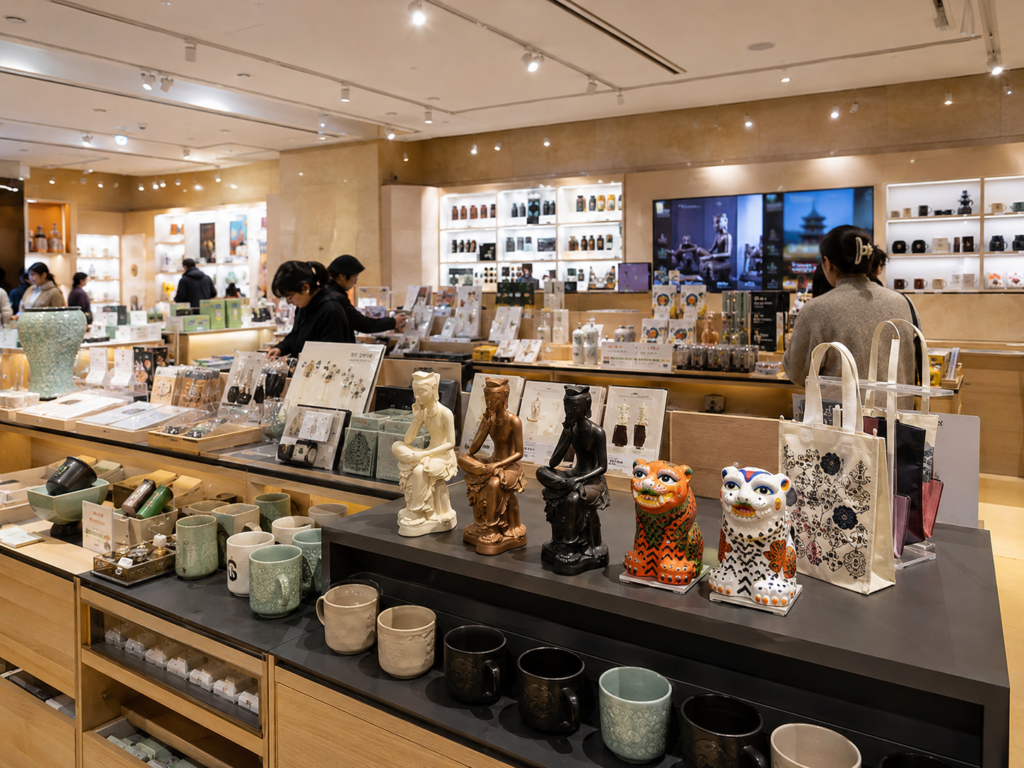
The best part is seeing the source object first.
A pattern or shape that looked like “nice Korean design” in the shop suddenly has a story because you saw the original upstairs.
For travelers who want souvenirs that feel connected to Korean culture without buying another generic Seoul magnet, this is one of the easier places to look.
There are multiple museum shops in the building, and the MU:DS brand showroom is also an official museum facility.
Stock changes, so I would not plan the entire visit around one viral product you saw online.
Browse after the galleries and see what is actually there.
What Is the Best Way to Fit It Into a Seoul Day?
The museum works best when you do not surround it with too many other “major” attractions.
I would rather pair it with one lighter plan than try to combine it with a palace, a market, a shopping district, and a night view all on the same day.
A simple museum day could be:
late morning or early afternoon at the museum → coffee or a walk nearby → dinner somewhere you actually want to explore
That leaves enough mental space for the museum to feel interesting instead of becoming one more item to complete.
And that is really the answer to whether the National Museum of Korea is worth visiting.
Yes — but you do not need to see everything.
Give yourself two or three hours, choose a few highlights, and leave while you are still curious.