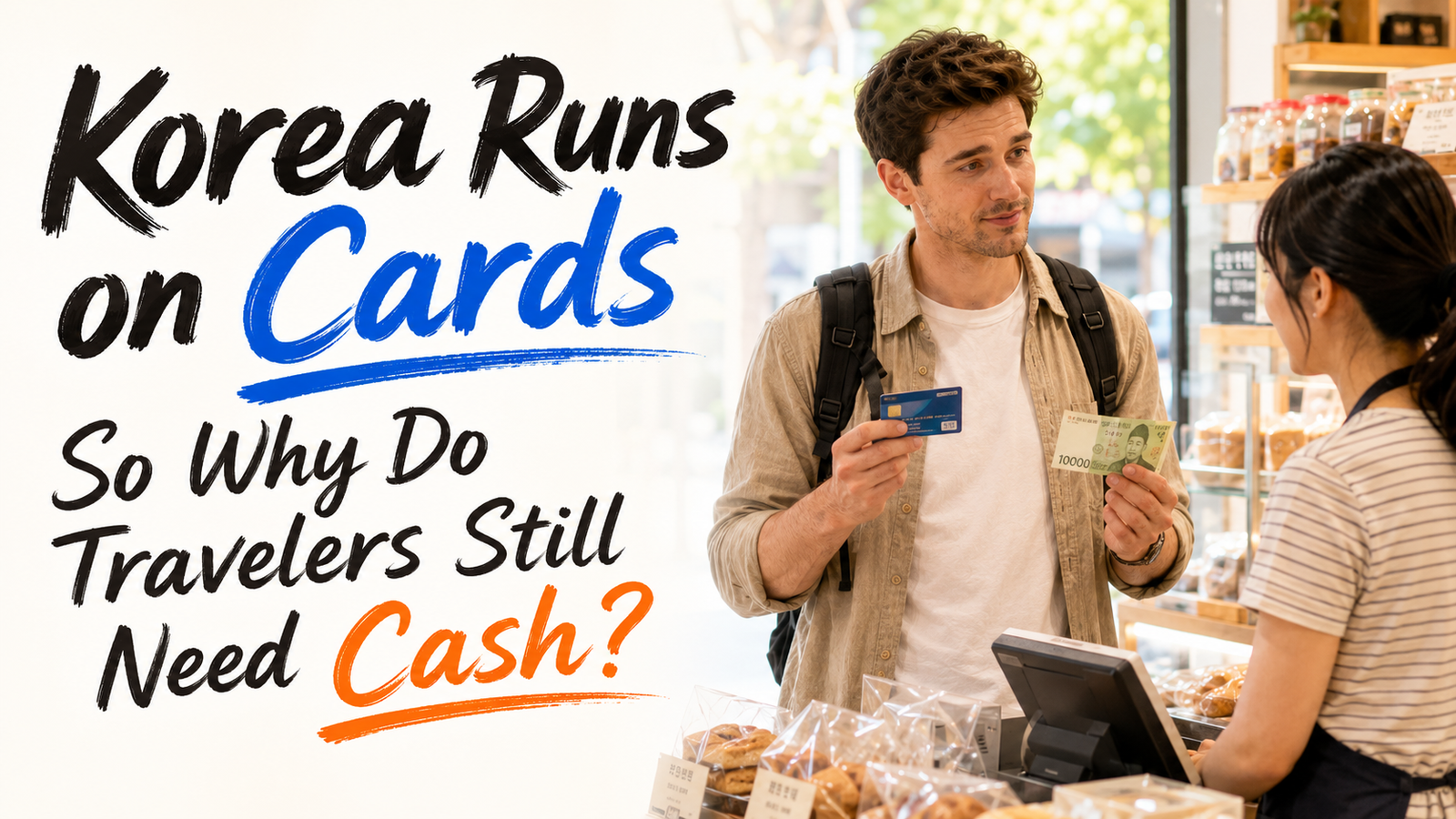
So, do you really need cash in Korea? Yes—but probably much less than you think.
For most everyday purchases, a foreign credit or debit card is usually the easiest option. Cafés, convenience stores, restaurants, hotels, department stores, and taxis are highly card-friendly, and paying by card for a small purchase is completely normal in Korea.
The situations that catch travelers off guard are the exceptions: a market stall, a small machine, a transportation card top-up, or a payment terminal that does not cooperate with a foreign-issued card.
Seoul is also becoming easier for international visitors. Some newer subway ticket machines now accept internationally issued cards for single-journey tickets and short-term Climate Card purchases or recharges. But this does not mean every transit machine, bus reader, or subway gate in Korea accepts a foreign bank card directly.
The practical answer is simple: use cards for most purchases and keep a small amount of Korean won as backup.
Table of Contents
Why Korea Feels Almost Cashless
1. Cards Are Normal Even for Small Purchases
In Korea, paying ₩1,500–₩3,000 by card is completely normal. A bottle of water, a convenience store snack, or a single iced Americano does not feel too small for a card payment.
Card payments are common at cafés, convenience stores, restaurants, bakeries, and taxis, so you may notice locals rarely taking out cash.

Why it matters: Seeing so little cash in daily life can make travelers think they will never need it. But being card-friendly does not mean cash is unnecessary.
Local tip: Keep a few small Korean bills handy. They can help when a card is not accepted.
Where Cards Meet Korea’s Local Rules
2. Why Foreign Cards Can Still Hit a Wall
Foreign cards usually work well at hotels, department stores, convenience stores, major cafés, and many restaurants in Korea.
Problems are more likely at small shops, market stalls, self-service machines, transit top-up machines, or apps that require Korean verification. Your foreign card may not always work like a Korean-issued card.
Why it matters: A rejected card often means that particular machine, shop, or payment system is not fully set up for foreign cards.
Local tip: Use your foreign card as your main payment method, but carry a backup card and a few small Korean bills.
3. Where Cash Is Still Useful: Markets and Small Shops
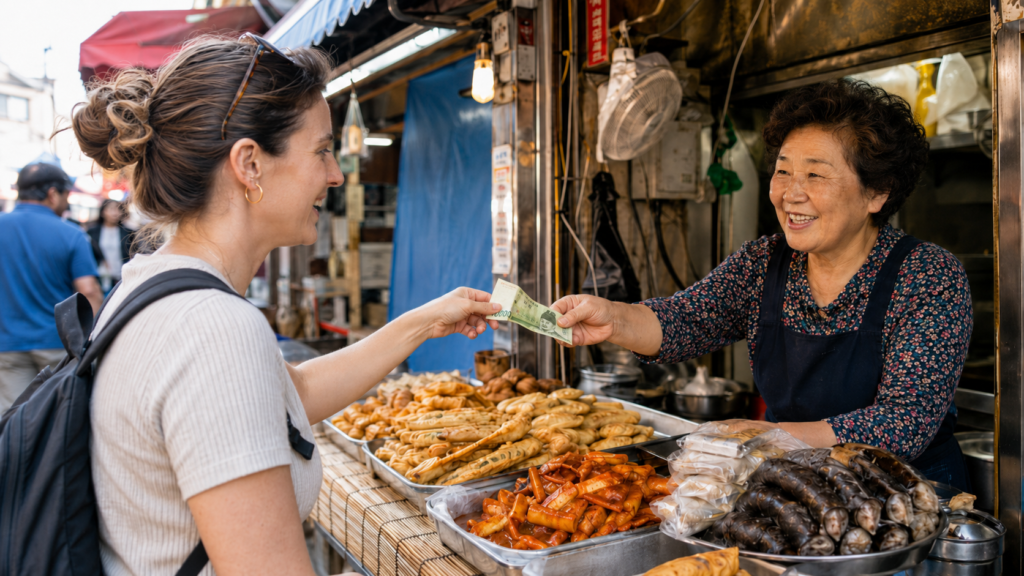
At traditional markets, street food stalls, and tiny neighborhood shops, cash can sometimes be faster and easier.
Many places do accept cards, but in a busy market, cash may be smoother than waiting for a terminal or trying again after a payment error. This is more about speed and convenience than whether your card is foreign.
Local tip: If you plan to visit traditional markets like Gwangjang Market (광장시장) or Namdaemun Market (남대문시장), bring a few small Korean bills.
Why Transportation Payment Feels Like a Separate System
4. Transit Is the Main Exception — But Seoul Is Changing
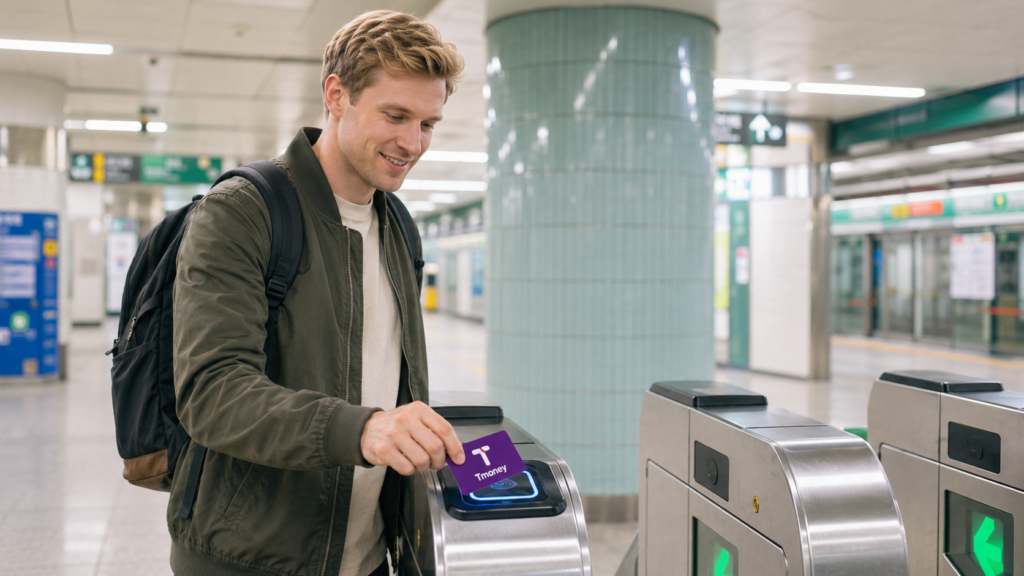
For most travelers, T-money, EZL, or a suitable transit pass is still a convenient way to use public transportation.
A foreign credit card that works for shopping cannot necessarily be tapped directly at every subway gate or bus reader. Treat transit as a separate payment system.
In Seoul, some newer subway ticket machines now accept internationally issued cards for single-journey tickets and short-term Climate Card purchases or recharges.
That means cash is not always required for transit, but these options should not be assumed to work at every machine or outside Seoul. A transportation card or pass that fits your route can still make getting around easier.
The Moments When Cards Are Not Enough
5. Where to Get Cash When Your Card Fails
Look for machines marked “Global ATM,” “International Card,” or familiar card network logos. You can find ATMs at airports, banks, some convenience stores and subway stations, and sometimes post offices.
Not every ATM in Korea accepts every foreign card. A machine may reject your card, limit the amount you can withdraw, or have menus that are confusing when you are in a hurry.
Why it matters: A small cash reserve gives you another way to pay when a machine does not recognize your card.
Local tip: Withdraw or exchange a small amount before you urgently need it. Do not wait until your wallet is empty.
How Much Cash Should You Carry in Korea?
For one traveler on a short trip, KRW 50,000–100,000 is a practical amount to have available when you arrive. Think of this as backup money, not your full travel budget.
You may use it for transportation card top-ups, market stalls, small purchases, or the occasional payment machine that rejects your foreign card. If most of your trip is in Seoul and you use newer transit machines or a Climate Card, you may end up using even less cash.
Try to keep some smaller notes—KRW 1,000, 5,000, and 10,000—rather than carrying only KRW 50,000 notes.
There is no need to exchange a large part of your travel budget into won in advance. Korea is highly card-friendly, so cash is mainly a backup for the moments when cards are inconvenient.
For a complete payment setup—including backup cards, T-money, EZL, Climate Card, and WOWPASS—see our guide to How to Pay in Korea in 2026.
Final Thoughts
Korea is highly card-friendly, and most travelers do not need to carry a large amount of cash.
Use your foreign card for everyday purchases, keep a small amount of Korean won for backup, and treat transportation as a separate payment system rather than assuming every foreign card will work everywhere.
For most short trips, that is enough: cards for the majority of spending, a transit option that fits your route, and a small cash reserve for the exceptions.
Frequently Asked Questions
How much cash in Korea should travelers carry?
For one traveler on a short trip, KRW 50,000–100,000 is a practical starting amount. You may need less if most payments go through by card. Keep some KRW 1,000, 5,000, and 10,000 notes for transit top-ups, markets, and payment failures.
Do Korean buses take cash?
Cash payment rules can vary by city and bus system, so travelers should not rely on cash for buses. A transportation card such as T-money or EZL is usually the safer and easier choice, especially if you need transfer discounts.
Where can I withdraw cash with a foreign card in Korea?
Look for ATMs marked “Global ATM,” “International Card,” or familiar card network logos.
You can often find them at airports, major banks, convenience stores, subway stations, and some post offices. Not every ATM accepts every foreign card, so withdraw a small amount before you urgently need it.
Related Guides
Lost in Korea? Why Google Maps Feels Different Here and What Locals Use Instead
Payment is not the only system that feels different in Korea. Navigation can surprise visitors too, especially if they rely only on Google Maps.
→ Read the guide
Why Getting Around Korea Feels Confusing Even When You Have a Map
Transportation and payment often connect in Korea, especially when travelers need subway cards, buses, taxis, and local route apps.
→ Read the guide
How to Pay in Korea in 2026: The Best Setup for Travelers
Choose the right mix of cards, cash, T-money, EZL, Climate Card, and WOWPASS for your trip.