
Choosing where to stay in Seoul is not just about booking a nice hotel.
It is about choosing the Seoul you will wake up to in the morning.
Do you want convenient Seoul, with subway stations, shopping streets, cafés, and easy airport access nearby? Do you want young and energetic Seoul, traditional Seoul near palaces and old alleys, or trendy modern Seoul filled with cafés, pop-ups, and local brands?
Experienced travelers already know location matters. But in Seoul, “good location” means more than being close to famous attractions.
Seoul is shaped by hills, the Han River, old neighborhoods, underground passages, and one of the world’s most useful subway systems. A hotel that looks close on the map may feel tiring with luggage, stairs, transfers, or uphill walks.
The best neighborhood is the one that matches both your travel style and the routes you will actually use every day.
Table of Contents
Why Seoul Hotel Location Matters
1. Seoul Has More Than One Travel Hub
In some cities, choosing where to stay is simple. You stay near the old town, the beach, the main square, or the most famous landmark, and most of the trip naturally begins there. Seoul is different. It has several travel hubs, and each area gives travelers a different version of the city.
Myeongdong can feel easy and tourist-friendly. Hongdae can feel young, casual, and lively. Gangnam can feel modern and polished, but more spread out. Anguk and Jongno can bring you closer to palaces, hanok streets, and older Seoul. Seongsu can feel trendy, creative, and more local. There is no single best area for everyone. The right choice depends on the kind of Seoul you want to experience.
Instead of asking which area is “best,” first decide where most of your itinerary sits: central Seoul, the Hongdae side, the palace/Jongno area, or south of the Han River.
2. Your Hotel Area Shapes Your Day
A hotel in Seoul is not just a place to sleep. It is the place where your day starts and ends. That means the area around your hotel can affect your trip more than you might expect.
A beautiful room may feel less special if every morning begins with a long walk to the subway, confusing transfers, or stairs with luggage. A hotel may be “only 7 minutes from the station,” but that walk can feel much longer if it includes hills, underground passages, a large road crossing, rain, or summer heat. If your trip falls in July or August, check this guide to Korea summer weather before deciding how much outdoor walking will feel realistic each day.
On the other hand, a simple hotel in the right area can make the whole trip feel easier. You can leave quickly, come back comfortably at night, and spend less energy just moving around. This is especially helpful on your first and last day, when you may be carrying luggage or traveling to and from the airport. If your arrival or departure time does not match your hotel’s check-in or check-out time, our guide to luggage storage in Korea explains hotel storage, Seoul subway lockers, T-Luggage, airport storage, and other practical options.
This is why, in Seoul, it is better to look at how your days will move from the neighborhood before you fall in love with the room photos. For first-time visitors, convenience is not boring. It can be the reason Seoul feels easy instead of overwhelming.
Pick the Seoul You Want to Wake Up To
3. Convenient Seoul
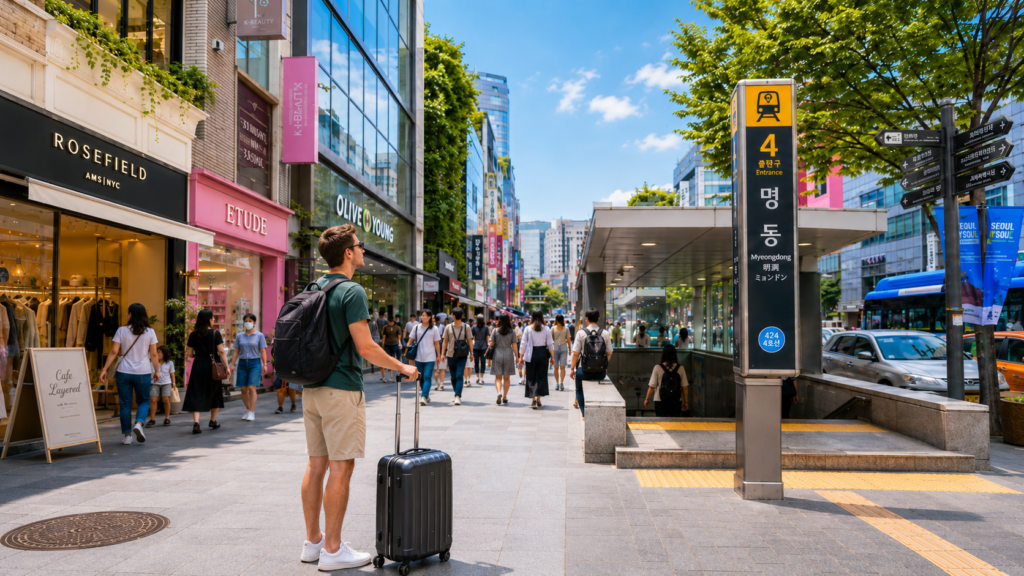
Convenient Seoul is the Seoul where everything feels easy from the moment you leave your hotel. Subway stations are nearby, cafés open early, convenience stores are everywhere, and you can find food, shopping, and basic travel services without thinking too much.
Areas like Myeongdong, Jongno, and Seoul Station are often useful for travelers who want this kind of comfort. Euljiro can also be convenient because it sits near Myeongdong and central Seoul, though some streets may feel more local and less polished. These areas are not always the quietest or most charming, but they can make a first trip to Seoul feel smoother.
This is especially helpful on your first and last day, when you are carrying luggage or moving to and from the airport. It also helps when you are still getting used to subway exits, local map apps, and Korean street names.
Best for:
- first-time visitors
- travelers who want easy subway access
- short trips with many central-Seoul sights
- travelers who value airport or train connections
Watch out for:
- some areas can feel busy or commercial
- convenience does not always mean the quietest or most atmospheric street
4. Young and Energetic Seoul
Young and energetic Seoul is the Seoul of late cafés, street fashion, casual restaurants, music, and people staying out after dinner. It feels relaxed, social, and full of movement.
Areas like Hongdae, Yeonnam, and Hapjeong are often connected with this kind of mood. These neighborhoods can be fun if you want to see how younger Koreans spend time with friends, move from cafés to restaurants, and enjoy a city that does not feel quiet too early.
But this energy is not for everyone. If you want quiet mornings, early nights, or a calm street around your hotel, this kind of area may feel too busy. Choose this side of Seoul if you want your trip to feel lively from the moment you step outside.
Best for:
- nightlife and late cafés
- casual restaurants and street culture
- travelers who want a lively neighborhood after sightseeing
Watch out for:
- noise and crowds can be tiring if you prefer early nights
- this may be less convenient if most of your plans are around palaces, Jongno, or the Gangnam side
5. Traditional Seoul
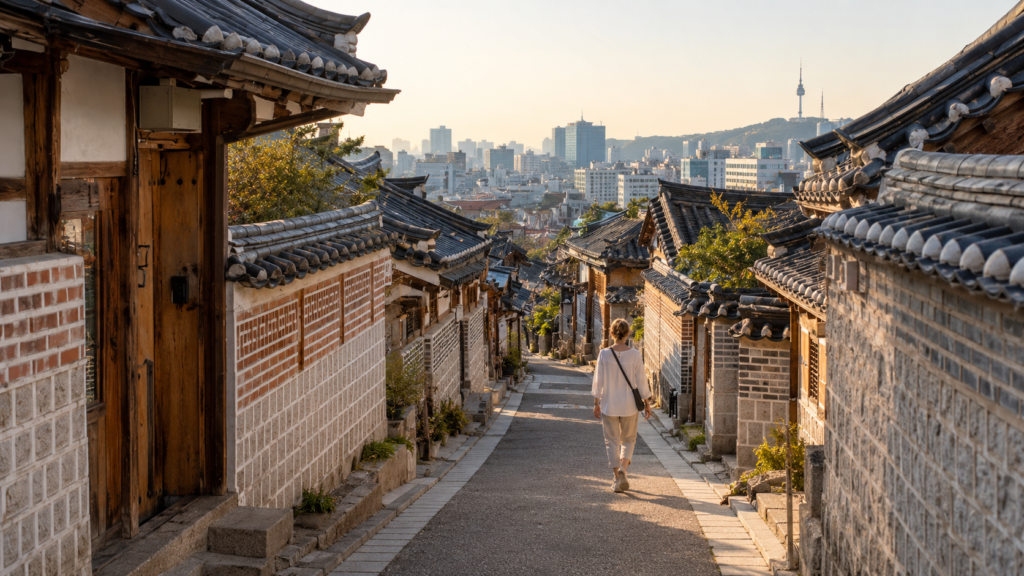
Traditional Seoul is the side of the city that often surprises first-time visitors. You can leave a modern subway station and, a few minutes later, find yourself walking beside palace walls, hanok houses, quiet galleries, tea houses, and old streets that feel slower than the rest of Seoul.
Areas like Anguk, Bukchon, and parts of Jongno are often connected with this mood. They are good choices if you want your mornings to feel calmer, more historic, and closer to the Korea many travelers imagine before visiting.
Still, this atmosphere can come with small travel inconveniences. Some streets can be narrow, slightly uphill, or harder for taxis to enter. If you choose traditional Seoul, choose it for the atmosphere, but check the exact route to your hotel before booking.
Best for:
- palaces, Bukchon, Seochon, and older Seoul
- travelers who want a quieter or more historic morning atmosphere
- walking-focused itineraries in central Seoul
Watch out for:
- hills, narrow alleys, and stairs can matter with luggage
- check the exact hotel entrance before booking, not just the neighborhood name
6. Trendy and Modern Seoul
Trendy and modern Seoul is the Seoul that feels like it is always becoming something new. A quiet-looking street can suddenly have a famous café, a weekend pop-up, a local fashion brand, or a restaurant everyone is posting about. This is the side of Seoul where everyday neighborhoods can quickly turn into places people want to visit.
Areas like Seongsu, Hannam, Apgujeong, and parts of Gangnam are often connected with this mood. They can be exciting if you enjoy design cafés, beauty shops, lifestyle stores, fashion, and seeing what Korean brands are doing right now.
But trendy Seoul is not always the easiest base for sightseeing. Some areas are spread out, and the best cafés or shops may not be right next to the subway exit. Choose this side of Seoul if you want your trip to feel stylish, current, and close to Korea’s modern local culture.
Best for:
- cafés, fashion, beauty, pop-ups, and modern Seoul
- travelers whose itinerary is already focused on these neighborhoods
- repeat visitors who do not need to stay near the classic central sights
Watch out for:
- some neighborhoods are more spread out than they appear
- a trendy area is not automatically the most efficient base for palace or old-Seoul sightseeing
Why Moving Around Seoul Can Feel Different
7. Hills, Stairs, and Luggage Matter
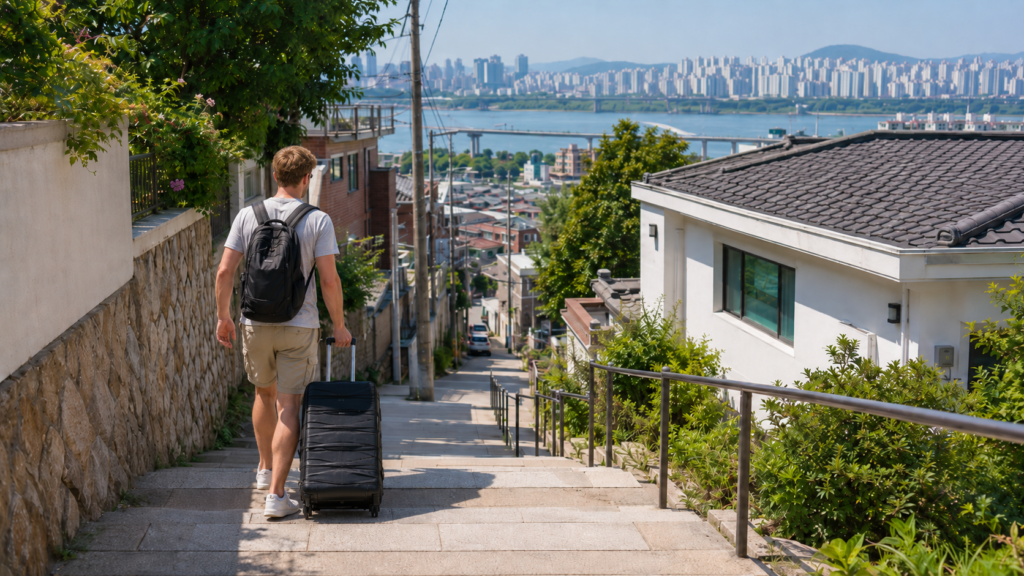
Seoul is not the only city with hills, stairs, or busy streets. But in Seoul, a short walk can feel different because many areas are built in layers. A subway station may lead to underground passages, large intersections, side streets, and older neighborhoods all within a few minutes.
That is why a hotel that looks close on the map may not always feel close when you arrive. The walk might be flat and simple. Or it might include stairs, a gentle hill, a long station exit, or a street that feels less convenient with luggage.
On a normal afternoon, this may not bother you at all. But after a long flight, with a suitcase in one hand and your phone in the other, these small details suddenly matter.
Before booking, check the walking route from the nearest subway station to your hotel. A quiet alley or small hillside street may look charming in photos, but it is better to understand the route before you arrive.
Before booking, zoom in on the final route from the subway exit to the hotel and check:
- whether the walk is uphill
- whether stairs are involved
- whether the station exit has an elevator or escalator nearby
- whether a taxi can stop close to the entrance
8. The Han River Can Add Travel Time
The Han River is one of the most beautiful parts of Seoul, but it is also a line that quietly changes your route. Seoul has excellent subways and bridges, so crossing the river is not difficult. But if you cross it too often in one trip, the travel time can slowly add up.
This matters because many classic Seoul attractions are north of the river. Palaces, Bukchon, Jongno, Myeongdong, and Hongdae are all on the northern side. Meanwhile, Gangnam, COEX, Apgujeong, and many modern shopping and business areas are south of the river.
There is nothing wrong with staying on either side. The key is to notice where most of your plans are. Crossing the Han River once or twice can be part of the fun. Crossing it back and forth every day can make Seoul feel bigger than you expected.
A simple rule: if most of your saved places are north of the river, staying north can reduce unnecessary back-and-forth. If most of your plans are in Gangnam, COEX, Apgujeong, or nearby areas, staying south may make more sense.
9. Old Alleys Can Be Beautiful but Less Easy
Some of Seoul’s most atmospheric stays are found away from the main roads. You might stay in a small hanok guesthouse, a quiet boutique hotel, or a local street that feels much calmer than the busy shopping areas nearby.
That calm atmosphere is the reason many travelers love these areas. Instead of stepping straight into traffic, bright signs, and busy sidewalks, you may start your morning on a quieter street with old walls, small cafés, and a slower local rhythm.
But older streets are not always the easiest places to reach. Some alleys are narrow, uneven, slightly uphill, or hard for taxis to enter. They may look lovely in photos, but with a suitcase after a long flight, the same street can feel very different.
This does not mean you should avoid these areas. They can be wonderful places to stay. Just check the route carefully before booking, especially if you are arriving late at night or carrying heavy luggage.
If atmosphere is the reason you are choosing the stay, keep it—but check the final 300–500 meters before booking so the arrival does not surprise you.
What to Check Before Deciding Where to Stay in Seoul
10. Check the Route Before You Choose the Hotel
Before booking a hotel in Seoul, it helps to imagine how your days will actually move from that neighborhood. A hotel may look great on the booking page, but the real question is whether it works well with the places you want to visit.
For example, check how long it takes to reach your main sightseeing areas, where you will return at night, and how easy your airport transfer will be on the first and last day. If most of your routes require extra transfers or long rides across the city, the hotel may feel less convenient once you are there.
This is also why local map apps are useful in Korea. Google Maps can help you understand the general area, but Naver Map and KakaoMap are often better for subway exits, bus stops, walking routes, and transfer details. Having a local map app ready before your first day can make checking exits, walking routes, and hotel entrances much easier.
Before you book, check these five things:
- How many subway transfers are needed for your main sightseeing days?
- How long is the final walk from the station exit?
- Is the route flat, uphill, or full of stairs?
- Is the airport or Seoul Station connection simple on your first and last day?
- Are most of your plans on the same side of the Han River?
In the end, a good Seoul hotel area is not just the place that looks nice online. It is the place that helps your trip flow naturally from morning to night.
Final Thoughts
The best place to stay in Seoul is not automatically the neighborhood with the most famous hotels or attractions.
Choose the area that matches most of your daily routes first. Then check the final walk, subway access, luggage route, airport connection, and whether you will repeatedly cross the Han River.
After that, choose the hotel.
A simpler room in the right neighborhood can make a Seoul trip much easier than a beautiful hotel that adds extra walking and transfers every day.
Frequently Asked Questions
What is the best area to stay in Seoul for first-time visitors?
When deciding where to stay in Seoul for the first time, Myeongdong, Jongno, and areas near major subway lines are easy places to start. They offer good access to shopping, food, public transportation, and major attractions. But the best area depends on your itinerary and travel style. If you want nightlife, Hongdae may feel better. If you want palaces and old streets, Anguk or Jongno may be a better fit. If most of your first-trip plans are palaces, markets, central shopping, and classic Seoul sights, staying in central or northern Seoul can reduce unnecessary travel.
Is Myeongdong a good place to stay in Seoul?
Yes, Myeongdong can be a good place to stay, especially for first-time visitors who want convenience. It is close to shopping, restaurants, subway stations, and central Seoul attractions. However, it can feel busy and touristy, so it may not be the best choice if you want a quiet or very local neighborhood. It is especially practical if convenience matters more to you than having a quiet residential atmosphere.
Is Gangnam a good place to stay for tourists?
Gangnam can be a good choice if your plans are mostly south of the Han River, such as COEX, Apgujeong, beauty clinics, shopping, or business areas. It feels modern and polished, but it is more spread out than many first-time visitors expect. If most of your plans are in northern Seoul, staying in Gangnam may add extra travel time.
Should I stay near Seoul Station?
Staying near Seoul Station can be useful if airport access, trains, or easy transportation are your top priorities. It is especially convenient for travelers using the Airport Railroad, also known as AREX, KTX trains, or early airport transfers. It is best viewed as a convenience-first choice rather than a stay chosen mainly for neighborhood atmosphere.
Related Guides
Getting Around Korea: Subway Exits, Buses, Taxis, and Airport Tips
Learn how subway exits, buses, taxis, and airport transfers actually work in Korea so your daily routes feel easier.
→ Read the guide
Google Maps in Korea 2026: Naver Map, KakaoMap & What Changed
Find out why Google Maps can feel different in Korea and why local map apps matter when choosing routes in Seoul.
→ Read the guide
20 Everyday Korean Habits That Can Make Your Trip Easier
Understand the everyday habits, local details, and travel behaviors that can make your Korea trip feel smoother from the start.
→ Read the guide
Official Seoul Travel Guide by Visit Seoul
Use Seoul’s official travel guide to check updated city information, maps, accommodations, and travel basics before your trip.
→ Visit the official guide