
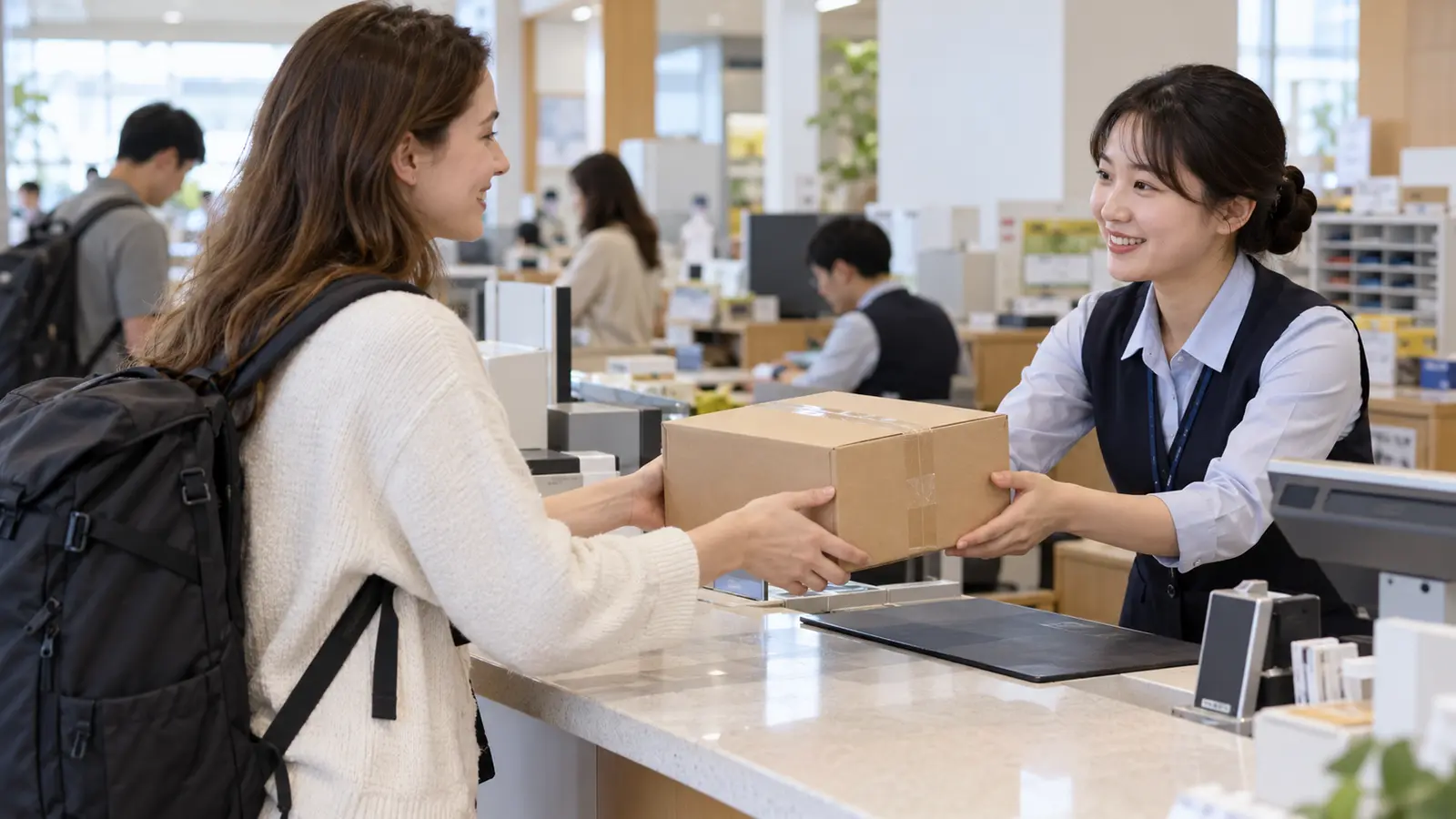
On a trip abroad, I bought so much that I planned to send some of it home by post. Then I saw the postage. It was far more than I had expected, and I ended up carrying the purchases around for the rest of the trip.
If your suitcase is getting full in Korea, it’s worth finding out the shipping cost while you still have a choice. Korea Post’s EMS and international-parcel services can help you mail souvenirs from Korea. Whether that works for your trip depends on what you bought, where it’s going and the price of the packed box.
You don’t have to decide at once. A box of books and T-shirts may be quite straightforward to prepare; skin-care products and snacks can need more checking. Let’s start with the cost, then work through what you’ll need at the post office.
Is mailing cheaper than taking your purchases home?
The quickest way to get a useful estimate is to gather the things you want to send and check that a service is currently available to your destination. Korea Post’s postage and delivery-time calculator lets you compare EMS and international parcel. A price appearing in the calculator doesn’t confirm that the service is accepting parcels to that country, so the post office can help with that part.
EMS is Korea Post’s express international service and includes tracking. Its general limit for gifts and merchandise is 30kg, but some countries have lower limits and their own conditions. International parcel may offer air or surface service, depending on the destination.
For the estimate, use the weight and outer dimensions of the box after the items and protective padding are inside. A mug wrapped safely for the journey takes up more room than the mug on its own. Postage uses the larger of actual and dimensional weight, and additional transport charges may apply. The calculator gives a reference price; the exact charge is worked out when the parcel is accepted.
If the total feels too high, there’s still time to compare your airline’s extra-baggage fee or send only some of the purchases. Bringing a box to the counter doesn’t commit you to mailing everything in it.
It also helps to tell the clerk if the parcel needs to arrive for a particular occasion. Delivery times are estimates: customs checks, remote destinations, holidays, weather, transport problems or missing paperwork can add time. For a birthday gift, a generous margin is more useful than the fastest-looking estimate.
Where can you mail souvenirs from Korea, and when is the post office open?
Before carrying your purchases across town, you can look for a nearby staffed branch in Korea Post’s official post-office finder. It accepts an address, post-office name or nearby subway station. Choose the post-office option: the same map also lists mailboxes, 365 facilities and unmanned counters.
You may come across a large post office or a smaller postal agency marked 우편취급국. A smaller agency may be able to accept EMS too; its current services need checking. A quick check with the branch—“Can I send this to [country] by EMS or international parcel?”—will save you bringing a box to a counter that cannot take that service.
Regular postal counters are generally open Monday to Friday, 9 a.m. to 6 p.m., excluding public holidays. The 4:30 p.m. closing time you may see is for banking. Some branches close for lunch, and the last collection for same-day dispatch may be earlier than the counter’s closing time. The official hours page explains those exceptions; checking your chosen branch before you go is useful if you’re fitting this around sightseeing or a flight.
What information should you take to the post office?
Having the address ready saves a lot of phone searching at the counter. You can ask the recipient to send it exactly as they use it for international mail, then save a copy that opens without hotel Wi-Fi.
Here’s what’s useful to have together:
- the recipient’s full name, address, postal code and country;
- the recipient’s phone number;
- your name, a Korean return address and a reachable contact number;
- an English list of the contents, with each item’s quantity and realistic value; and
- receipts that help identify a product or its price.
Korea Post’s address-label guide calls for names and addresses in English, or English together with a language used in the destination country. A phone number can help the recipient deal with delivery; some countries may return mail when nobody is home and no contact number is available.
For EMS merchandise, you’ll use a goods address label with a CN23 customs declaration. The form and number of copies can differ by service and destination, so the counter staff can confirm which you need. Personal gifts still need customs information, and the recipient may have duty or tax to pay.
If you’re thinking of using your hotel as the return address, ask the property first. That’s especially useful if you’ll have checked out by the time a parcel could come back. The hotel needs to agree to receive it; otherwise, a return can be difficult to arrange after you leave Korea.
What should you write on the customs declaration?
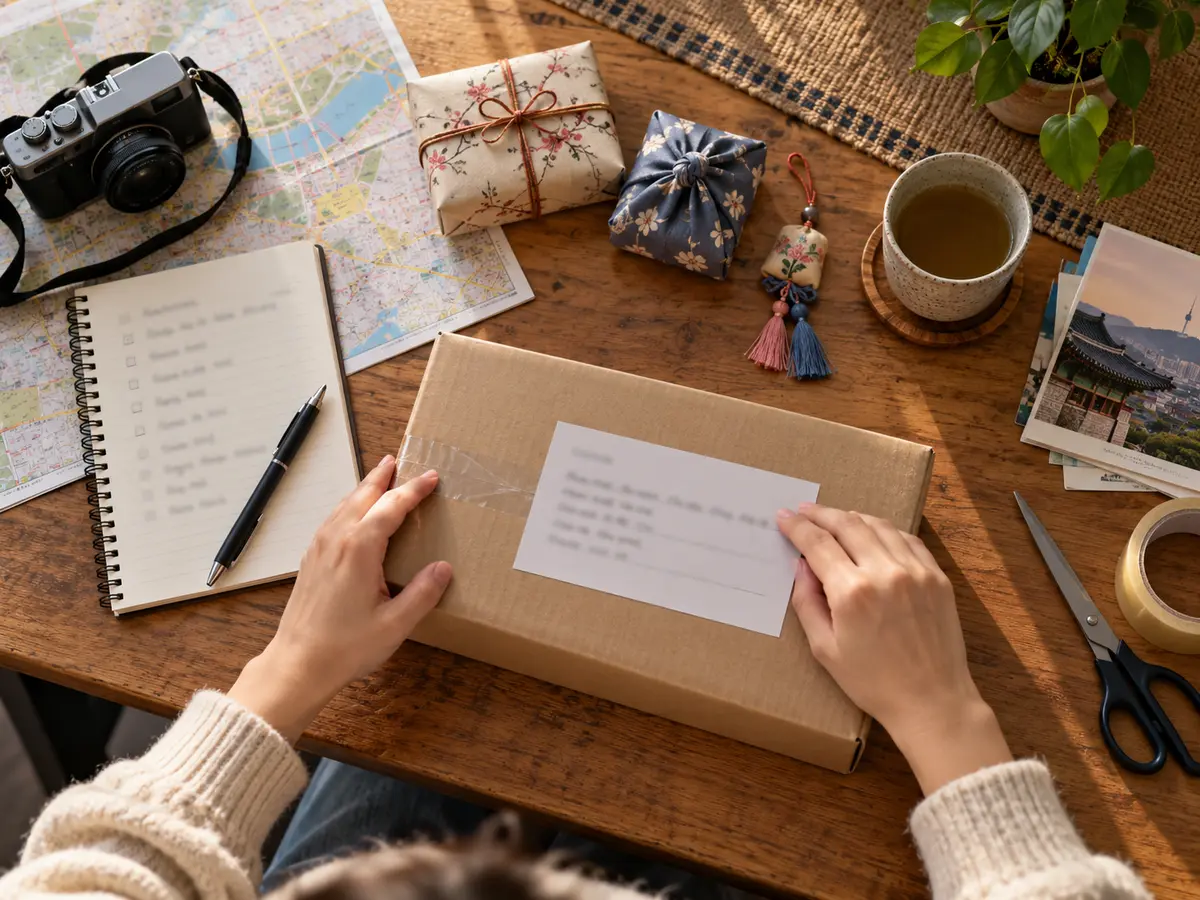
This part is easier with a short list of what you actually bought. Instead of writing only “souvenirs” or “gift,” you could write:
- cotton T-shirts, 3;
- printed books, 2;
- ceramic mug, 1;
- packaged stationery, 5 sets; or
- skin-care cream, 2 tubes, with the size if requested.
Each line also needs a reasonable value. A gift still has a value, so zero—or a lower figure chosen to avoid tax—won’t give customs the information it needs. Missing or inaccurate details can hold up the parcel or cause customs problems.
The CN23 for EMS goods asks for item-level information such as category, quantity, weight and value. Commercial shipments may need extra invoices or permits. Even for personal gifts, keeping the descriptions and values ready makes filling in the form much easier.
Can you mail everything you bought in Korea?
Some lovely purchases are awkward to post. Perfume, aerosols and certain nail products can be flammable; batteries and devices containing them have shipping restrictions. Food, supplements and medicine can also depend on the destination’s rules.
Korea Post’s EMS guide excludes categories including cash and negotiable items, dangerous materials, narcotic or psychotropic substances, precious metals and jewelry, perishable food, animals and plants, and items prohibited by the destination country.
It’s worth asking about these before sealing the box:
- perfume, aerosols, nail products or other flammable liquids;
- loose lithium batteries and devices with batteries;
- food containing meat, dairy, seeds or other restricted ingredients;
- supplements or medicine;
- cosmetics in pressurized containers;
- plants, dried botanical material or untreated wood; and
- high-value jewelry or precious metal.
If a product leaves you unsure, keep its packaging and label handy and show it at the counter. Buying it legally in a Korean shop doesn’t necessarily mean it can travel by post or enter your home country.
The post office can help with Korea Post’s conditions. For the import side, Korea Post’s destination information and the destination’s customs or postal authority are the places to check. A parcel accepted in Korea may still face tax, inspection or requests for documents abroad.
How should you pack fragile or bulky purchases?
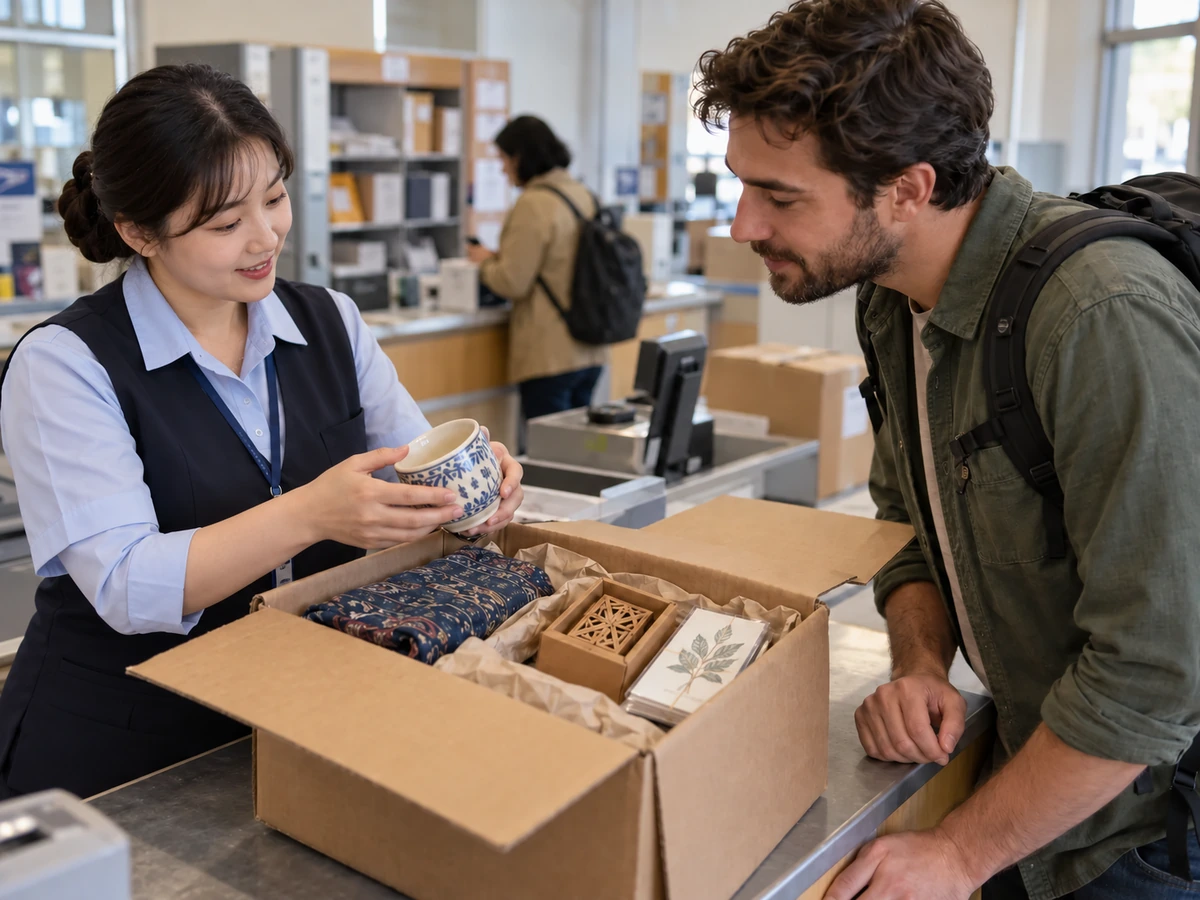
You can buy parcel boxes in different sizes at post offices. If you need a particular size, asking the branch about its current stock and price before bringing everything over may save a trip. For bubble wrap, I’d bring what you need or ask that branch whether it sells or provides any; it isn’t something to count on finding at every counter.
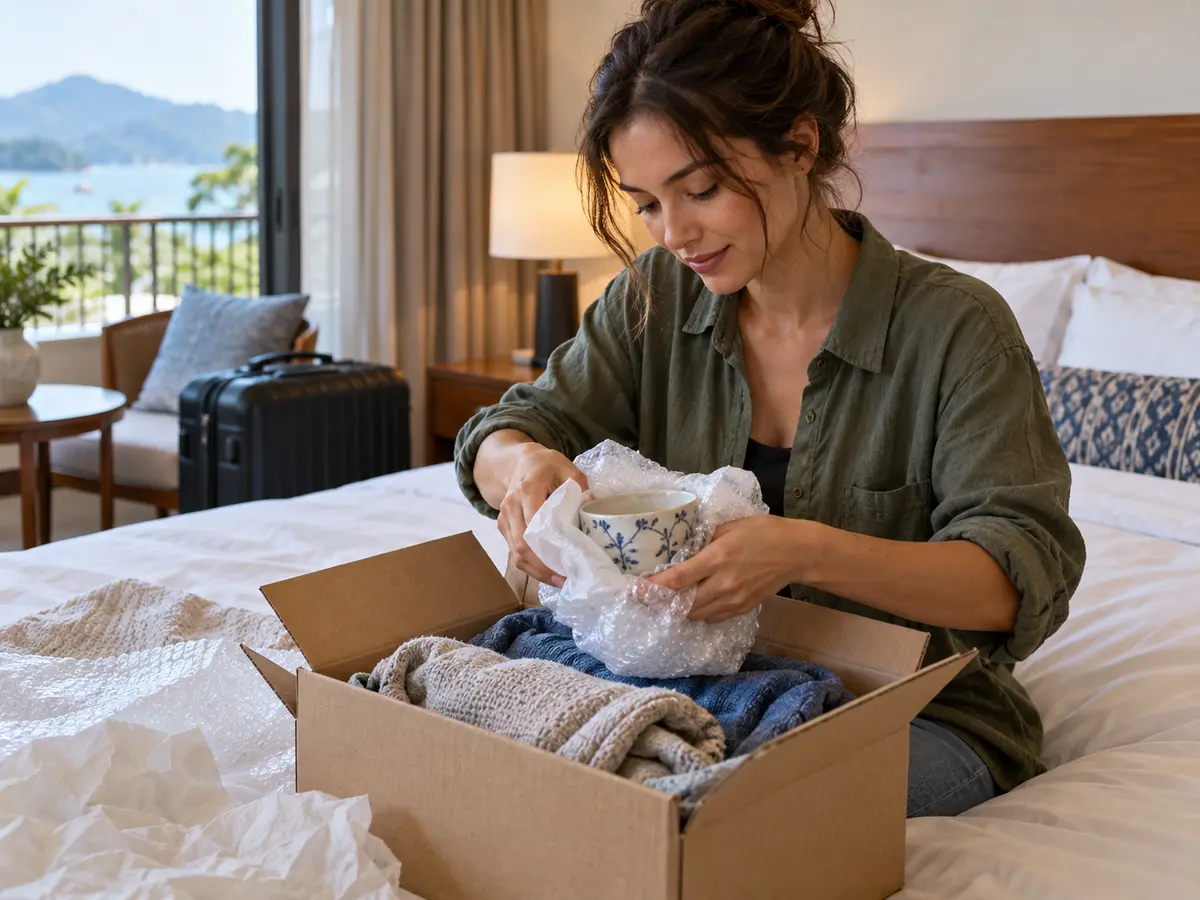
For a ceramic mug or other fragile gift, a sturdy box, individual wrapping and padding in the empty spaces will help keep it from moving around. International parcels are stacked and transferred between facilities, and customs may open them.
Once everything is protected, you can measure the outside of the finished box for the postage estimate. A light but oversized box may cost more because of dimensional weight, so a reasonably close-fitting box is useful—as long as the contents still have enough protection.
Sealed inner bags can contain a leak from an allowed liquid. They don’t make a restricted liquid acceptable for mailing. If you’re unsure whether an item can be sent, let the staff check it before you close the box. You can then use the packing tape provided at the post office to seal it.
A photo of the contents before closing the box, together with receipts for valuable items, gives you a personal record. You’ll still need the customs declaration and any relevant insurance arrangements.
What should you confirm before paying, and keep afterward?
At the counter, you can ask about the services currently available to your destination, the chargeable weight and total cost, and the estimated delivery time. It’s also a good moment to ask about tracking, insurance, destination restrictions and what would happen if the parcel were returned.
Once it’s accepted, keep the receipt and 13-character tracking number until it arrives. Korea Post has an English EMS tracking page, so you can follow it after leaving Korea. Sharing the number with the recipient also helps them watch for delivery or contact from customs about duty, tax, identification or additional information.
If you’re still shopping, our Olive Young guide and tax-refund guide may help before you pack. If the problem is only where to leave your bags for a few hours, luggage storage may be all you need.
For a parcel home, I’d leave the final decision until you have the total price and a realistic arrival estimate. If those work for you and the recipient, you can send it. If they don’t, taking the purchases home in your baggage is still an option.