You’ve ordered lunch, but no water has arrived. You start looking through the drinks menu, then notice a sign on the wall:
물은 셀프.
The water was there all along. You just had to get it yourself.
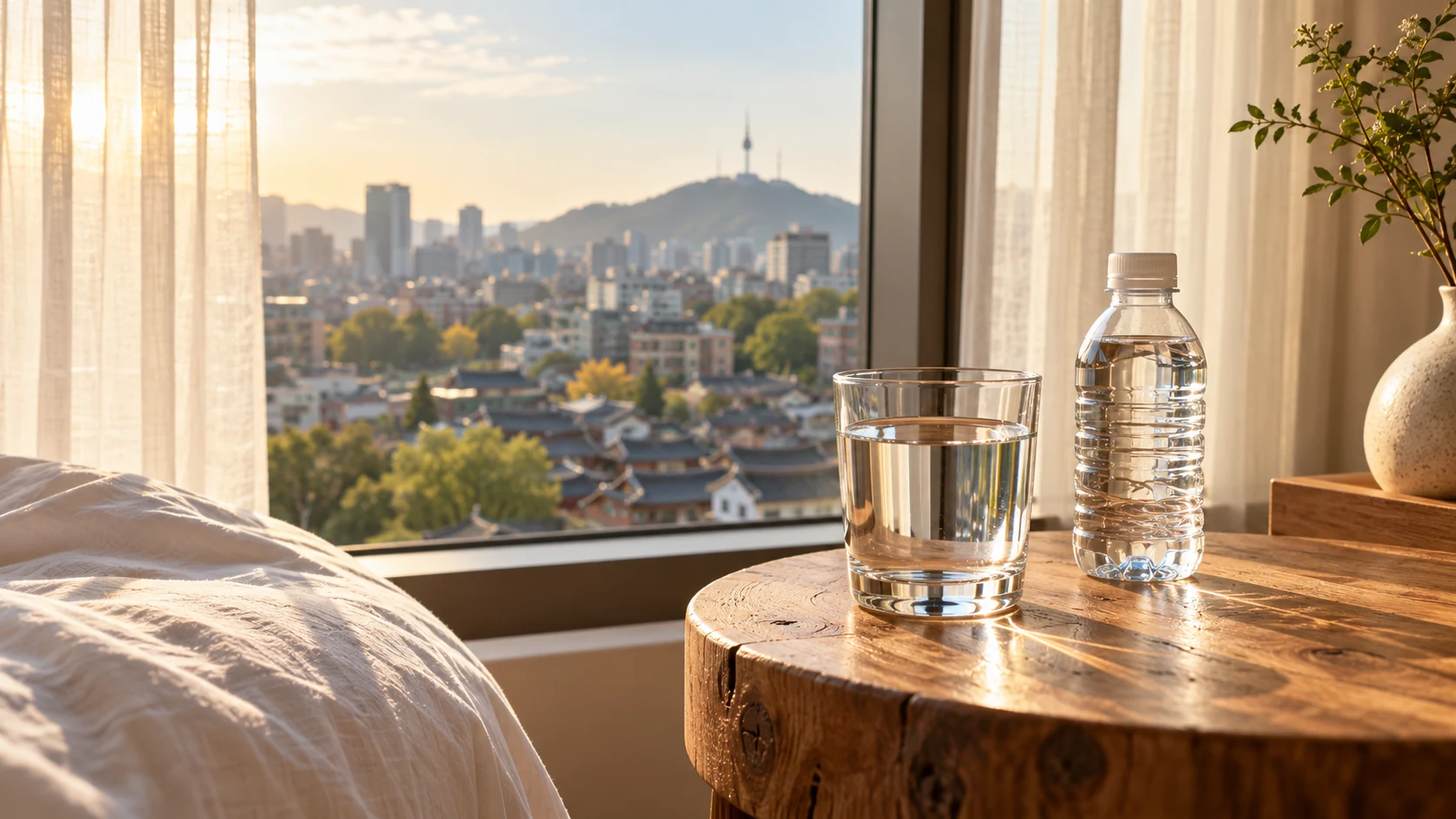
That little sign is useful to know on a trip to Korea. You may find water already on your restaurant table, a dispenser tucked beside the cups, or bottles provided in your room. Buying water is one option, and sometimes the easiest one, but it doesn’t have to be part of every stop.
If you’re wondering about tap water in Korea too, let’s start with that first lunch.
Before buying a drink, look for the water
물은 셀프 means “water is self-service.” At a restaurant with this setup, waiting for a server to bring a jug may leave you waiting quite a while.
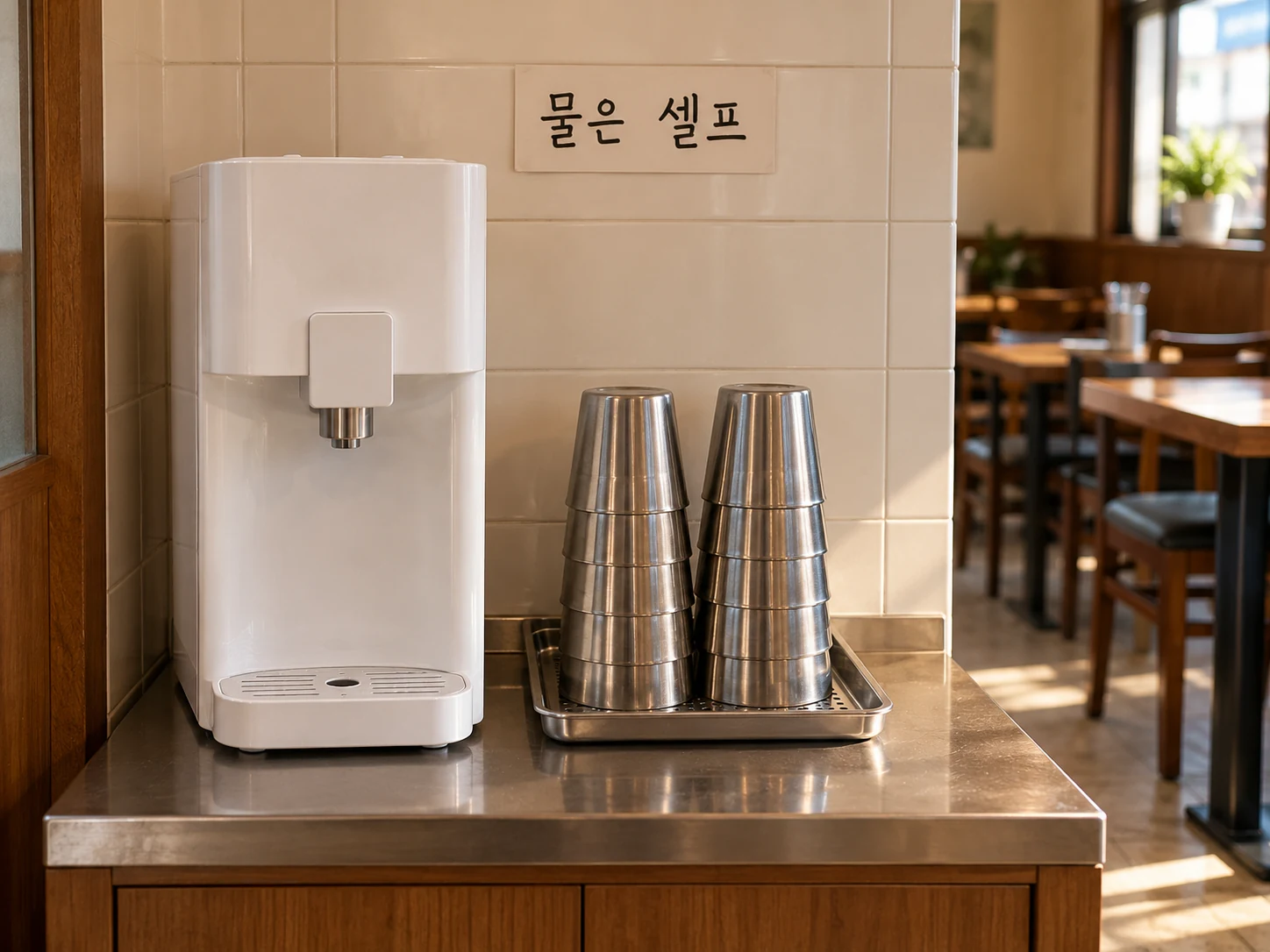
Look for a dispenser with cups beside it. Another setup is a small refrigerator holding reusable water bottles for the tables. Take what the restaurant has provided back to your seat. If the water station isn’t obvious, ask:
“물 어디 있어요?”
Mul eo-di i-sseo-yo?
Where is the water?
Ordinary drinking water served with a meal at a typical Korean restaurant is usually free, including refills. A bottle of mineral water or sparkling water listed with a price on the menu is a separate order. So a drinks menu doesn’t necessarily mean you have to pay for a glass of water with lunch.
When you’d like more, this is enough:
“물 좀 더 주세요.”
Mul jom deo ju-se-yo.
Could I have some more water, please?
At a self-service restaurant, go back to where you got your first cup. If the staff brought the water, you can ask them for more.
This is the kind of detail that’s easy to miss before a trip. You can spend time reading about Korea’s water quality and still find yourself sitting at a restaurant with an empty cup because you didn’t recognize the self-service sign.
As for the water itself, I drink what the restaurant serves without asking how it’s prepared. That’s my habit, though, rather than information about every restaurant. A stainless steel jug doesn’t tell you what’s inside. If you’d like to know, ask:
“이거 무슨 물이에요?”
I-geo mu-seun mu-ri-e-yo?
What kind of water is this?
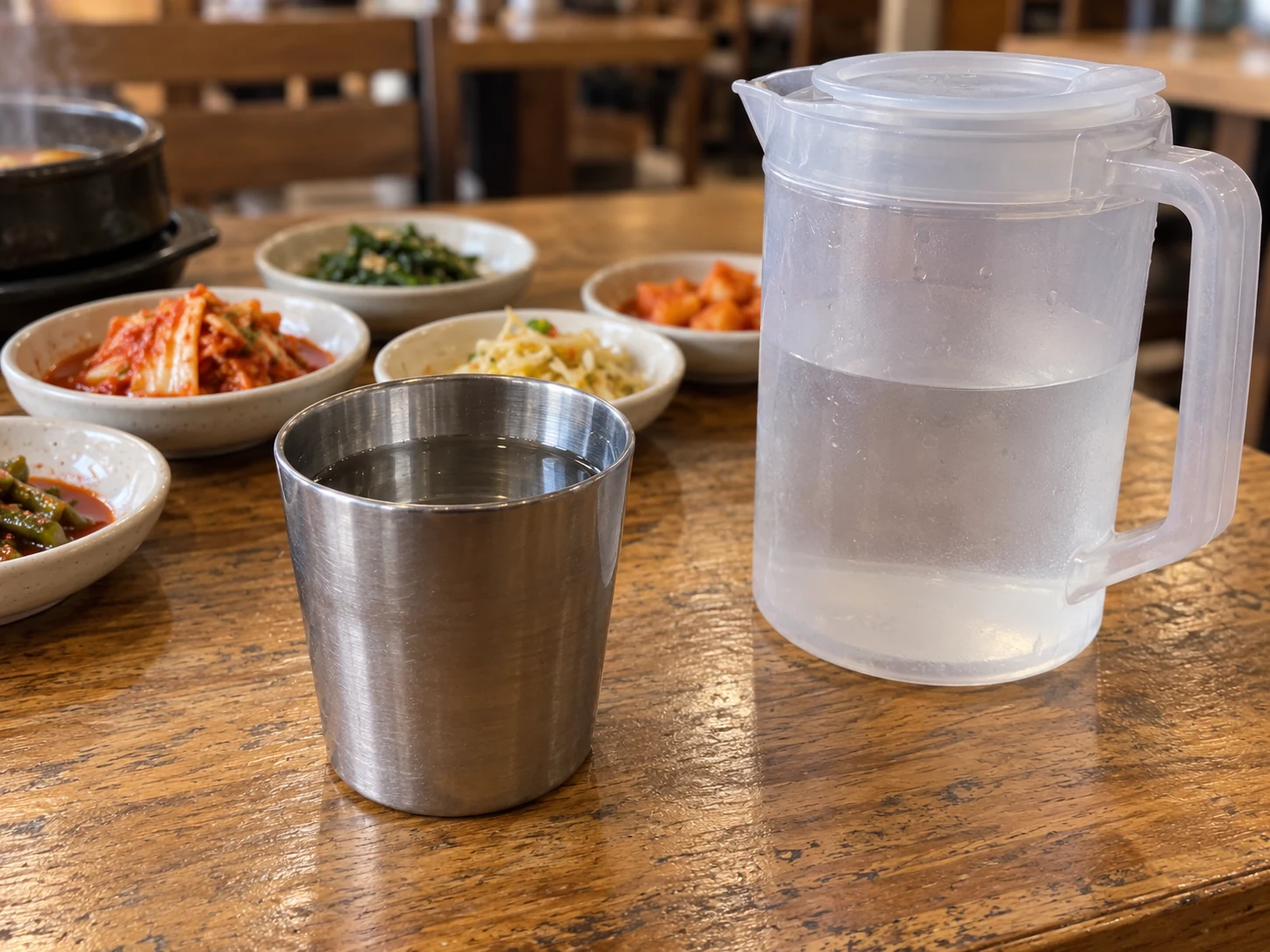
One distinction is worth keeping in mind: another cup with your meal and filling a personal bottle to take away are different requests. Ask before filling your own bottle. The restaurant can tell you whether it allows that.
But can you drink tap water in Korea?
In Seoul, Arisu is treated and monitored for drinking. That’s the answer about the city’s water supply. For the tap in your accommodation, ask the host or front desk, because the building’s plumbing matters too. Outside Seoul, use the local water guidance rather than assuming Arisu’s reports describe every Korean city.
Now for the part that can look confusing: I buy bottled water at home.
I think about the pipes the water travels through before reaching my kitchen. I know the water is treated, but I don’t know the condition of every pipe along the way. Buying bottled water is the choice I feel comfortable with. I haven’t had a test confirm a problem with my home’s water.
Yet at a restaurant, I drink the water they provide. That’s how it works in my everyday life. Seeing a Korean person buy bottled water doesn’t, by itself, tell you that something is wrong with the tap water.
Other homes use a purifier or boil their water. If a friend offers you a bottle from the fridge, it may simply be what they normally drink.
For your own room, the question is straightforward:
“수돗물 마셔도 돼요?”
Su-don-mul ma-syeo-do dwae-yo?
Can I drink the tap water?
If the accommodation confirms it’s safe to drink as it is, you don’t need to boil it first. Follow any specific water-use warning instead of assuming a kettle will solve the problem; boiling cannot make every kind of contaminated water safe. If the water looks discolored or there’s a notice saying not to drink it, use sealed bottled water and tell the staff or host.
Find a refill before you need another bottle
I start with the bottled water provided in a hotel room. Before opening it, though, look for a complimentary-water label or a price. Minibar water may be sold separately, and the front desk can explain which bottles are included if the room information is unclear.
Once those bottles are empty, there may be another option besides going shopping. Some accommodations have a drinking-water dispenser in a shared kitchen or guest area. If you carry a reusable bottle, ask where the dispenser is and whether you can fill your bottle there.
“정수기 어디 있어요?”
Jeong-su-gi eo-di i-sseo-yo?
Where is the water dispenser?
All the Korean sentences here can be shown on your phone, too. You don’t have to get the pronunciation right to get an answer.
For a self-check-in stay, I’d ask the host before arrival where drinking water is available and whether that area will be accessible when I arrive. That gives you time to buy a bottle on the way if needed, rather than discovering the answer after you’ve reached the room.
During the day, Seoul’s Arisu Map can help you find outdoor drinking fountains. Its interface is mainly Korean. Look for 야외 음수대, meaning “outdoor drinking fountains”; 음수대 is also useful to recognize on a sign.
Try looking near the places you’re already planning to visit. A fountain along your walk can be a convenient stop, especially if you have a bottle to fill. Keep the Korean menu name handy if the interface is unfamiliar.
The map shows locations, not a promise that every fountain will be running. Follow any closure or inspection signs on-site. Winter matters here: outdoor fountains may be shut off to prevent freezing. Seoul’s winter 2025–26 shutdown notice is a past example, so look for information covering your travel dates rather than relying on an old schedule.
For a cold-weather walk, I’d leave with water already in my bag.
Sometimes buying a bottle is simply easier
When I finish the water provided at a hotel, I buy more at a convenience store. Refilling is useful when it’s convenient, but buying water fits my own routine too.
The word to look for is 생수, saeng-su: ordinary bottled drinking water. 탄산수, tan-san-su, means sparkling water. For still, unflavored water, read the label rather than choosing by the shape of the bottle. You can show 생수 to a shop assistant if you’re unsure what to pick.
Think about where the bottle is going. A large one can stay in your room; a smaller one is easier to carry the next day. I’d buy enough for the morning as well as that evening, so getting ready to go out doesn’t start with an empty bottle.
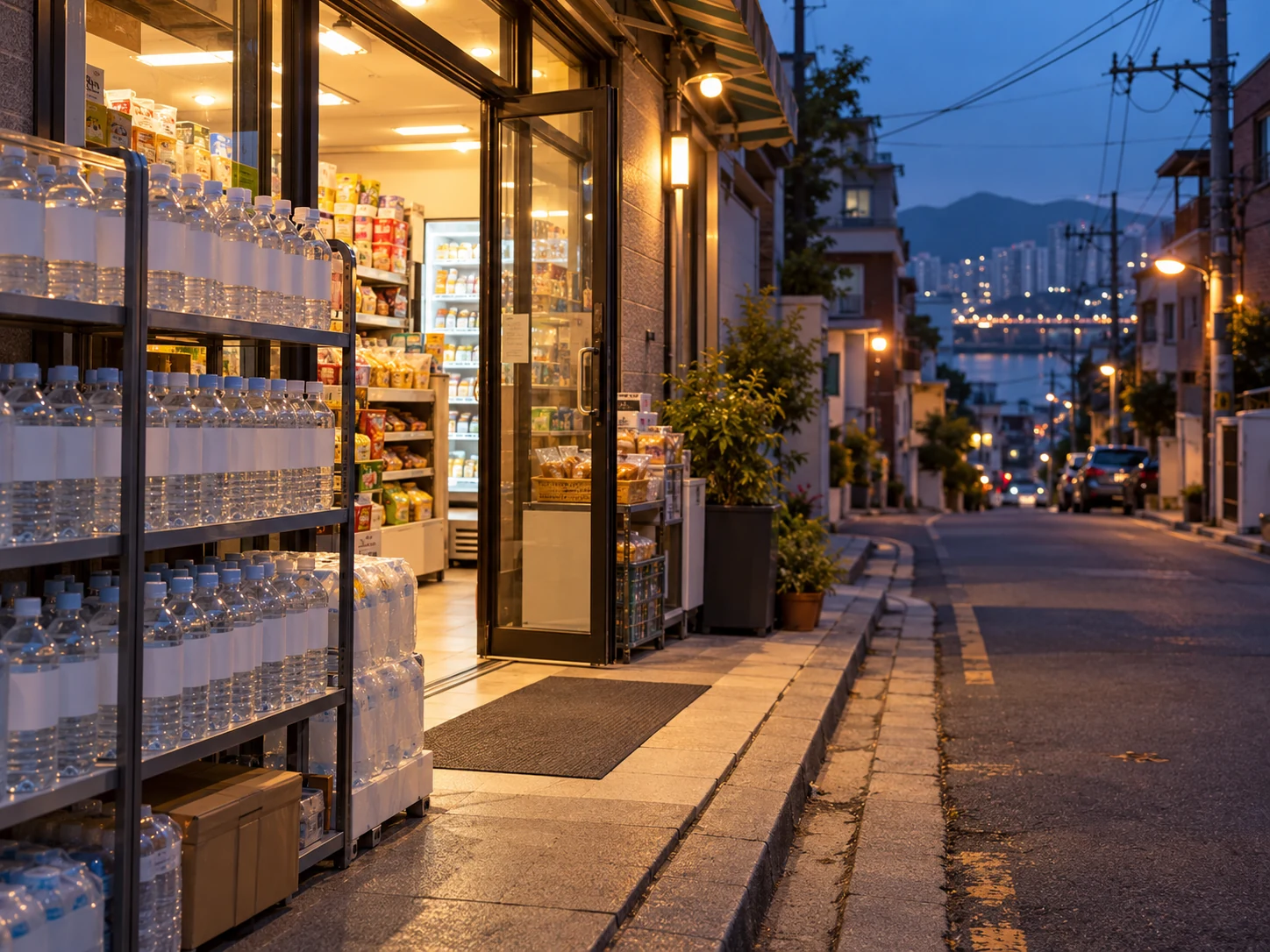
If you’re returning late, stop at a convenience store on the way back. Once you’re in your room with your shoes off, going back out for one bottle of water feels like a much bigger job.
Images are illustrative examples, not photographs of specific places.