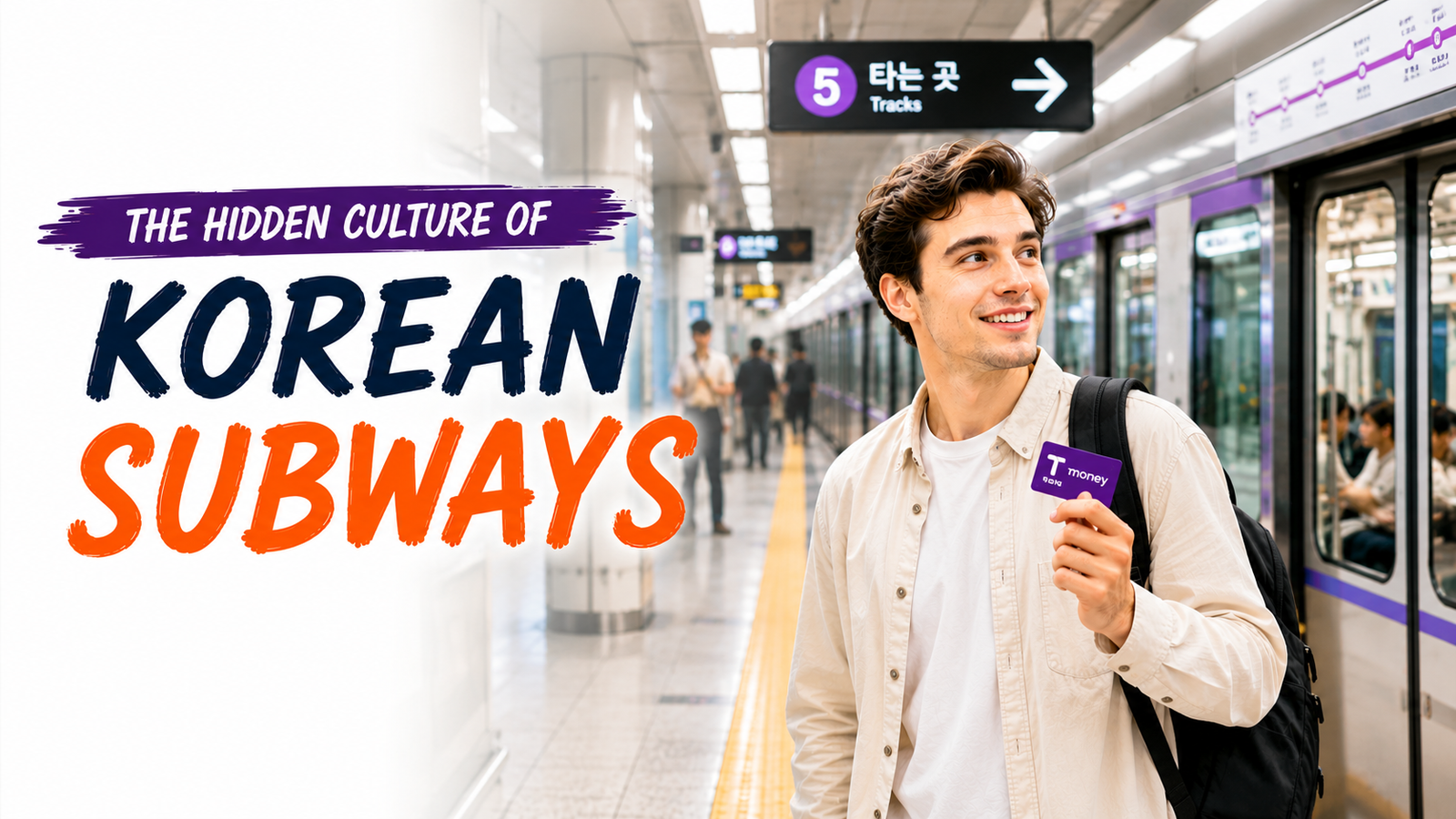
A Korean subway ride is not just about getting from one station to another. It is also one of the easiest places to notice the small habits that shape shared public space in Korea.
You may see passengers waiting beside the doors before boarding, keeping conversations relatively quiet, leaving certain seats available, checking exit numbers before they arrive, or moving toward the door before their stop.
None of these habits is followed perfectly by everyone, and visitors are not expected to memorize a long list of rules. But understanding the patterns can make your first few rides feel much easier.
This guide explains 11 practical parts of Korean subway culture and etiquette—from boarding and priority seats to exits, transfers, food, and what to do if you leave something behind.
Table of Contents
Boarding and Riding Without Getting in the Way
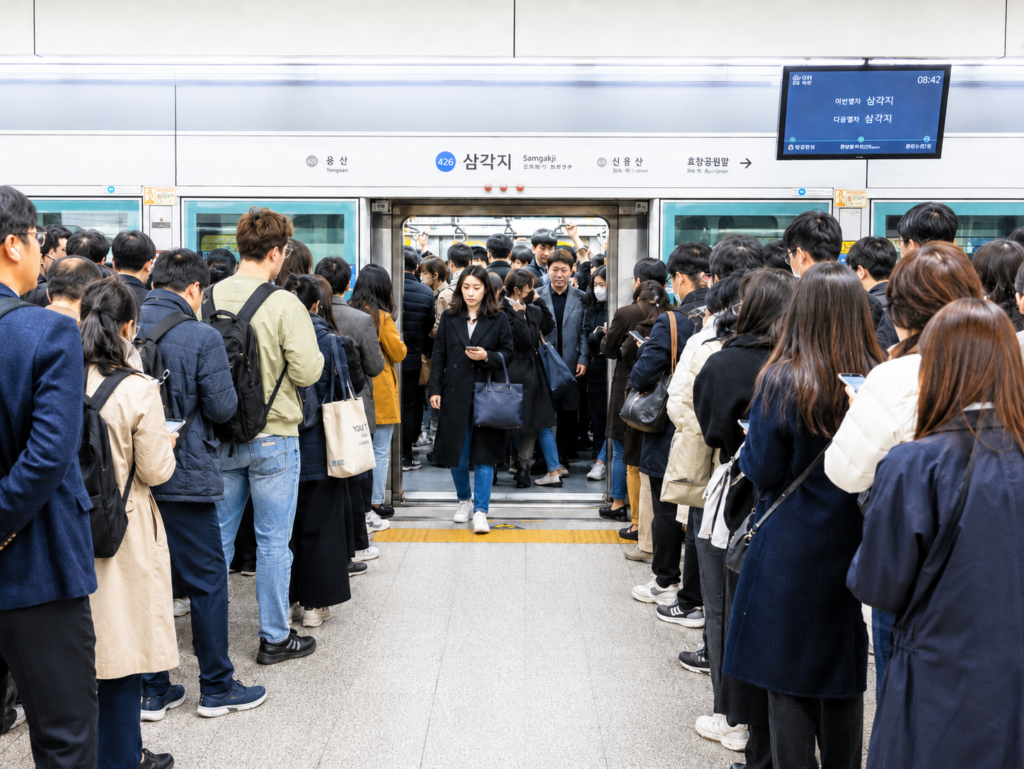
1. Keep Conversations at a Comfortable Volume
Korean subway cars often have a relatively quiet atmosphere, including during busy periods.
Talking with friends is fine, but loud conversations, long phone calls, and speaker audio can disturb people sharing the carriage.
Keeping your voice and personal audio at a comfortable level is a simple way to make the ride easier for those around you.
Why it matters
A reasonable volume helps passengers share a crowded public space comfortably.
Local tip: Talking with friends is perfectly fine—just keep your voice at a reasonable level.
2. Let Passengers Get Off Before You Board
Passengers often wait at the sides of the platform doors so that people on the train can exit first.
During crowded periods, boarding may not look perfectly orderly, but leaving the center of the doorway clear is the most practical approach.
After passengers have stepped off, board with the flow instead of trying to move through the middle too early.
Why it matters
Giving people space to exit helps both boarding and departure move more smoothly.
Local tip: Wait to the side of the doors, let passengers exit, and then board with the flow.
3. Use Earphones for Videos, Music, and Calls
Phones are a big part of subway time in Korea, but the important point is not that everyone sits in silence.
Many passengers watch videos, listen to music, read, message, or scroll through their phones during the ride. Apps such as KakaoTalk, YouTube, and Netflix are common examples.
Use earphones for audio and keep phone calls brief and at a reasonable volume. The practical etiquette is simply to avoid making your personal audio part of everyone else’s journey.
Priority Seats and Getting Ready to Leave
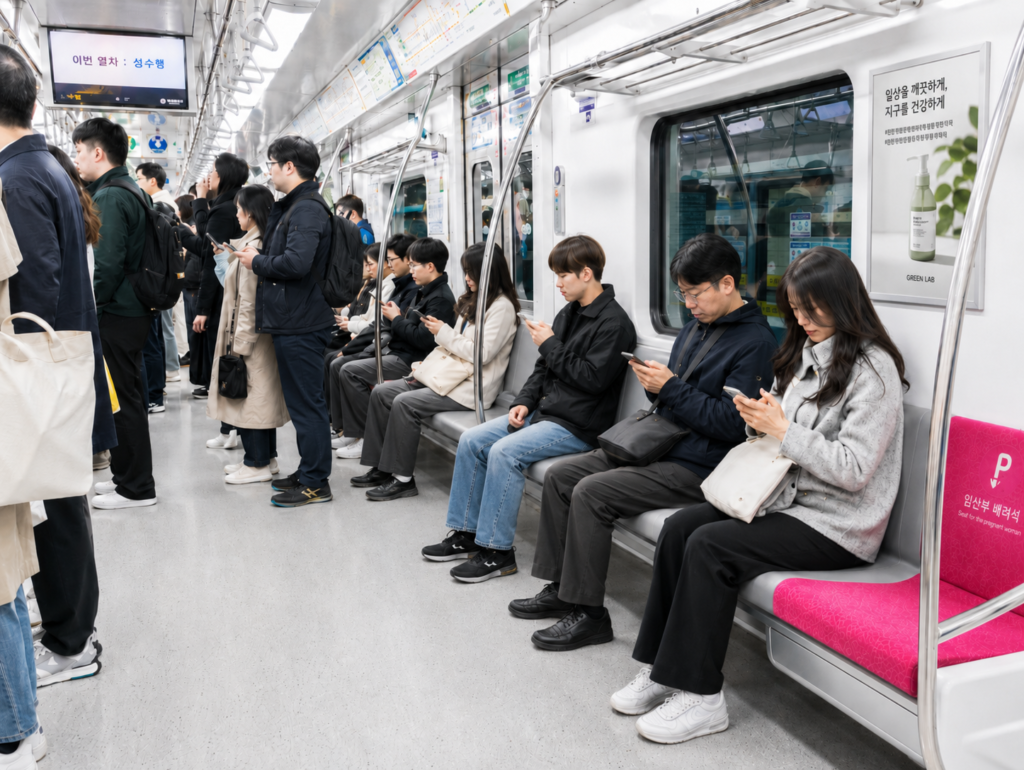
Subway cars may use different colors and signs to identify seats intended for passengers who need them more urgently. Check the marking before you sit.
4. Know What the Pink Pregnancy Seat Means
Pink seats are designated for pregnant passengers. You may notice other passengers leaving them available even when the train is crowded, but behavior varies.
For visitors, the simplest approach is to recognize the marking and leave the seat available for someone who needs it.
Seoul also provides an official guide to pregnancy-seat design.
Local tip: If a seat is marked for pregnant passengers, leave it available for someone who needs it.
5. Check the Signs Before Taking a Priority Seat
Not every specially marked seat is the same.
Subway cars may have designated or priority seating for older adults, people with disabilities, pregnant passengers, and others who may need a seat more urgently.
Colors, signs, and layouts can vary by operator or train, so check the marking before sitting rather than relying only on the seat color.
If you are unsure, choosing a regular seat is the simplest option.
6. Get Ready Before Your Stop—Without Blocking the Door
When the train is crowded, check where you are about one station before your destination so you have time to reach the door without rushing.
Preparing before the doors open can make it easier to get off, but there is no need to stand directly in front of the doorway too early or block other passengers.
Consider both your own safety and the flow of passengers around you as you move toward the exit.
Local tip: If the train is crowded, start positioning yourself for the exit before the doors open, but do not block passengers unnecessarily.
7. Check the Exit Number Before You Leave the Platform
Different exits at the same station can lead to different streets, bus stops, office buildings, shopping areas, or landmarks.
Choosing the wrong exit can add unnecessary walking, especially at a large or complex station.
Navigation apps like Naver Map and KakaoMap can show the best exit for your destination.
Local tip: Check the recommended exit number in Naver Map or KakaoMap before you leave the platform.
Routes, Transfers, and Finding Your Stop
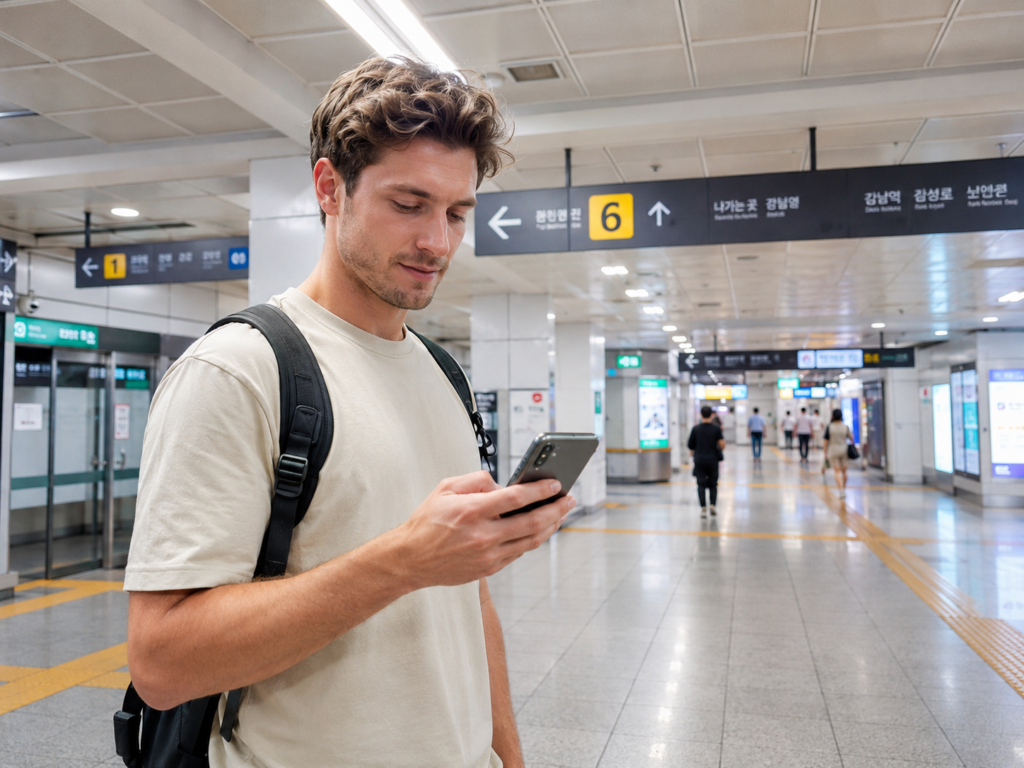
A route that looks quickest on a map is not always the easiest choice, especially when you have luggage or need to navigate a large transfer station.
8. The Fastest Route Isn’t Always the Best
Most map apps in Korea let you compare the fastest route with options that have fewer transfers.
A route with fewer transfers may take a few minutes longer, but it can be easier when you have luggage, are traveling with children or family, or want to avoid long walks inside stations.
Consider both the journey time and the effort required to change lines before choosing.
Why it matters
The best route depends on your group, luggage, transfer count, and the walking distance inside stations—not only the arrival time.
Local tip: Compare both travel time and number of transfers before choosing a route.
9. Use Station Names, Numbers, Signs, and Announcements
Many subway trains and stations provide Korean and English station names, line colors, station numbers, displays, and announcements.
The exact display and announcement format varies by line and operator, but visitors can usually confirm the next stop without reading Korean fluently.
Local tip: Check both the station name and station number when available. This is especially useful when names look or sound similar.
Food, Lost Items, and Everyday Courtesy
10. Avoid Meals and Strong-Smelling Food on the Train
Eating a full meal or strong-smelling food on the train is uncommon and can make a crowded carriage uncomfortable for other passengers.
A small drink is different from opening a meal, but the safest travel habit is to finish food before boarding or wait until you leave the train.
Avoid leaving rubbish, spills, or strong smells behind in a shared carriage.
Local tip: Finish meals before boarding and take all rubbish with you.
11. If You Leave Something Behind, Act Quickly
If you realize you left something on a subway, note the line, direction, station, approximate time, train car if you remember it, and the item you lost.
Contact the relevant subway operator or station as soon as possible. Lost items from subway systems can also appear in the Korean National Police Agency’s LOST112 database.
Do not assume an item will automatically be returned, and do not leave valuables unattended just because other passengers appear relaxed.
Final Thoughts
You do not need to copy every subway habit you notice in Korea.
The practical basics are enough: let passengers get off before boarding, keep your audio to yourself, recognize priority seating, check your exit number, and choose a route that fits your luggage and transfers.
Most subway etiquette comes down to one idea—share a crowded public space without making the trip harder for the people around you.
Once those basics feel familiar, the signs, seats, exits, and small routines that seemed unusual on your first ride become much easier to understand.
Frequently Asked Questions
Is the Korean subway easy for first-time visitors?
Yes. English signs, station numbers, announcements, and apps such as Naver Map and KakaoMap can make routes and stops easier to follow.
Can tourists use the Korean subway without speaking Korean?
Yes. English signs, station numbers, and navigation apps help visitors follow their route, and many ticket machines offer an English option.
Is it okay to talk on the Korean subway?
Yes. Talking is fine, but loud conversations, calls, or speaker audio can disturb other passengers.
What should I do if I lose something on the subway?
Contact the station or subway operator as soon as possible and check the Korean National Police Agency’s LOST112 database. Keep details such as the line, direction, time, station, and item description ready.
Is the Korean subway safe at night?
Generally, subway systems remain widely used into the evening, but keep your valuables with you, check the last-train time, and use the same precautions you would in any major city.
Related Guides
Want to move around Korea more like a local?
These guides will help you understand the everyday habits that make Korean travel feel easier, cleaner, and more convenient.
20 Everyday Korean Habits That Can Make Your Trip Easier
Korean subway etiquette is part of a bigger local rhythm. This guide explains the everyday habits visitors often miss.
→ Read the local habits guide
Korean Convenience Store Guide: 17 Things Travelers Should Know
Convenience stores are everywhere in Korea, including near subway stations. Learn how locals use them for food, drinks, daily needs, and quick travel breaks.
→ Read the Korean convenience store guide
For official Korea travel information, you can also visit the Korea Tourism Organization website.
→ Visit Korea Tourism Organization
How to Pay in Korea in 2026: The Best Setup for Travelers
Learn which payment card, transit card, and cash backup to prepare before using public transportation in Korea.