
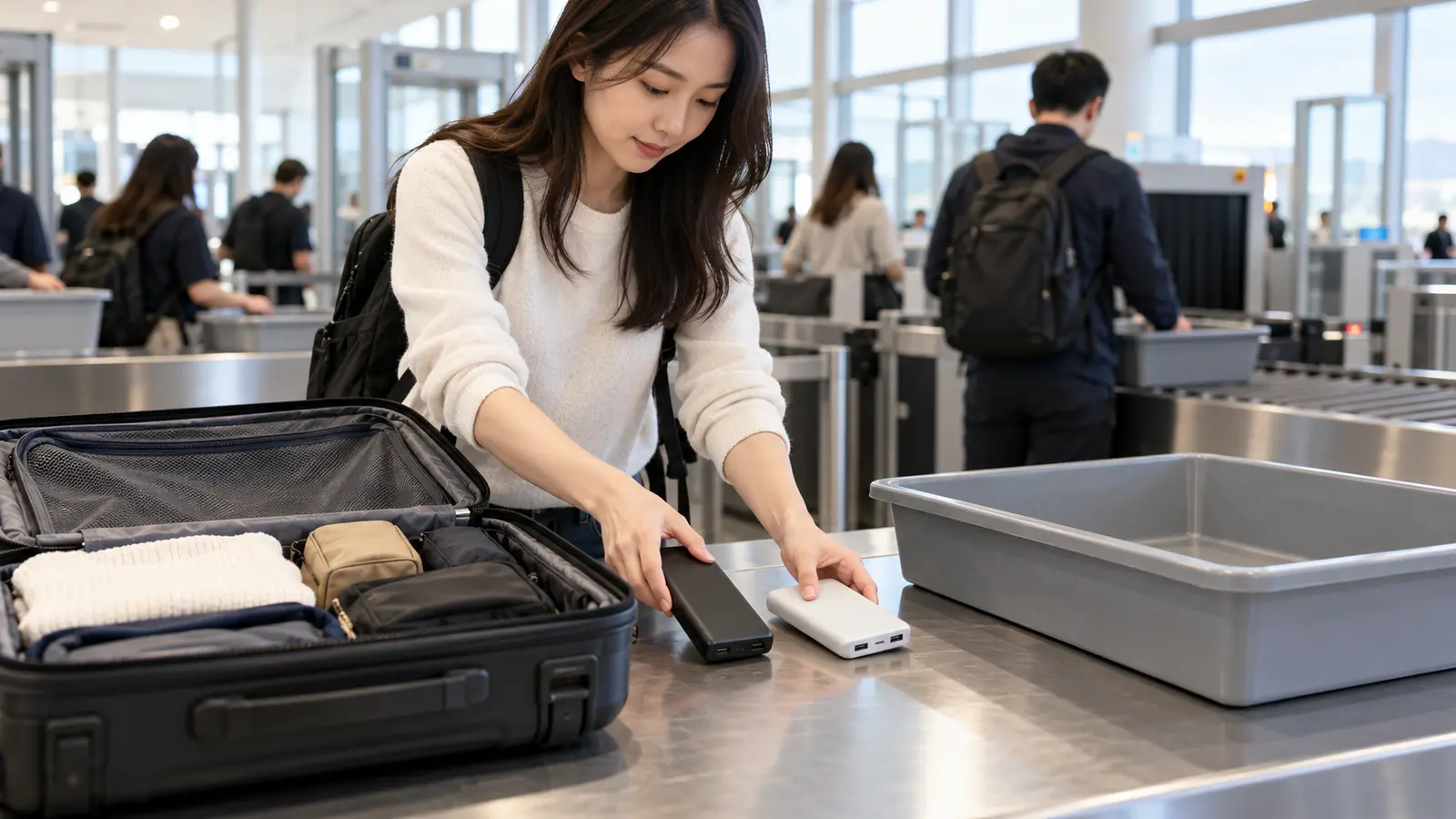
I looked up Korea power bank flight rules while getting ready for a trip, covered the terminals and put the batteries in separate plastic bags. I like to have that part sorted before I leave.
If you’re packing for a flight out of Korea, start with the power banks you actually want to take. You can bring up to two per passenger, each no more than 160Wh, under the Korean rule in effect from April 20, 2026. Anything over 100Wh and up to 160Wh needs approval from your airline; a power bank over 160Wh cannot travel. An unreadable capacity label can also mean leaving the battery behind.
They go in your carry-on. If you usually keep a power bank in your suitcase, this is a good moment to move it. Protect each battery against a short circuit, and put it somewhere you can reach before your cabin bag goes into the overhead bin. On board, keep the power bank with you or in the seat-back pocket, following the crew’s instructions.
For ordinary phone or tablet charging, you can’t use the power bank during the flight or recharge the power bank itself. Medical equipment needs a separate check with the airline. Your airline, destination or connecting airport may have stricter conditions, so use your operating airline’s current notice for the final packing check.
How can you check your power bank’s capacity?
Turn the power bank over and look for Wh, or watt-hours. A readable label such as 74Wh or 99.9Wh makes this part straightforward.
If yours gives the capacity in mAh and the voltage instead, Korean Air provides this calculation:
Wh = (mAh ÷ 1,000) × V
For example, 20,000mAh at 3.7V is 74Wh. A 30,000mAh unit at 3.7V is 111Wh, so that one needs airline approval. Use the voltage on your own battery; it isn’t always 3.7V.
A faded label is worth sorting out before the airport. Without a readable capacity marking or the necessary voltage information, the airline may be unable to confirm what you’re carrying. A photo can help you keep a record, but the marking on the physical battery still needs to be readable at inspection. A small-looking battery may still be refused.
What are the current Korea power bank flight rules?
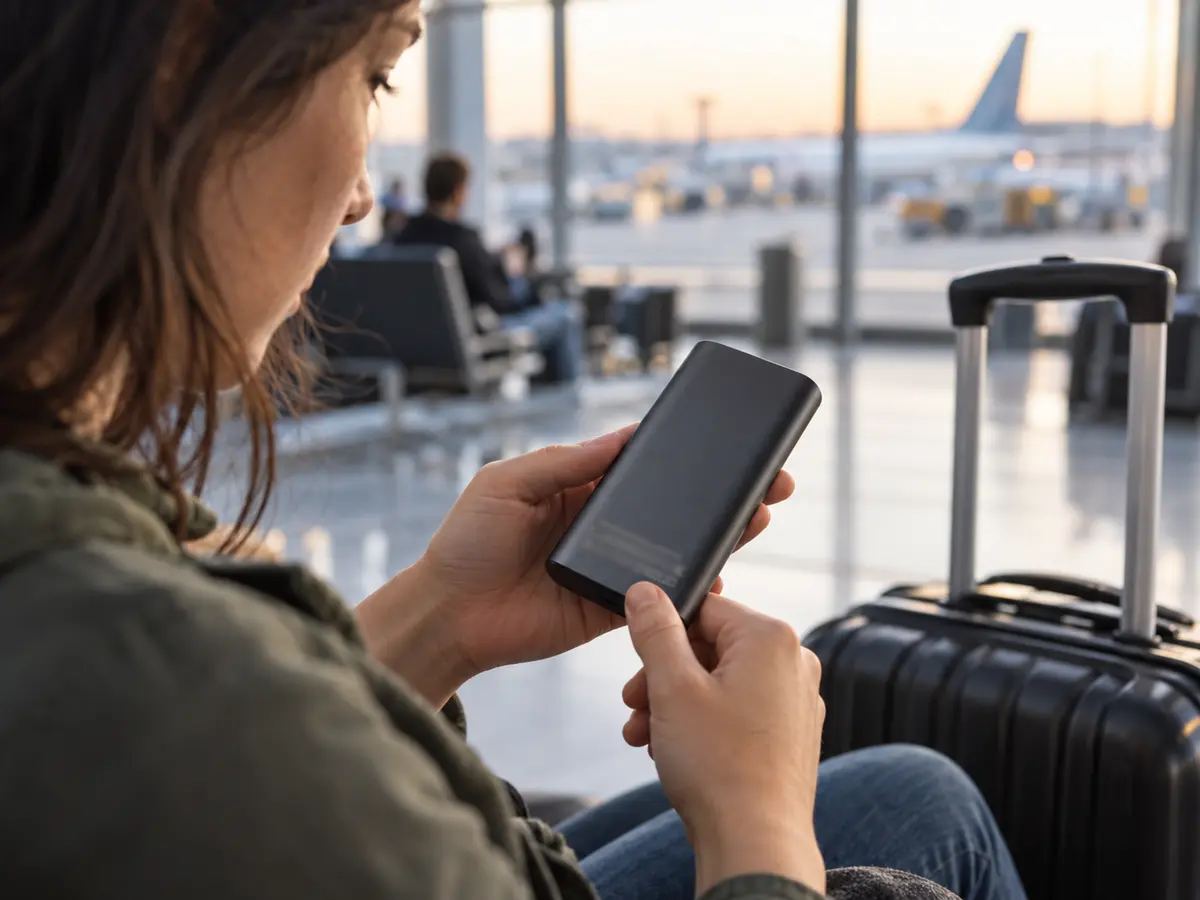
You might remember being allowed several small portable chargers on an earlier trip. Korea changed the power-bank limit on April 20, 2026: the Ministry of Land, Infrastructure and Transport announced a maximum of two per passenger, with power-bank use and charging prohibited in flight.
Korean Air’s current notice and Air Seoul’s notice reflect that change. If an older packing guide says something different, check the operating airline’s current power bank rules.
A power bank is a separate portable battery used to charge your phone or another device. A removable spare battery that slots directly into a camera or another device is a different item in the airline’s table. If you’re taking only portable phone chargers, the power-bank limit is the one you need: up to two per passenger.
Taking both kinds? Korean Air and Air Seoul say that power banks and removable spare batteries in the over-100Wh to 160Wh range share a combined limit of two, with airline approval. Check your full battery list with the operating airline rather than counting each category’s allowance separately.
How should you protect each power bank before security?
This is easier to do while you’re still packing. If your power bank is in a pouch with keys, coins or cables, take it out so loose metal can’t touch exposed terminals.
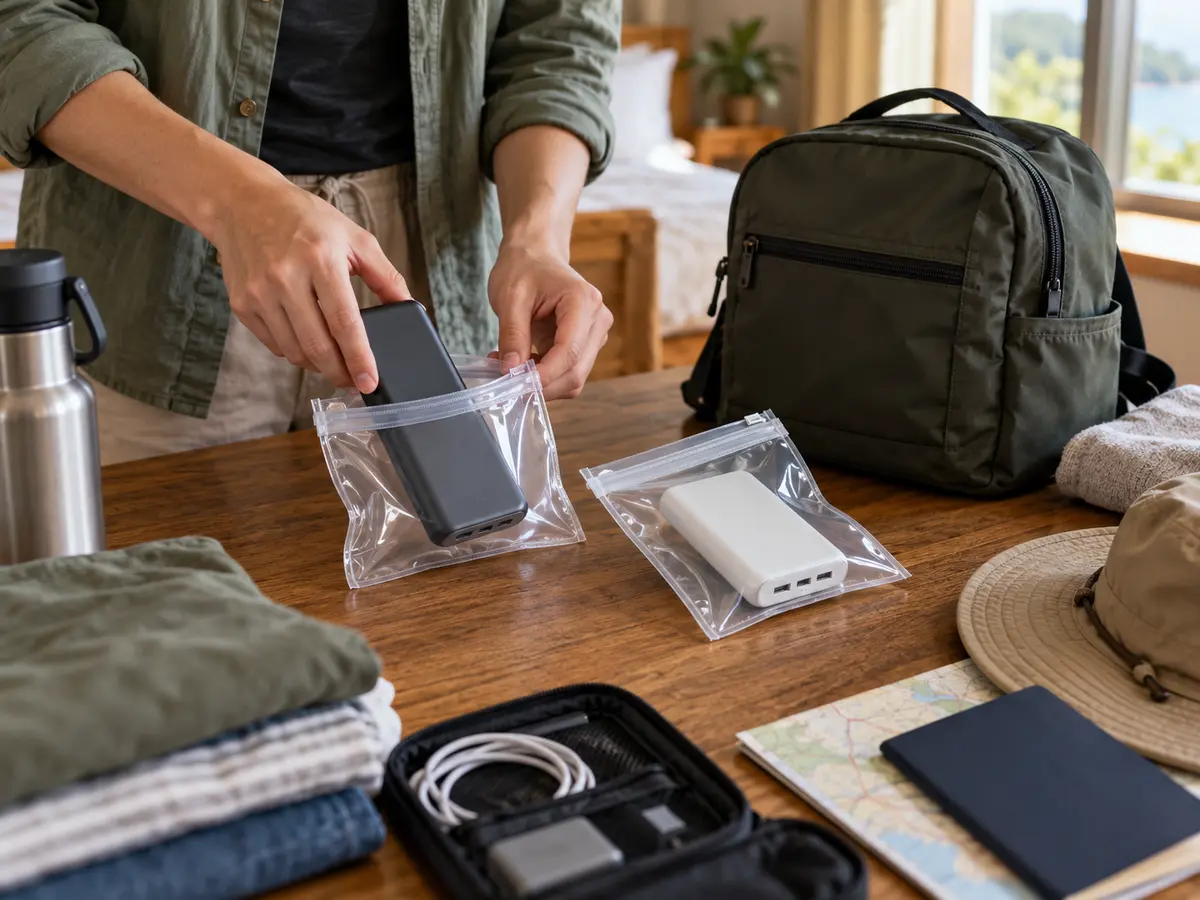
Korean airlines list these ways to protect it:
- put each battery in its own transparent zipper bag;
- cover the terminals or ports with insulating tape; or
- use an individual protective pouch or case for each battery.
Give each battery its own protection. Two together in one bag aren’t separated from each other, and keys, coins or exposed metal cable ends still need to stay away from the terminals.
Have a look at the case while you’re doing this. Korean Air says a battery may be refused if it shows signs of danger, including overheating, damage or swelling. If yours is swollen, stop using it and ask the airline or airport about safe disposal. It shouldn’t go in an ordinary bin or your checked suitcase.
Where should you keep your power bank during the flight?
Before checking your suitcase, it’s worth one last look through the pockets. A power bank contains a lithium battery and has to travel in the cabin, even if the bag it was tucked into is being checked.
Using Easy Drop to check luggage in Seoul? Take your power banks out before handing over the suitcase there, too.
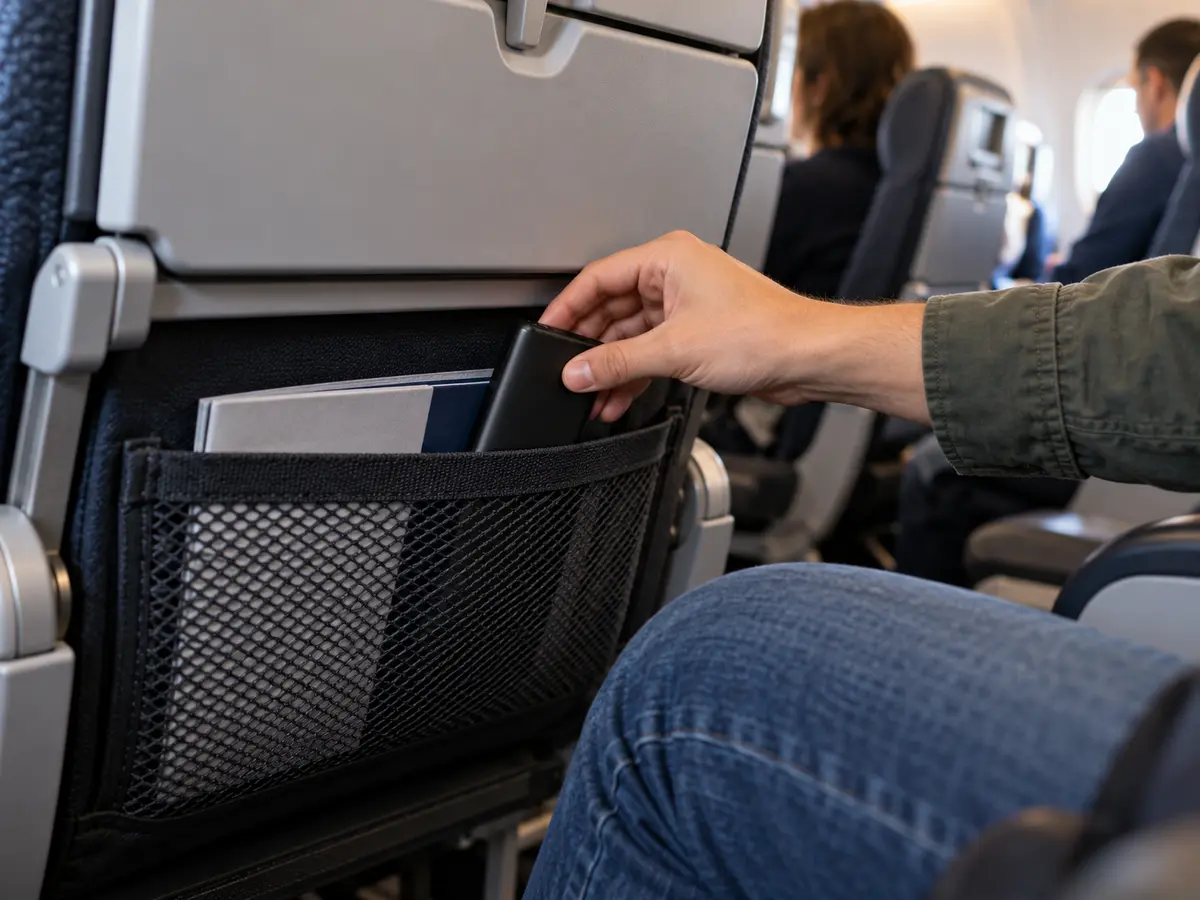
Once you board, take it out before putting your cabin bag in the overhead bin. The power bank stays with you or in the seat-back pocket, as your airline instructs, where it can be reached if it overheats.
Your phone will need another charging plan: using the power bank for a phone or tablet is prohibited during the flight, and so is plugging the power bank into the aircraft’s power supply to recharge it. Air Seoul notes that some aircraft may provide an approved outlet or cable for charging a device. The crew can tell you what’s available on your flight; that doesn’t permit charging the power bank itself.
If you use medical equipment, speak to the operating airline before travelling about the device, its batteries and in-flight use. Korean Air’s restricted-items guidance says spare batteries may be used on board for medical purposes such as POC or CPAP equipment. Ask how that applies to your particular equipment and battery; it isn’t general permission to use an ordinary power bank.
If a battery gets hot, smells unusual, swells, smokes or is damaged after something falls on it, tell a cabin crew member immediately. Keep it out of a closed bag and don’t try to cool it with a drink.
When do you need to contact the airline in advance?
A quick check with the airline before departure can save an awkward decision at the airport, especially if:
- your battery is over 100Wh;
- its capacity label is unclear;
- you have medical equipment and spare batteries;
- you’re bringing removable batteries as well as power banks;
- you’re connecting through another country; or
- your ticket is a codeshare operated by a different airline.
For a power bank over 100Wh and up to 160Wh, ask the operating airline for battery approval separately from booking your ticket. That may be a different company from the one that sold you the flight.
What should you check before leaving for the airport?
With everything still in front of you, check these once:
- You have no more than two power banks under the Korean rule.
- Each has a readable capacity marking; calculate Wh if necessary.
- You have airline approval for any unit over 100Wh and up to 160Wh.
- Each battery is separately protected against a short circuit.
- All power banks are in your carry-on, with none left in checked luggage.
- You’ve checked the operating airline’s current notice.
Once you’ve checked them, put the protected power banks somewhere easy to take out before your cabin bag goes overhead. Charge your phone before boarding if you can, and ask the airline or crew about the charging options on your flight; the power bank itself stays unused.
It can feel like a lot to remember when you’re also looking for your passport and checking the departure time. Sorting out the batteries while your bag is still open gives you one less thing to work out at the counter. Give them this little bit of attention while you’re packing, then you can get back to the rest of your trip preparations.